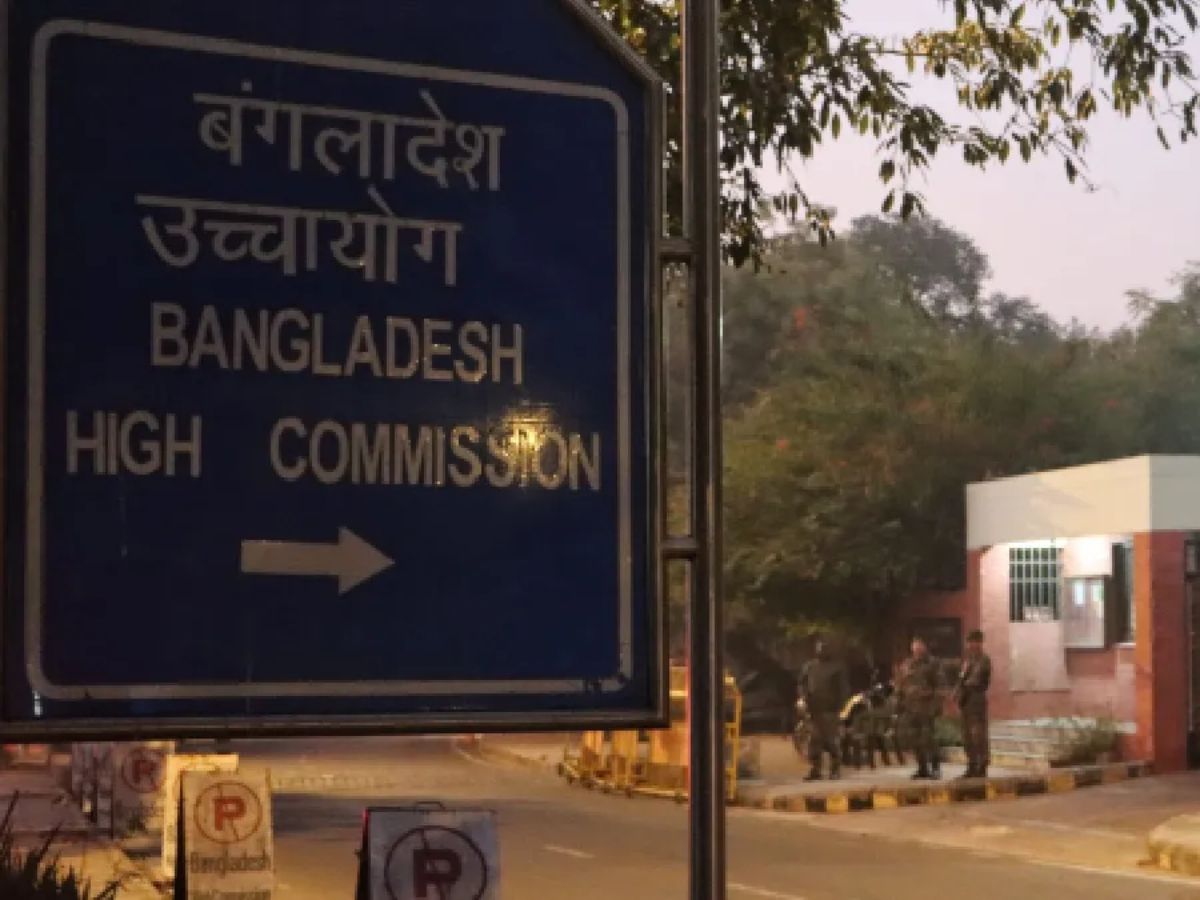
A diplomatic disagreement has surfaced between India and Bangladesh following a protest outside the Bangladesh High Commission in New Delhi. While India dismissed reports of a security breach as “misleading propaganda,” Bangladesh has called the incident “highly regrettable,” creating a rare public divergence between the two neighbors. The exchange underscores underlying tensions linked to concerns over minority safety in Bangladesh.
What Happened Outside the High Commission?
On December 20, a group of 20-25 youths gathered in front of the Bangladesh High Commission residence in Delhi. They raised slogans condemning the recent lynching of a Hindu man, Dipu Chandra Das, in Bangladesh’s Mymensingh district. The gathering lasted a few minutes before Delhi Police personnel stationed at the spot dispersed the crowd. Visual evidence of the brief, contained protest is publicly available.
Why Are the Official Statements So Different?
The core of the dispute lies in the characterization of the event. India’s Ministry of External Affairs (MEA) stated there was “no attempt to breach the fence or create a security situation at any time.” It emphasized India’s commitment to protecting all foreign missions under the Vienna Convention. In contrast, Bangladesh’s Foreign Ministry stated the protest was an “unjustifiable incident,” arguing that miscreants were allowed to operate right outside the mission’s perimeter, creating panic. Dhaka also highlighted that it was not informed in advance about what it called an “organized event.”
The unjustifiable incident at the Bangladesh High Commission residence in New Delhi on 20 Dec 2025 is highly regrettable.@bdhc_delhi pic.twitter.com/XopXufH3dw
— Ministry of Foreign Affairs (@BDMOFA) December 21, 2025
Lynching of Dipu Chandra Das
The protest was directly triggered by a brutal incident in Bangladesh, where Dipu Chandra Das, a 25-year-old Hindu garment worker, was beaten to death and set on fire by a mob in Mymensingh on December 19. The mob accused him of blasphemy. India’s MEA condemned the killing as “horrendous” and “barbaric,” urging the Bangladesh government to bring the perpetrators to justice. It confirmed raising “strong concerns” over recurring attacks on minorities.
A Broader Context of Violence and Political Tension
The incident occurred against a backdrop of political unrest in Bangladesh. Violent protests have shaken the country since youth leader Sharif Osman Hadi was shot dead during an election campaign. His party, Inqilab Moncho, tied his death to a “struggle against Indian hegemony,” reflecting anti-India sentiment among some factions. This context complicates the diplomatic discussion surrounding the Delhi protest.
Also Read: Why 90% of the Aravallis Remain Protected: Centre Clarifies