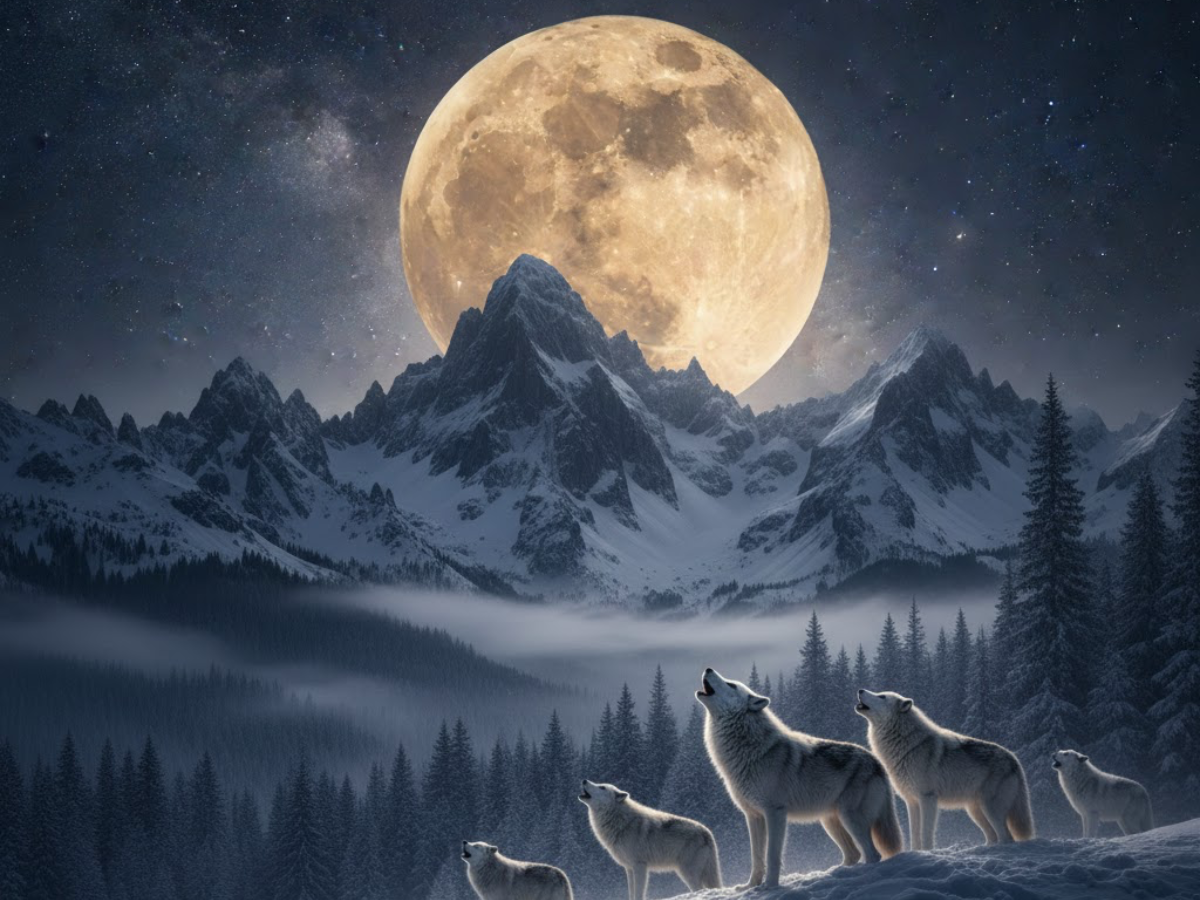
Supermoon January 2026: The first full Moon of 2026 is known as the Wolf Supermoon, will illuminate the night sky on January 3. Appearing slightly larger and brighter than usual, this Moon rises opposite the Sun in the constellation Gemini marking a spectacular start to the year for skywatchers worldwide. Its unique brightness and size make it one of the most notable celestial events of the season.
What is a Wolf Moon?
The term Wolf Moon dates back to Northern Hemisphere folklore where midwinter nights were associated with the howls of wolves. Traditionally, this name is linked to the January full Moon. It serves as a cultural marker and helping distinguish each month’s full Moon while connecting modern observers to ancient lunar traditions.
How & When to Watch Wolf Moon
- The Moon reaches fullness around 03:32–03:34 pm IST on January 3, though it appears full for a few nights before and after.
- Look for the Moon during moonrise on January 2 and 3 it may appear yellow or orange near the eastern horizon.
- Observers can spot Jupiter near the Moon, creating a striking visual pairing in the evening sky.
- Use a camera or telescope for detailed observation, though the naked eye will still reveal its grandeur.
Where It Will Be Visible
The Wolf Supermoon will be observable across most of the globe including:
- North America: New York (5:03 a.m. EST)
- Europe: London (10:03 a.m. GMT)
- Asia: Tokyo (7:03 p.m. JST), Beijing (6:03 p.m. CST)
- Australia: Sydney (9:03 p.m. AEDT)
- Other regions in Africa and the Middle East will also enjoy the sight, weather permitting.
ALSO READ: What is the Wolf Supermoon? Everything You Need to Know About 2026’s First Full Moon
Will It Be Visible in India?
The Wolf Supermoon will be visible throughout India shortly after sunset around 5:45–6:00 pm IST. Its proximity to Earth makes it appear larger and brighter than an average full Moon. The Moon will remain visible all night and set in the west at dawn, offering a spectacular experience for amateur astronomers and casual observers.
What is a Supermoon & Why is it So Bright?
A supermoon occurs when a full Moon coincides with perigee, the point in the Moon’s orbit closest to Earth. This January Moon will be roughly 362,000 km away, making it appear 6–14% larger and 13–30% brighter than a typical full Moon. Additional brightness comes from Earth being near perihelion, the point closest to the Sun, enhancing the sunlight reflected off the lunar surface.
ALSO READ: What is a Supermoon? Full List of 2026 Supermoon Dates & Everything You Should Know
What Are the Names of All the Full Moons & What Do They Mean?
| Month | Full Moon Name | Meaning / Significance |
|---|---|---|
| January | Wolf Moon | Linked to wolves howling in midwinter and marks the first full Moon of the year |
| February | Snow Moon | Named for North American snowfall also called Storm Moon or Hunger Moon |
| March | Worm Moon | Signals worms appearing in soil at end of winter also called Milk Moon |
| April | Pink Moon | Named after early spring pink flowers wild ground phlox also Egg Moon or Fish Moon |
| May | Flower Moon | Celebrates blooming flowers also Hare Moon, Corn Planting Moon or Milk Moon |
| June | Strawberry Moon | Coincides with strawberry harvest also Honey Moon, Rose Moon or Mead Moon |
| July | Buck Moon | When male deer grow full antlers also called Thunder Moon |
| August | Sturgeon Moon | Named for sturgeon fish catches also Grain Moon, Green Corn Moon or Black Cherries Moon |
| September | Corn Moon | Marks harvest time if nearest to autumn equinox, sometimes called Harvest Moon |
| October | Hunter’s Moon | Time to hunt for winter provisions also considered a Harvest Moon |
| November | Beaver Moon | Beavers start building dams also called Frost Moon |
| December | Cold Moon | Named for winter chill also Long Night Moon or Oak Moon |
Disclaimer: This article is for educational purposes only. For celestial observations, check local conditions and follow safe viewing practices.