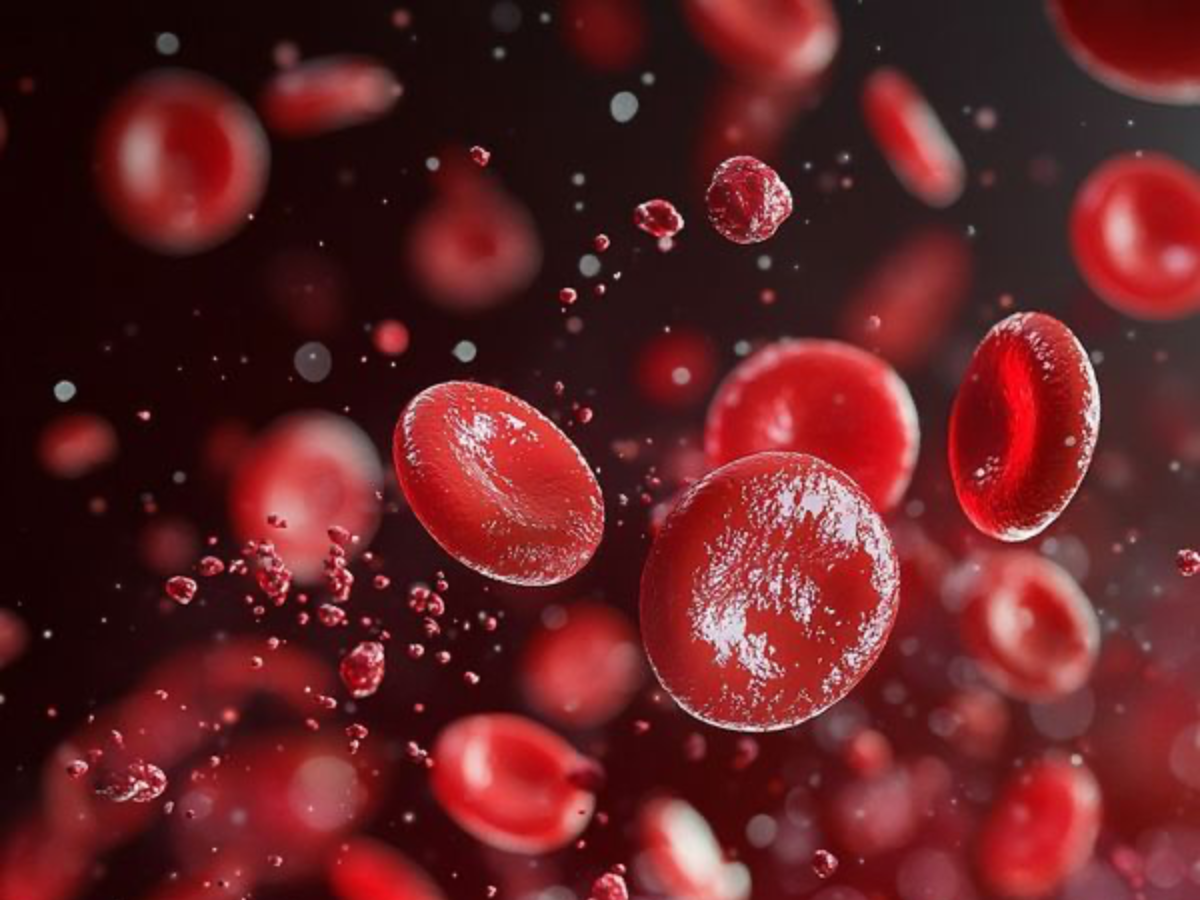
Human blood types continue to fascinate scientists with their intricacies and varieties, far beyond the well-known A, B, AB and O blood groups. Recently, a hybrid blood type called B(A) was discovered by researchers in Thailand among only three people in the world.
This exposes the intriguing questions in genetics and transfusion medicine. This opens up discussion on issues of compatibility, medical preparedness and the science of our blood.
How is blood type determined?
Blood groups are identified by specific antigens-proteins, sugars, or lipids-on the surface of red blood cells. A-antigen carries N-acetylgalactosamine, B-antigen has D-galactose, AB expresses both and O blood types differ in the presence of the Rh factor.
For successful transfusions, antigens between donors and recipients should match, hence why O-negative is considered a universal donor. All this is coded in the ABO gene on chromosome 9.
What is the B(A) blood type?
The newly identified B(A) blood type is a very rare genetic modification of the ABO gene. In these people, the researchers found four gene variants that changed the glycosyltransferase enzyme responsible for the production of antigens.
ALSO READ: Astronomers Reveal Explosive Death of Two Suns: Stunning Novae & Gamma-Ray Emissions
Because of this, the red blood cells of these people primarily present the B-antigen but also express trace amounts of A-antigen. This makes the combination incompatible with the standard blood transfusions of types A, B, AB or O.
Other rare blood types
Beyond B(A), many other rare blood types exist. O-negative occurs in less than about 7% of the global population, while less than 50 people have Rh-negative completely devoid of any manifestation of the Rh antigen.
ALSO READ: How Fast is Earth Heating? New Study Reveals a Clearer CO2 Limit
For instance, in 2025, a woman from Bengaluru was identified with CRIB blood group and a European patient had Gwada-negative type; both are so rare that compatible donors just do not exist. These cases highlight the work of specialized blood banks and research in transfusion science.
Implications for Medicine & Research
A discovery like B(A) emphasizes how intricate human genetics can be and how precise blood types are needed in medical practice. They also highlight the importance of global registries of donors and advanced genetic research that could prevent life-threatening mismatches during transfusions.
As scientists continue to find more and more rare blood types, the future of personalized medicine and safer blood transfusions grows increasingly bright.
ALSO READ: Fact Check: Did Japan’s ‘Baba Vanga of Manga’ Foresee the Tsunami? Viral Prophecy Resurfaces
Disclaimer: This article is for informational purposes only and not intended as medical advice; consult professionals for health-related decisions.