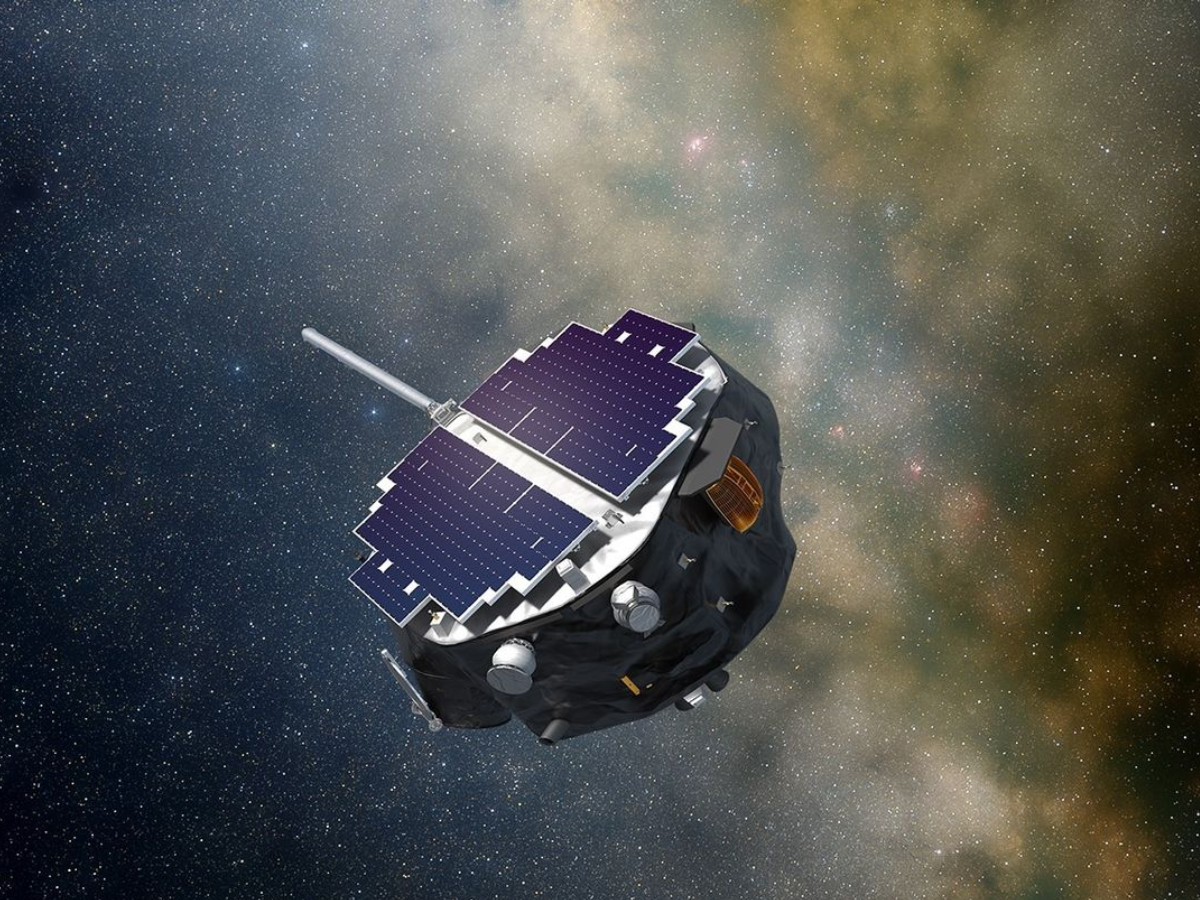
A new age of solar exploration as three advanced spacecraft get ready for launch and promising unprecedented insights into the Sun’s influence across the whole solar system. Due for launch no earlier than September 23, 2025, the concurrence between NASA and NOAA incorporates three different missions IMAP (Interstellar Mapping and Acceleration Probe), Carruthers Geocorona Observatory and SWFO-L1 (Space Weather Follow on at L1) of NOAA.
These spacecrafts will be launching with the SpaceX Falcon 9 mission out of Kennedy Space Center in Florida and subsequently targeting Lagrange Point 1, roughly one million miles distance from Earth.
What is IMAP Mission?
The IMAP mission is going to be a really huge leap in learning about the heliosphere which is this vast protective bubble of solar wind within which our solar system is shielded from the radiation present in the galaxy. It brings into play cutting-edge sensors and which will provide very high-resolution data about the behavior of solar particles at the heliopause boundary and about how these charged particles interact with the surroundings of space.
The IMAP findings can pioneer an updated vision of space weather models and risk assessment to astronauts, satellites or even technologies on the ground affected by solar storms.
ALSO READ: NASA Announces CHAPEA Crew for 378-Day Mars Simulation Mission
What is Carruthers Geocorona Observatory?
Carruthers Observatory is named to honor physicist Dr. George Carruthers, this small satellite will observe the outermost layer of the atmosphere around Earth and known as the exosphere. Using an L1 orbit, one can take a panoramic view of this enigma, where researchers can observe the changes over time.
The effects of solar storms on our planet are significant, and the exosphere is a critical factor in how Earth absorbs solar storms. The density and behavior of this could add detail to forecasts of the disturbances that would impact GPS, radio signals and other vital infrastructures.
ALSO READ: NASA & SpaceX Partner for Rapid-Response Launch to Cygnus Space Station
What is SWFO-L1 of NOAA?
NOAA satellite SWFO-L1 was meant to be a resident watchdog on the threats in space weather events and is equipped with advanced instruments for the latest monitoring of solar flares, coronal mass ejections and solar wind conditions. These instruments will relay very critical data back to earth and afford advanced warnings on potentially disruptive space weather.
It will be NOAA’s first fully operational spacecraft especially by design for the continuous monitoring of the sun to provide connections between scientific research and preparedness at a national level.
Missions United to Earth and Space Safety
These missions develop scientific advances as well as capacity enhancement to protect modern technology, infrastructure and life above and below the surface of Earth. Understanding the Sun becomes even more critical as we proceed deeper and deeper into the solar system.
ALSO READ: Surya Grahan September 2025: Date, Time & Spiritual Significance of Solar Eclipse