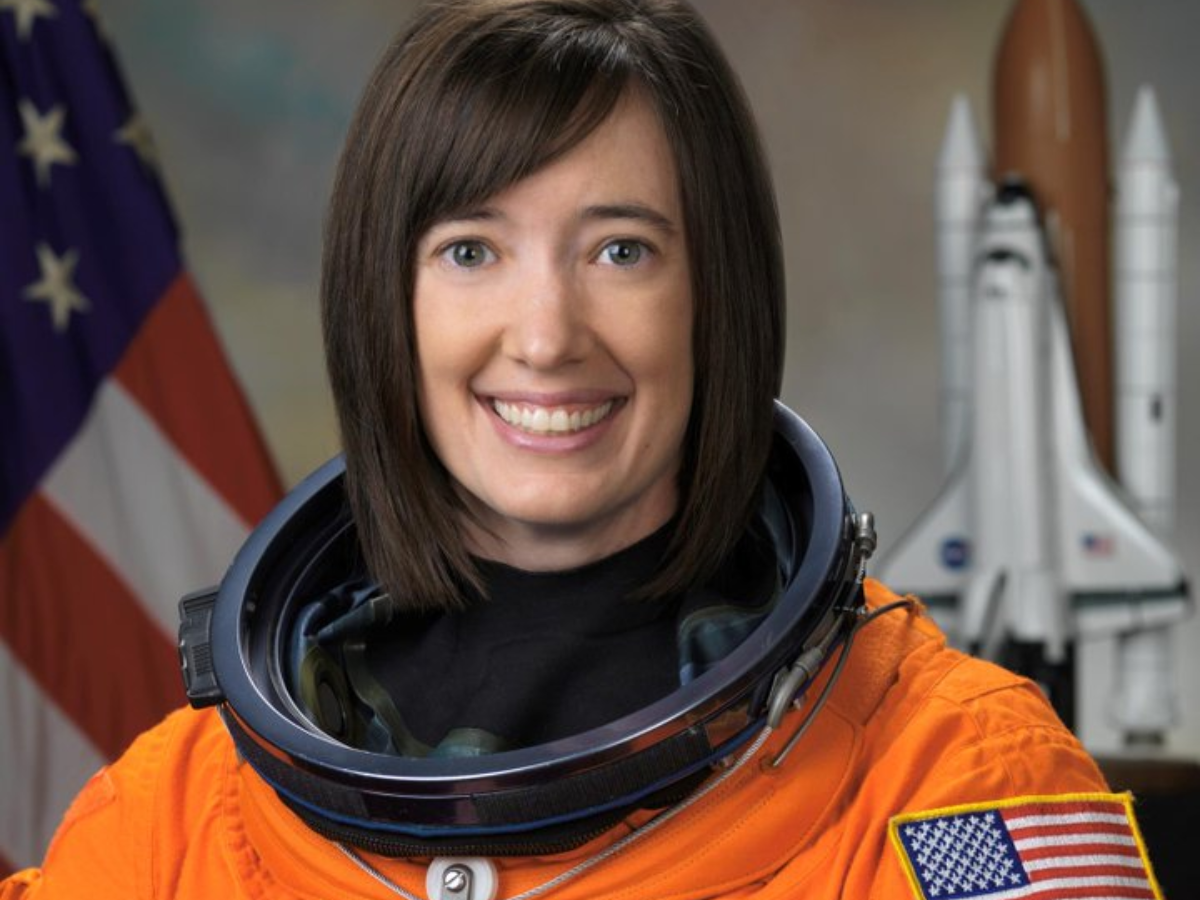
Megan McArthur was born in Honolulu, Hawaii and spent most of her childhood traveling around the world within the Navy family. Moving from place to place coupled with the culture exposure gave her that keenness of adaptability, which when combined with her burning interest in science, formed the essence of this exceptional career.
She received her bachelor’s degree in aerospace engineering from UCLA before embarking on a doctoral degree in oceanography from the Scripps Institution of Oceanography at the University of California, San Diego. This rare blend of engineering expertise and Earth sciences gave McArthur an uncommon view one which later influenced her contributions to research and exploration in space.
Farewell to a trailblazer! Megan McArthur closes out a legendary career. 👩🚀
NASA astronaut Megan McArthur has retired, concluding a career spanning more than two decades. A veteran of two spaceflights, McArthur logged 213 days in space, including being the first woman to pilot a… pic.twitter.com/oxJenGyyIu
— NASA’s Johnson Space Center (@NASA_Johnson) August 29, 2025
ALSO READ: Rectangular Telescopes to Unlock the Mystery of Earth Like Worlds: A New Shape for Discovery
Megan McArthur: From Hubble Servicing to SpaceX Milestones
The 2009 launch of Space Shuttle Atlantis on STS-125 the last servicing mission to the Hubble Space Telescope marked McArthur’s first in space experience. McArthur was actively involved in controlling the shuttle robotic arm during five arduous spacewalks for the recovery and enhancement of the telescope. Consequently, Hubble went on to make revolutionary scientific discoveries well into the next decade.
More than ten years later, McArthur returned to space in 2021 as the pilot of SpaceX’s Crew-2 Dragon mission to the International Space Station (ISS), having become the first woman to pilot the Dragon spacecraft with 199 days spent in orbit for the mission. That was a significant milestone for herself but also a statement of progress for commercial crewed spaceflight and women in aerospace.
Leadership and Contributions Beyond Flight
McArthur’s impact at NASA went beyond her time in orbit. As an assistant director of flight operations for the ISS Program and she coordinated astronaut teams and mission operations. Later, as deputy division chief of the Astronaut Office and she influenced astronaut training and the preparation of upcoming crews.
ALSO READ: Bermuda Triangle Mystery Cracked with Stunning New Theory: Scientists Drop Groundbreaking Claim
Her leadership stretched beyond NASA’s core missions. In 2022, she became chief science officer at Space Center Houston, helping to bridge the gap between cutting-edge research and public engagement. In this role, McArthur emphasized the importance of science communication and encouraged students, teachers and the lay public to regard space exploration as a joint human venture.
Family, Legacy and Lasting Impact
McArthur is married to fellow astronaut Robert Behnken, who in 2020 made history as a participant in SpaceX Dragon’s first crewed mission. Together with their son, they represent one of NASA’s most inspirational astronaut families.
McArthur’s retirement brings to a close a career that spanned over two decades, characterized by resilience, precision, and trailblazing achievements. She showed that astronauts are not only explorers but also scientists, engineers, leaders and role models. From the repair of Hubble instruments to piloting next-generation spacecraft, she has indelibly marked the field of human spaceflight.
As McArthur begins the next part of her life, her influence continues to reverberate around the scientific community, NASA missions and education programs. Her story speaks to how passion, preparation and perseverance can reshape the frontiers and inspire a future generation to keep reaching for the stars.
ALSO READ: Petralona Skull Mystery Solved: 300,000-Year-Old Fossil Confirmed as Hominid After 60 Years