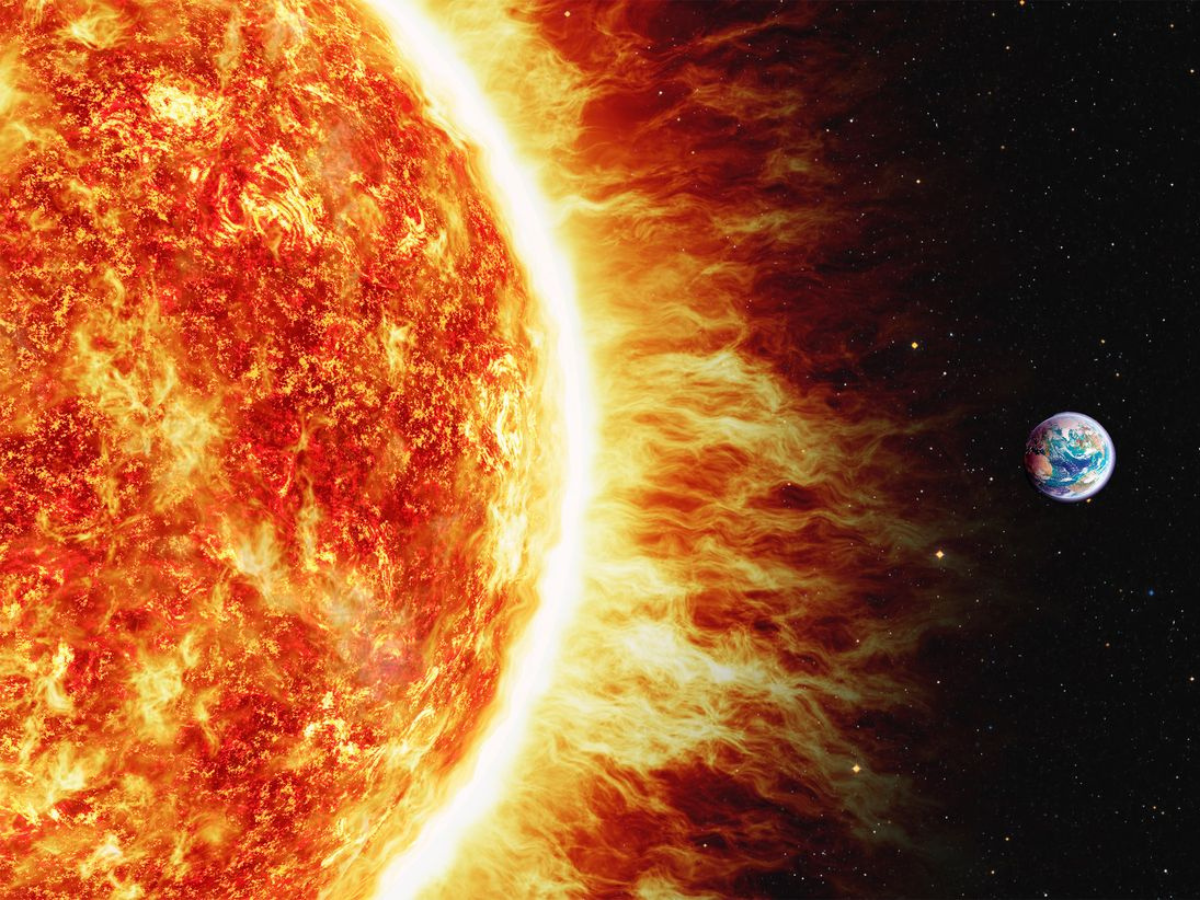
Researchers in Brazil’s National Institute for Space Research detected surprising links between solar activity and human health. INPE researchers have discussed the abnormal involvement of space weather causing heart attacks in women. NASA has warned that between the looming increase in solar activity; there is a greater likelihood of more severe solar storms occurring in the weeks ahead.
Most of the dialogue has been focused on the technological manifestations of geomagnetic storms interruptions of communication and enumeration of satellite malfunctions. This new study demonstrates more distressing physiological consequences and primarily for women the possibility of heart attacks.
How the sunlight comes from the Sun with the potential of snowballing?
The solar flares of radiation and coronal mass emissions comprise charged particles interact with the Earth’s magnetic field and remain confined from being ionized in the lower atmosphere. This influence extends up to the limits of the earth’s shielding, the magnetosphere threatened by solar flare emissions or releases. A disturbed magnetosphere may absorb the ionization along with several health complications.
ASLO READ: How Magnesium Supplements Could Reduce Colorectal Cancer Risk Through Gut Health
It turns out that any DE changes of the low-frequency spectrum in the field would also affect the chemical reactions between the signal and moonlight and the secretion of electrophoretins. Such functional changes are likely to have serious repercussions on cardiovascular regulation, blood pressure and heart function.
Some three times more cardiac arrests, on days of heightened geomagnetic activity, have been observed in women between the ages of 31 and 60. Further health vulnerabilities for exposed people include increase in UV exposure and the obstructive consequences for asthmatics.
what is Solar Storms & Heart Attacks?
In the study, the categorization of days was undertaken into quiet, moderate, or disturbed according to analysis with the Kp-index, in comparison with hospital records of hospital admissions and geomagnetic activity. Women had a statistically higher rate of hospital admissions on days classed as disturbed in the study compared with quiet days, suggesting quite a sharp increase on such days.
Risk factors that might predispose women to a stress induced cardiovascular event might include different hormonal levels or sharp increases in vascular tone or the presence of other cardiovascular disorders. The study thus very strongly implies that solar storms were previously ignored as a strong trigger of cardiovascular events.
ASLO READ: Liver fat, not weight, predicts health risks in children with obesity, scientists say
At what aged Women get Heart Attack?
Observational data revealed that women in the age group 31–60 had an exceptionally high number of hospital admissions and in hospital mortality on days when there were high geomagnetic disturbances. Comparable results were not seen for men with a greater number of total heart attacks there always remained a bigger number of events in men.
It highlighted the need for development and testing of more nuanced public health measures whose focus is not purely on biological and traditional risk calculations but instead include consideration of specific environmental factors.
Preventive Measures & What an Individual Can Do
Solar activities are an unstoppable process but the one who needs preventive measures can exercise them the existing heart condition. This behavior encompasses using existing medical prescriptions and drugs, limiting heavy-duty physical labor when the sun is more likely to surge solar storms and early recognition of symptoms.
It is including a future space weather alert in health advisories could prove helpful in mitigating the cardiovascular risks. The study is observational and does not definitively establish causation and the study highlights one more time the potential role of environmental factors in cardiovascular health management.
ASLO READ: Why the Moon is Rusting & Turning Red: Earth’s Role Explained by Science
Disclaimer: This article is for informational purposes only. Consult a healthcare professional for advice on heart health and prevention during solar storms.