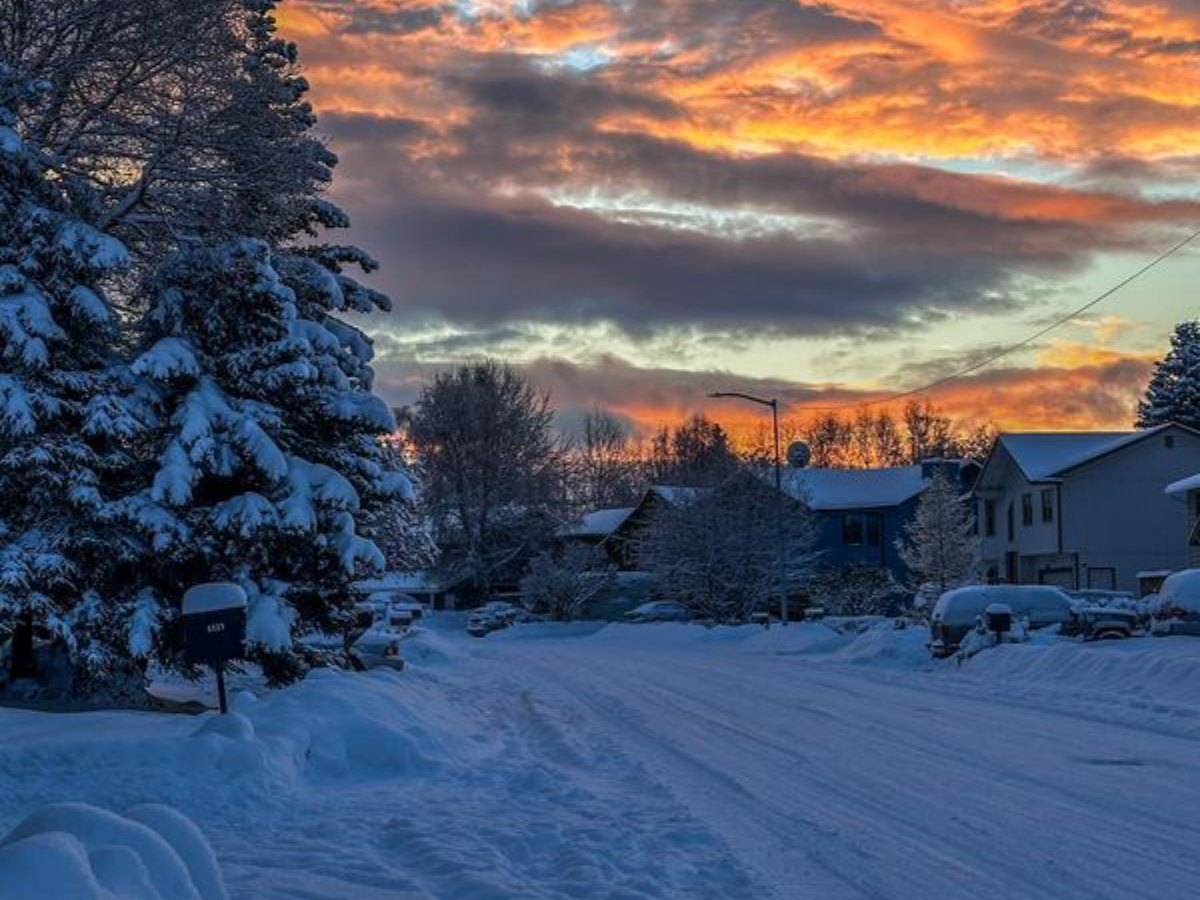
As winter tightens its grip on the Arctic, Utqiagvik, Alaska has slipped into one of Earth’s most dramatic natural events. The town witnessed its final sunset of 2025 and has now entered Polar Night, a 64-day stretch in which the Sun never rises above the horizon.
For America’s northernmost community, the season means more than just darkness: It forms routines, shapes the environment and even influences weather far beyond Alaska.
What is the Science Behind Polar Night
Utqiagvik sits well above the Arctic Circle, where Earth’s axial tilt causes long, uninterrupted periods of darkness each winter. Even though direct sunlight disappears, the town isn’t completely blacked out.
Civil twilight soft blue light that lingers before dawn-still offers a few hours of gentle illumination. This limited natural light becomes essential for daily life when true daylight won’t return until January 22, 2026.
Life in America’s Northernmost Town
It has a population of about 4,400 and lies hundreds of kilometres northwest of Fairbanks, both holding Indigenous heritage and archaeological sites dating back to about the year 500 CE.
ALSO READ: Who is Vikram ‘Vik’ Bajaj? The MIT Scientist Now Leading Project Prometheus With Jeff Bezos
The darkness of winter brings temperatures that bite, a chill deepened by the absence of heating from daylight, defining Arctic life and the community finds rhythm in a world where sunrise is months away.
How Polar Night Shapes Weather Beyond Alaska
This extended lack of sunshine affects more than just local conditions. The darkness helps create the intensity of the Polar Vortex, a giant reservoir of cold air high in the stratosphere.
Sometimes perturbations in that circulation send blasts of Arctic cold southward, bringing intense winter weather to the continental United States. What happens in Utqiagvik does not stay in Utqiagvik, it ripples through North American climate patterns.
ALSO READ: How the Sun Escaped Its Birth Cluster: New Clues from the Solar System’s Edge
A Land of Extremes: From Dark to Light
If the winter months test endurance, the summer months reward it. When the seasons flip, Utqiagvik enjoys almost three straight months of sunlight. Continuous daylight supports everything from outdoor activities to Barrow High School’s football team-the northernmost in the country-highlighting how life continues even under extreme skies.
How will the Sun Return
With Polar Night setting in, weeks of twilight, bright auroras, and no sunshine await them. The annual cycle is a reminder of the extraordinary adaptability of Arctic communities, as well as the remarkable influence of Earth’s tilt on human experience.
When the first sunrise breaks at the end of January in 2026, it will mark not just the return of daylight, but the renewal of the region’s seasonal rhythm.
ALSO READ: Nasa to Unveil New Images of Interstellar Comet 3I/ATLAS Entering Our Solar System
Disclaimer: Information is based on available reports and scientific understanding of Arctic seasons. Events and timelines may vary due to environmental conditions.