Rocket Lab has just made a serious move to disrupt the commercial launch landscape. The company’s new-generation rocket, Neutron, has just passed all its qualification tests and is positioning itself as a possible competitor to SpaceX’s Falcon 9.
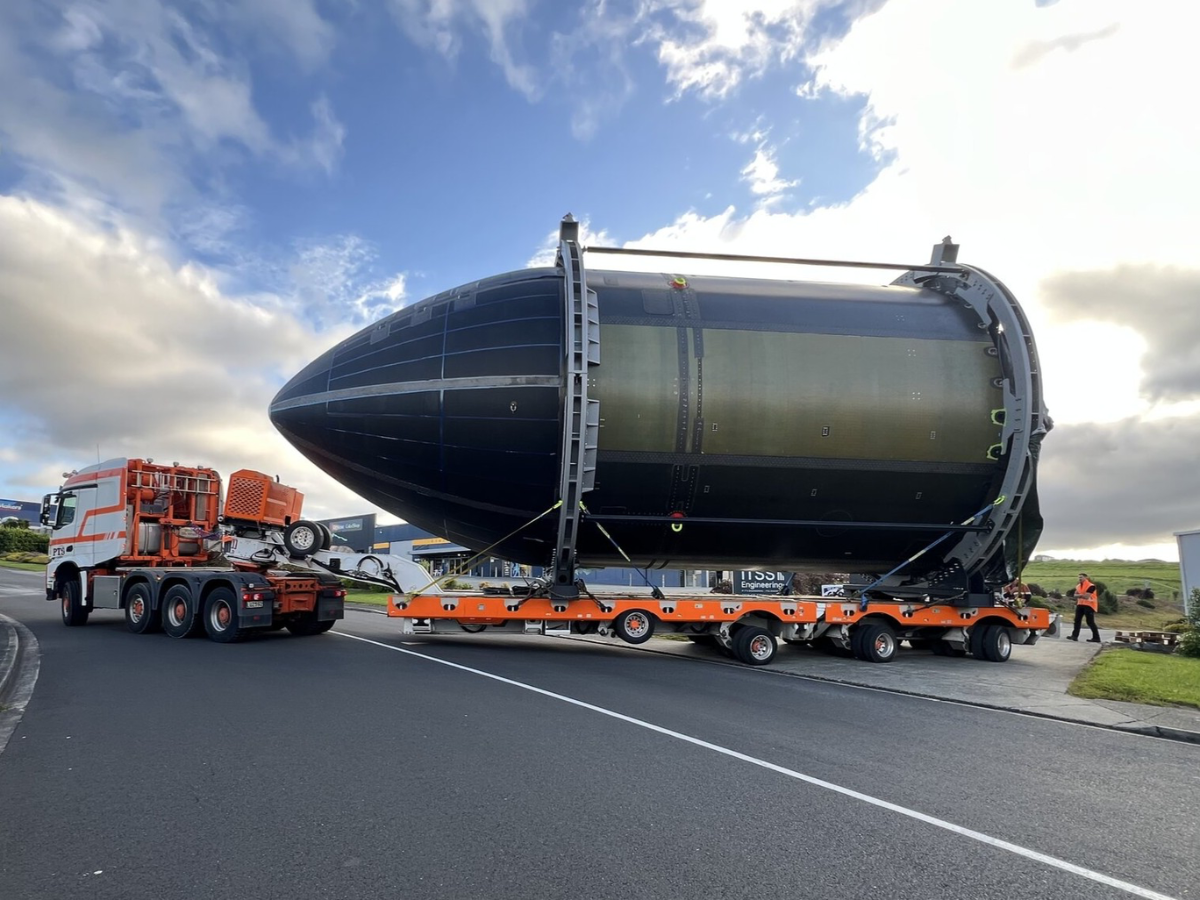
Hungry Hippo is on the move 🦛 With qualification and acceptance testing complete, Neutron’s fixed reusable fairing and upper module is on its way to LC-3. pic.twitter.com/SlRwCjMYkP
— Rocket Lab (@RocketLab) December 9, 2025
Designed as a partially reusable medium lift vehicle, Neutron marks Rocket Lab’s transition from launching small satellites into more ambitious missions that require higher payload capacity and reusable architecture.
What Makes Neutron Different
What sets Neutron apart from most of the rockets flying today is its unorthodox fairing system. Instead of jettisoning its fairing halves like most launch vehicles, Neutron deploys a clamshell style structure that opens to deploy the second stage and payload before then closing again.
That mechanism shields important components and enables the first stage to return intact. The concept is simple yet bold, offering a fully integrated recovery approach to reduce hardware loss and cut recurring launch costs.
How Neutron Stacks Up Against Falcon 9
SpaceX’s Falcon 9 remains the gold standard for reusable rockets. Its proven recovery method brings the booster back to land while fairing halves splash down separately.
Neutron counters this with a smaller payload capacity but a more unified reusability design instead of shedding multiple pieces midflight, the rocket keeps its primary structure together for a streamlined return. This can give Rocket Lab the edge in cost efficiency for medium class missions.
Technical Strength & Testing
Rocket Lab bills Neutron as the largest carbon-composite launch vehicle ever built. Before moving on to the launch site, the fairing underwent stress tests with forces of almost 275,000 pounds and opening and closing cycles repeatedly to confirm mechanical robustness.
ALSO READ: Baba Vanga & Ryo Tatsuki Predictions: Which 2025 Prophecies Actually Came True?
Static fire testing of the nine Archimedes engines remains, at the Mid-Atlantic Regional Spaceport in Virginia. These would prove how Neutron performs as a whole, flight-ready system.
What Neutron will meet in Future
If Neutron meets its projected launch window early next year, Rocket Lab will join a market long dominated by larger players. The project marks a new phase for the company, beyond its niche in launching small satellites to broader competition in orbital transport.
With innovation in both reusability and cost-cutting, Neutron could turn out to be a real disruptor in the global space industry.
ALSO READ: Geminid Meteor Shower 2025: Date, Timings, Visibility in India, USA, Canada & Best Phones to Capture
Disclaimer: Information is based on current updates from Rocket Lab and industry sources. Technical details may change as Neutron advances toward its first flight.