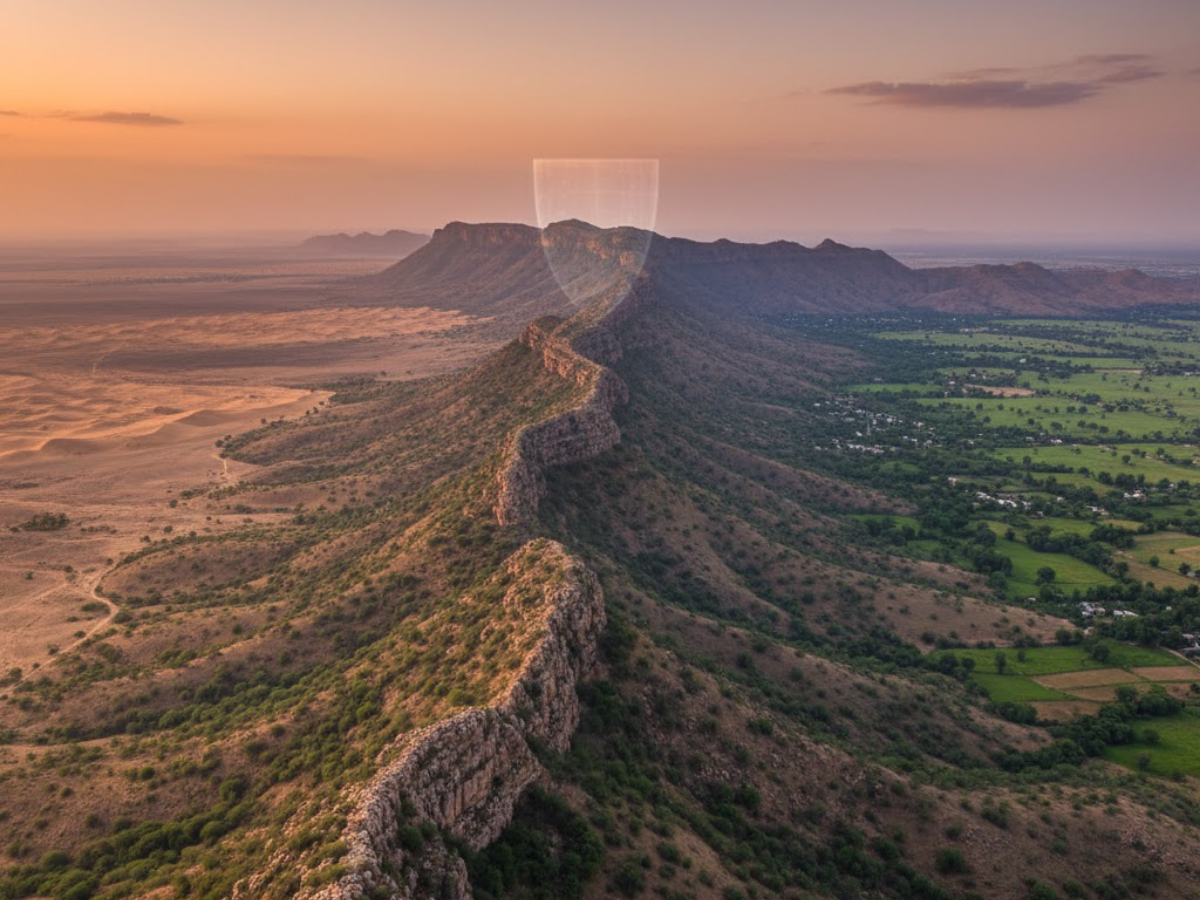
Aravalli Hills: The government has rejected fears that the new definition of the Aravallis may open up the range to large-scale mining, pointing out that more than 90% of the uplands will continue to remain protected.
The Centre has claimed that the new definition has resulted in an improved framework regarding the protection of the environment that has been approved by the Supreme Court and the ongoing ban on mining on new lands. Amidst increasing discussions on the definition of the Aravallis, it has become the need of the hour to know about the nature and importance of the range.
What is the Aravalli Range
The Aravali range is one of the oldest mountain ranges in the form of a fold mountain, which was created approximately two billion years ago. Extending from Delhi to the Haryana, Rajasthan, Gujarat, to almost Ahmedabad, it stretches some 670 to 700 kilometres in length, making this range the backbone in the northwestern part of India by nature.
Though not as high as the Himalayas, its average elevation of 600 to 900 metres and the tallest point, Guru Shikhar at 1,722 metres, make it geographically very significant.
Aravalli Hills: Geography That Affects the Surface of the Earth
In the northern part, the Aravalli range is seen as broken ranges of rocks in the southern part of Delhi and Haryana. In the southern part, it appears and becomes more substantial, dividing Rajasthan into two clear parts of the Thar Desert in the western part and the fertile land of the eastern part.
ALSO READ: India–New Zealand Announce Free Trade Agreement Boosting Trade & Investment
It is divided into two parts by geologists: the northern ranges, which are highly eroded and the southern ranges, which are higher and hillier.
Aravalli Hills: A Window on Early Earth’s History
The Aravalli Supergroup holds geological history that dates back around 2.5 billion years. Primarily made up of Archaean-era Aravalli Gneisses, Granites, as well as Aravallis Quartzites, this mountain range offers valuable information on the formation of the oldest Earth crust known.
This geological structure dates back to what is commonly referred to as the oldest known onshore area within the Indian subcontinent. Such locations include the erstwhile territory of Chittorgarh, Rajasthan, as well as Bhadesar.
Aravalli Hills: Ecological Shield of North India
The significance of the Aravalli Hills transcends geological values. To Delhi and the National Capital Region around it, the Aravalli Hills provide a natural air filter and heat regulator.
ALSO READ: Solar Eclipse 2026: Dates, Timings, Where to See It & How to Watch Safely
At the national level, the Aravalli Range serves as a land barrier that prevents the advance of the Thar Desert into the farmland of Haryana and Uttar Pradesh. The range contains animal and plant life varying from the leopard to bird species to some rare plant species.
Aravalli Hills: Protection, Policy & the Future
‘Until a comprehensive management plan is finalized, no further mining activities will be allowed and this highlights that the court realizes the danger of illegal mining and tree cutting,’ he explained.
As the Aravalli ranges support the Chambal, Luni and even the Sabarmati rivers, ensuring that the Aravalis are protected is of utmost importance to ensure water security and even heritage preservation. Protecting this ancient range of mountains, in fact, has become an imperative in the future of India, as their preservation can ensure that the country’s heritage lives on.
ALSO READ: Lunar Eclipse 2026: Date, Time, Visibility, How to Watch & Why the Moon Turns Red
Disclaimer: This article is for informational purposes only and reflects publicly available data and policy statements at the time of writing.