Congress leader and leader of opposition Lok Sabha Rahul Gandhi grabs attention in a new controversy this week after his dramatic “vote chori” charges, his high-profile appeals to Gen-Z youngsters, along with a sharp “not my job to save democracy” statement. The drama has refreshed old controversies about his political strategy, the authenticity of his accusations, and the overall plan of Congress as a national opposition.
Vote Chori Jab: Data and Drama
Gandhi lifted his attack on the Election Commission and made charges of systematic voter deletion, particularly in Karnataka’s Aland constituency, where he gave instances of software-based bogus applications deleting hundreds of names. The Congress leader termed it a “direct assault on democracy,” showing what he said was clear evidence but withholding a promised “hydrogen bomb” revelation for another day. He also alleged the CEC of covering up the guilty ones and sought official statistics on digital deletions. The Election Commission was quick to reject these charges and both BJP and critics claimed the campaign as a cover-up for Congress’ electoral failures.
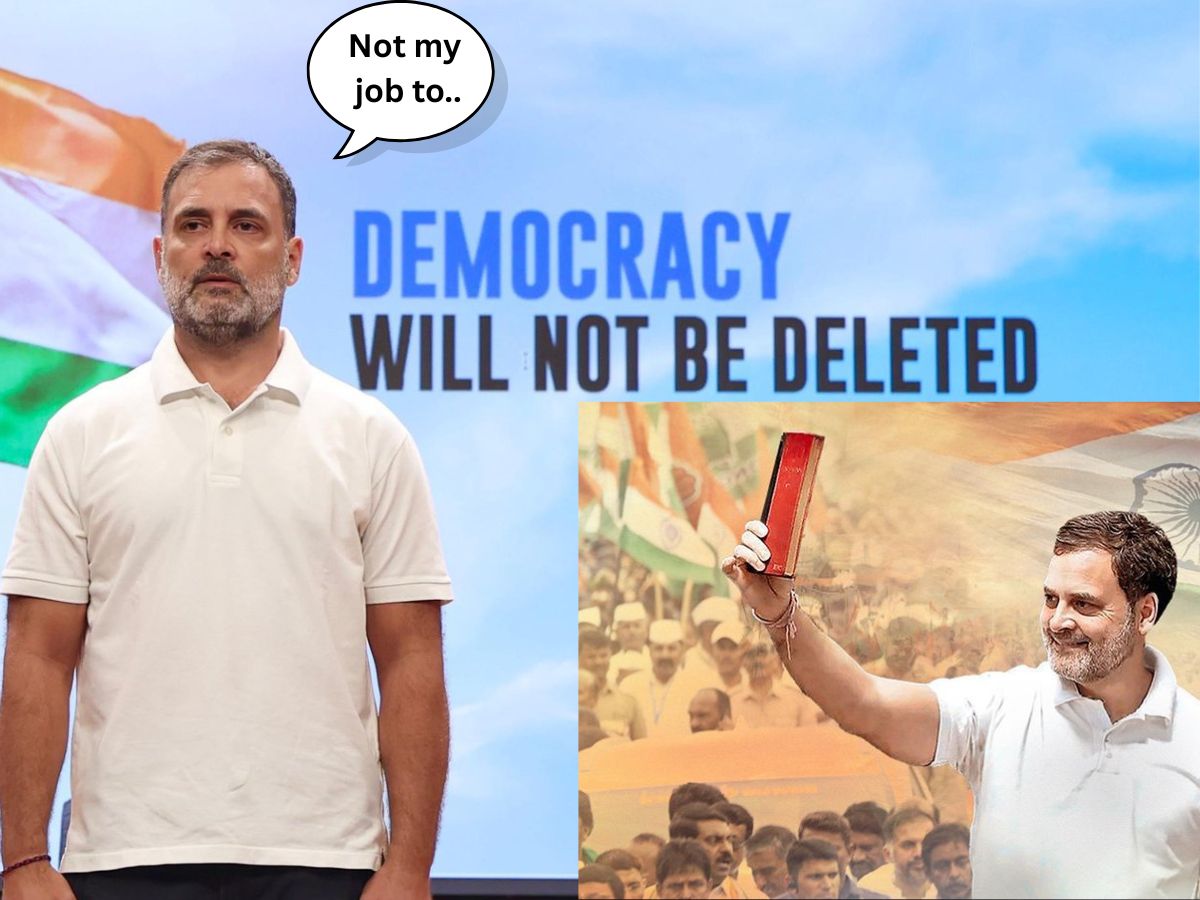
Not My Job to Save Democracy
Further escalating the controversy, Rahul Gandhi told reporters, “Saving democracy is not my job,” suggesting that the responsibility for protecting democracy rests with institutions and government. Critics, including spiritual leader and ex-Congress politician Pramod Krishnam, critisiced him for avoiding accountability and “discrediting constitutional institutions,” urging him to take legal action rather than sprinkle unsubstantiated grievances in the media every now and then.
Gen-Z Spotlight and Political Optics
Gandhi’s call to students and Gen-Z to “save the constitution and stop vote theft” marked a clear attempt to rally younger voters ahead of impending state and general elections. Though his outreach to youth signals tactical awareness of changing electoral demographics, BJP leaders have alleged that this is a destabilising ploy, warning of chaos akin to recent youth protests in Nepal and Bangladesh. Critics assert that Gandhi’s remarks reveal a pattern of hit-and-run politics, lacking steadiness and discipline expected of a national opposition leader.
BJP and Critics’ Interpretation
The BJP, led by leaders like Ravi Shankar Prasad and Anurag Thakur, strongly dismissed Gandhi’s accusations as “insulting the voters and the Constitution,” asserting that repeated court rebukes and failed bombs have eroded his credibility. They argue that these stunts expose a lack of faith in institutions and represent loose, reactive politics out of step with the requirements for winning elections in a mature democracy.
Nutshell
Rahul Gandhi’s rhetorical escalation has again put the Congress campaign in the spotlight for controversy rather than constructive opposition. As calls grow for the INC chief to show more balance, awareness, and electoral focus, his recent statements risk undermining the party’s efforts to reassure voters and build broad-based support ahead of crucial state and national contests.