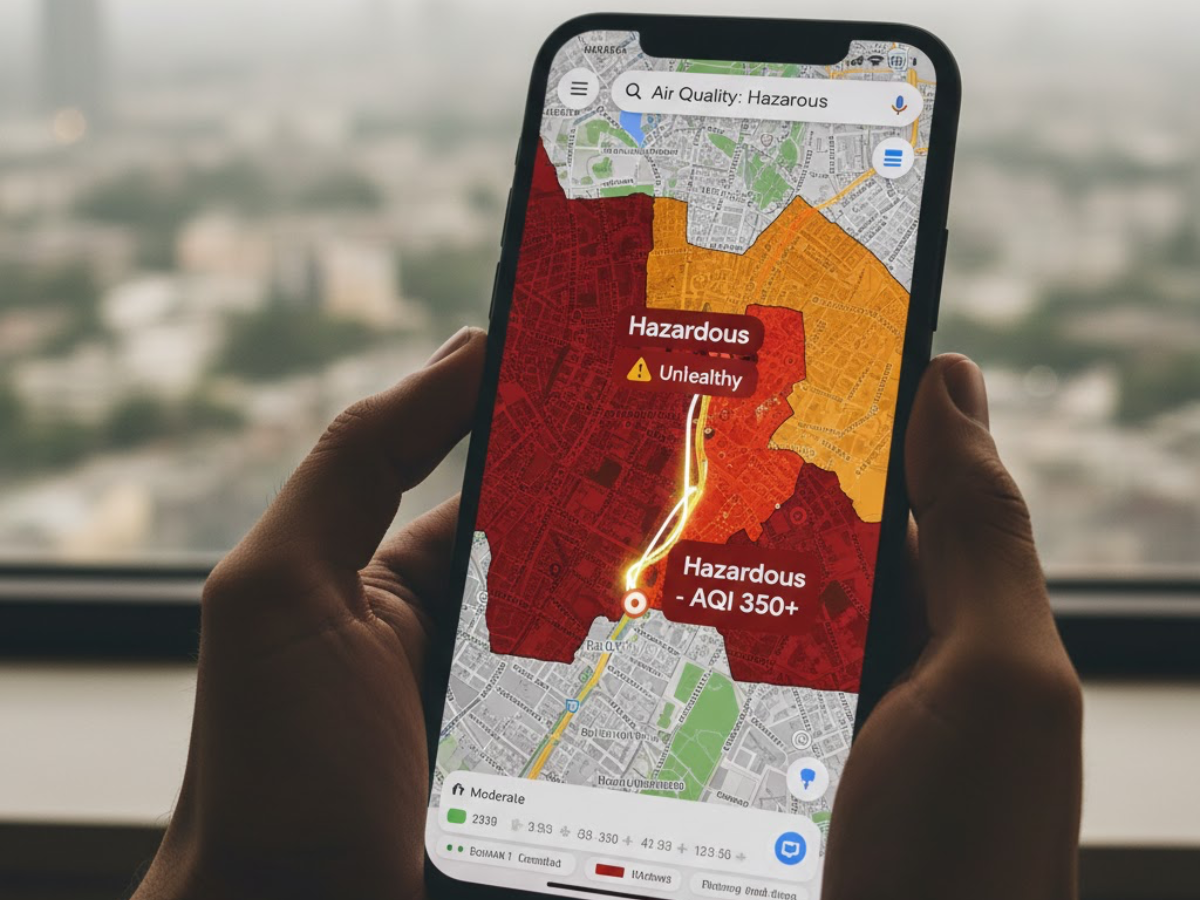
The winters have just set in, and cities across India are again fighting choking pollution. Delhi tops the chart, which recorded an AQI of 435 early Tuesday morning in the severe range. Due to the highly variable pollution levels hour after hour, people now seem to be using real-time air-quality tools before stepping out.
Google Maps has become a practical companion because it now provides live AQI data right on its interface. The feature is accessible both on desktop and mobile, enabling users to easily track pollution on a color scale from good to hazardous.
From planning exercise outdoors to knowing if kids can safely go outside to play, this feature will allow users to be more circumspect about everyday routines.
How to check AQI on Google Maps?
- Update your app through the Play Store or App Store and make sure you have the latest available version.
- Open Google Maps on your device or go to maps.google.com if you are using a desktop browser.
- Use the search bar to search by city, neighbourhood or specific address. You can also zoom in on your location manually.
- Tap the layers icon, which typically consists of a stack of small squares.
- Select the Air Quality option from the menu.
- Color-coded pollution levels for your chosen place will be displayed on the map.
- Click on any shaded area or AQI label to see detailed readings and associated health guidance.
How Google Maps Displays Air Quality
- AQI information is updated hourly to reflect changing conditions.
- Google Maps uses a 0–500 scale, with smaller numbers representing cleaner air.
- The color scheme includes green for good, yellow for satisfactory, orange for moderate, red for poor, purple for very poor and maroon for severe.
- Tapping on a region shows the precise AQI value, plus other information on pollutants.
- The feature lets users determine if it is safe to travel, exercise outdoors or take preventive steps like masking.
Why Checking AQI Matters in Winter
- Winter traps pollutants because of low wind movement and temperature inversion.
- AQI levels can spike sharply in the early morning and late evening.
- High pollution especially affects children, older adults and people with respiratory conditions more severely.
- Knowing the AQI helps families plan safer outdoor routines.
- It encourages people to mask up, avoid peak smog hours and monitor their health more closely.
ALSO READ: UK Autumn Budget 2025: What is Sugar Tax in UK? Target Milk Drinks Amid Rising Childhood Sugar Intake
Disclaimer: Information provided is for general awareness and should not replace official air-quality advisories or medical guidance.