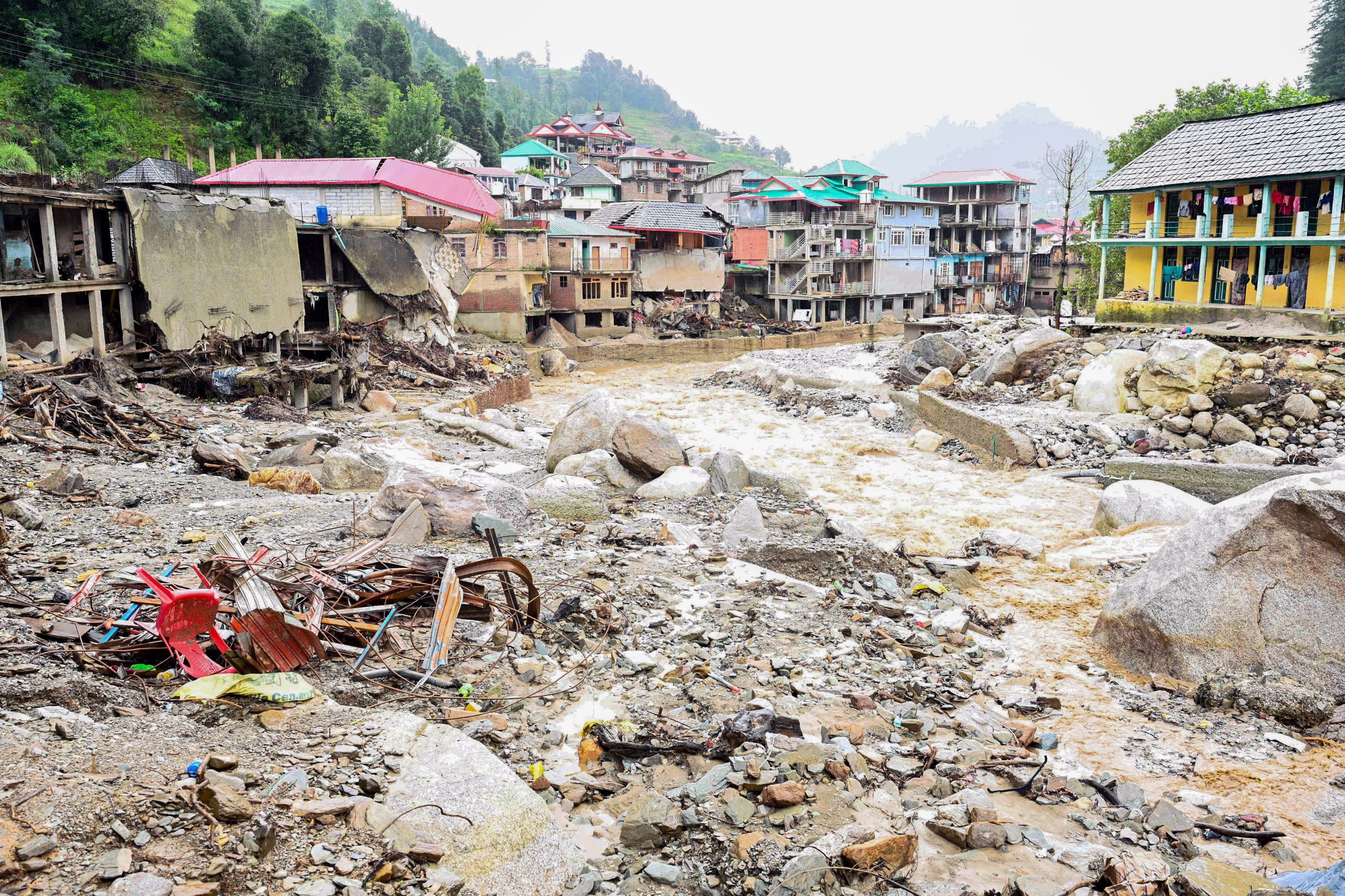
Relentless monsoon rains have unleashed widespread devastation across Northeast India, claiming dozens of lives, displacing thousands and crippling infrastructure from the floodplains of Assam to the rugged hills of Arunachal Pradesh, Nagaland and Sikkim. What began as early flash floods in late June has now grown into a multi-state disaster, with fresh landslides and a deadly tunnel collapse in Sikkim adding to the mounting toll.
The latest tragedy struck Sikkim on July 21 when a landslide hit the under-construction Samardung tunnel in Namchi district, part of the NHPC Teesta Stage VI project. The landslide blocked the tunnel entrance, trapping workers inside and triggering a suspected methane gas leak. The death toll stands at 7-10 confirmed, while more than 20 people are feared trapped. Rescue teams from the National Disaster Response Force (NDRF), State Disaster Response Force (SDRF) and other agencies are continuing operations despite difficult and hazardous conditions.
Sikkim Chief Minister Prem Singh Tamang is monitoring the rescue efforts. He thanked Prime Minister Narendra Modi for personally calling him and assuring full support from the Centre. Tamang said the Prime Minister’s “words of concern and compassion… have provided immense strength and reassurance.”He also confirmed that he is “closely monitoring the rescue mission,”while directing all departments to speed up rescue operations, assist affected families and ensure safety standards are maintained. He further appealed to the public to remain calm and avoid spreading unverified information.
In Assam, the first major flood wave of the 2026 monsoon, triggered by heavy upstream rainfall in Arunachal Pradesh, has submerged villages, damaged vast stretches of agricultural land and disrupted road and rail connectivity. According to the Assam State Disaster Management Authority (ASDMA), more than 45,000 people across districts including Dhemaji, Dibrugarh, Lakhimpur and others have been affected in the latest spell of flooding, with Dhemaji emerging as the worst-hit district.
The situation in Dhemaji remains severe as swollen rivers, including the Kemi and Simen, overflowed their banks. A 300-metre iron bridge was washed away, cutting off road communication, while the historic 1965 railway bridge over the Simen River partially collapsed due to severe bank erosion, disrupting train services. The floods have also resulted in the loss of tens of thousands of livestock, while relief camps have been opened for affected residents.
Assam Chief Minister Himanta Biswa Sarma said the government was closely monitoring the situation and extending all possible support to affected families. He said, “Since the flood situation has unfolded in Dhemaji, I’ve been closely monitoring the situation. We are deeply saddened by the impact it has had on the lives of our people and in this difficult time, we firmly stand with them.”
He further said, “We are deploying a whole of government approach and mobilising all our resources to prioritise the immediate safety and long term rehabilitation of all families affected… We are leaving no stone unturned to mitigate the impact of these floods on our people.” Sarma also thanked Union Home Minister Amit Shah for assuring central assistance and requested the Indian Army and the Indian Air Force to remain on standby for possible evacuation operations in vulnerable districts such as Sivasagar, Charaideo and Jorhat.
Arunachal Pradesh was among the first states to be hit by the monsoon in late June after a cloudburst in Keyi Panyor triggered flash floods and landslides. The disaster killed at least three people, damaged houses and cut off several districts from the rest of the state. Rescue operations carried out by the NDRF, the Indian Air Force and local residents helped save many stranded people.
Expressing concern over the disaster, Arunachal Pradesh Chief Minister Pema Khandu said, “My thoughts and prayers are with all those affected and the families anxiously awaiting news of their loved ones.” He also assured that “all concerned agencies… are actively engaged in rescue and relief operations. Every possible assistance is being extended to those affected,” while noting that he was personally monitoring the situation and coordinating with central agencies. The state government also announced ex-gratia payments for the families of those who lost their lives, while aerial surveys were conducted with Union ministers to assess the damage.
Nagaland also witnessed severe destruction on July 19-20, when intense rainfall triggered massive landslides in Mon district. At least nine people were killed and several others were injured after houses were buried under debris. Roads were blocked and flash floods were reported from different parts of the state.
Nagaland Chief Minister Neiphiu Rio expressed grief over the tragedy, saying, “Deeply distressing reports of heavy landslides in Mon. My heartfelt condolences to those who’ve lost loved ones.” He announced immediate ex-gratia assistance of Rs 4 lakh for the family of each deceased person and Rs 74,000 for the injured. Rio also assured that “the government will extend immediate ex gratia assistance to the families of the deceased and relief to all those affected” and that the situation was being closely monitored with all departments placed on high alert.
The widespread destruction across the Northeast highlights growing concerns over increasingly intense climate-related disasters. Experts point to more extreme rainfall, frequent landslides on fragile hill slopes and rising flood risks worsened by development activities and deforestation. The disasters have also affected agriculture, raised concerns over hydropower projects and disrupted economic activity across the region. With the India Meteorological Department forecasting more heavy rainfall, authorities continue to stress the need for stronger early warning systems, sustainable infrastructure and large-scale afforestation efforts.