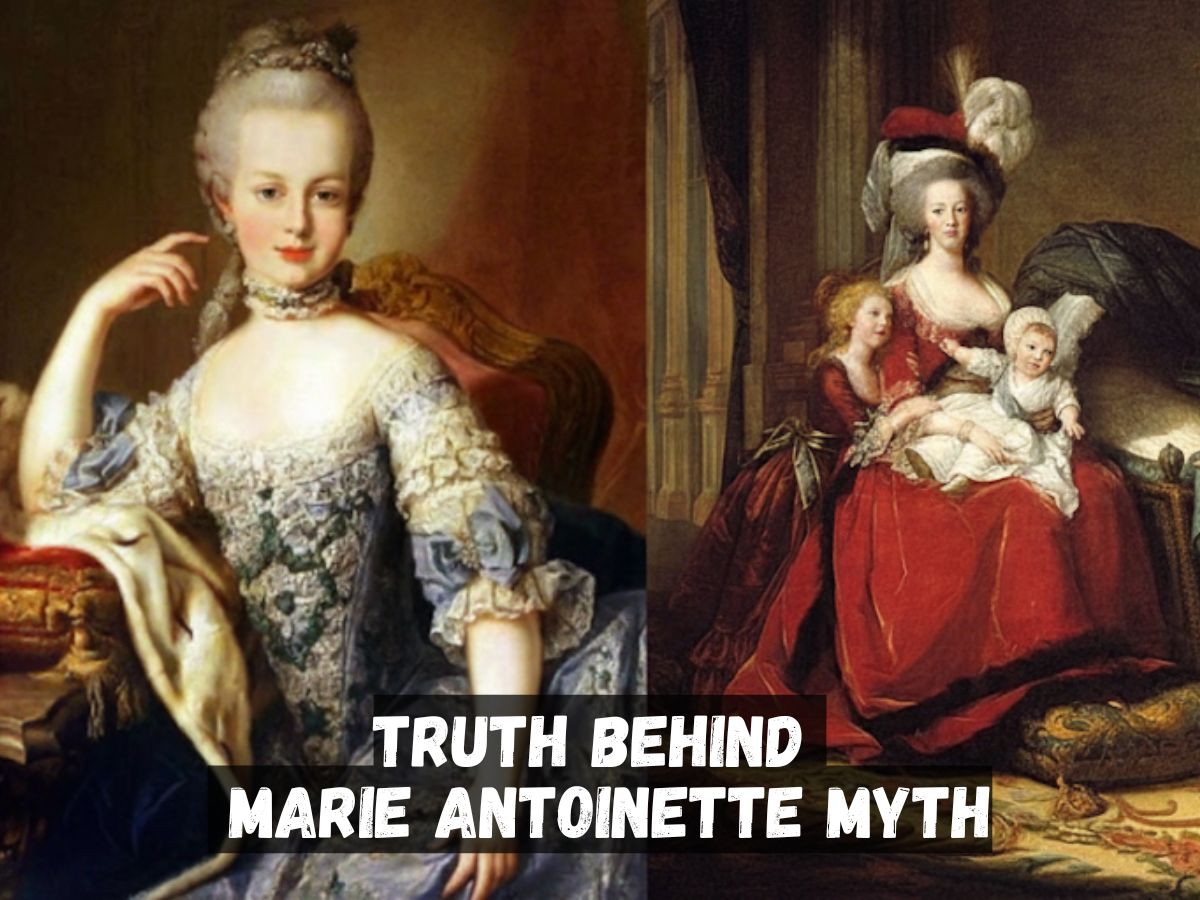
She was the queen who supposedly quipped “let them eat cake” to her starving subjects, a spendthrift libertine whose decadence helped topple a monarchy. For centuries, Marie Antoinette has been frozen in history as a villainess, her story ending on the cold steel of the guillotine. But what if we’ve been wrong all along? A major new exhibition at London’s V&A, Marie Antoinette Style, is on a mission to interrogate the myths and re-evaluate the legacy of the most fashionable and controversial queen in history.
Who Was the Woman Behind the Moniker?
She arrived at the French court as a 14-year-old pawn, a peace offering from Austria named Maria Antonia. Her mother, Empress Maria Theresa, warned, “All eyes will be on you.” That scrutiny, however, curdled into a uniquely cruel form of hatred. Married to the shy, medically hindered Louis XVI, the young queen was bored, isolated, and trapped in a gilded cage. Her response was to become a spectacle of another kind: a tastemaker whose vast, structural pannier dresses and towering hairstyles became her armor and her rebellion.
The exhibition peels back the layers of propaganda to reveal a more complex figure. Far from the “empty-headed idiot,” historians now argue she was “well-intentioned, generous and kind-hearted.” She recycled her wardrobe for her staff, adopted children—including Jean Amilcar, a Senegalese boy she freed from slavery, and gave generously to charity. The moniker “Madame Déficit” was a brutal misnomer; France’s bankruptcy was fueled by war spending, not her wardrobe. “It’s the spending on wars that is actually what bankrupts France,” says curator Dr. Sarah Grant. “Her wardrobe budget is the equivalent today of around $1 million, but France spent $11.25 billion on just the American War of Independence.”
Also Read: Erika Kirk Takes Helm of TPUSA After Charlie Kirk’s Murder, Pledging to Continue Husband’s Mission
What Are the Biggest Myths Being Debunked?
The show directly confronts the lies that sealed her fate.
“Let Them Eat Cake”: The most famous quote attributed to her is a complete fabrication. It appeared in Rousseau’s writings when she was just 10 years old and still living in Austria.
The Diamond Necklace Affair: A spectacular necklace of over 600 diamonds was fraudulently ordered in her name. Though she was completely exonerated at trial, the scandal cemented her public image as a woman of grotesque excess. A replica features in the show.
The Libertine Lifestyle: Pamphlets accused her of orgies, lesbian affairs, and incest. Curator Grant argues this was “all driven by misogyny.” In reality, she was reportedly quite prudish, rarely drank, and had only one known lover, Count Axel von Fersen.
Why Was She So Despised?
Marie Antoinette was the perfect storm of everything France had come to distrust. She was a foreigner—derogatorily called “L’Autri-chienne” (the Austrian bitch). She was a woman who dared to step out of the shadows and meddle in politics, secretly lobbying against constitutional reform. And she was a dazzlingly visible symbol of excess in a country starving for bread. She became a convenient scapegoat, her head the ultimate price to pay for the sins of an entire regime.
Also Read: Trump Hails Jimmy Kimmel Suspension as Critics Decry ‘Government-Instigated Censorship’
How Does Her Legacy Live On?
The exhibition brilliantly traces her enduring influence from the 18th century to the present day. It showcases opulent French Revival furnishings inspired by her style and, in a delicious modern twist, the frilly pink shoes designed by Manolo Blahnik for Sofia Coppola’s 2006 film. Blahnik, who remains “enraptured by everything about her,” sees the show as nothing less than “the re-vindication of Marie Antoinette.”
Her style—both the extravagant spectacle and the simpler, country attire she preferred at her rural retreat—has been endlessly echoed by icons from Madonna to Rihanna and designers from Dior to Moschino. Even her death created macabre trends: short “porcupine” haircuts and blood-red chokers suggestive of the guillotine’s cut.
The exhibition doesn’t ask us to forget her tragic end but to understand the complex woman who lived before it. It presents a figure who was not a monster, but a human being: a devoted mother, a misunderstood philanthropist, and a style icon whose story is a timeless cautionary tale about power, perception, and the price of being a woman in the spotlight.