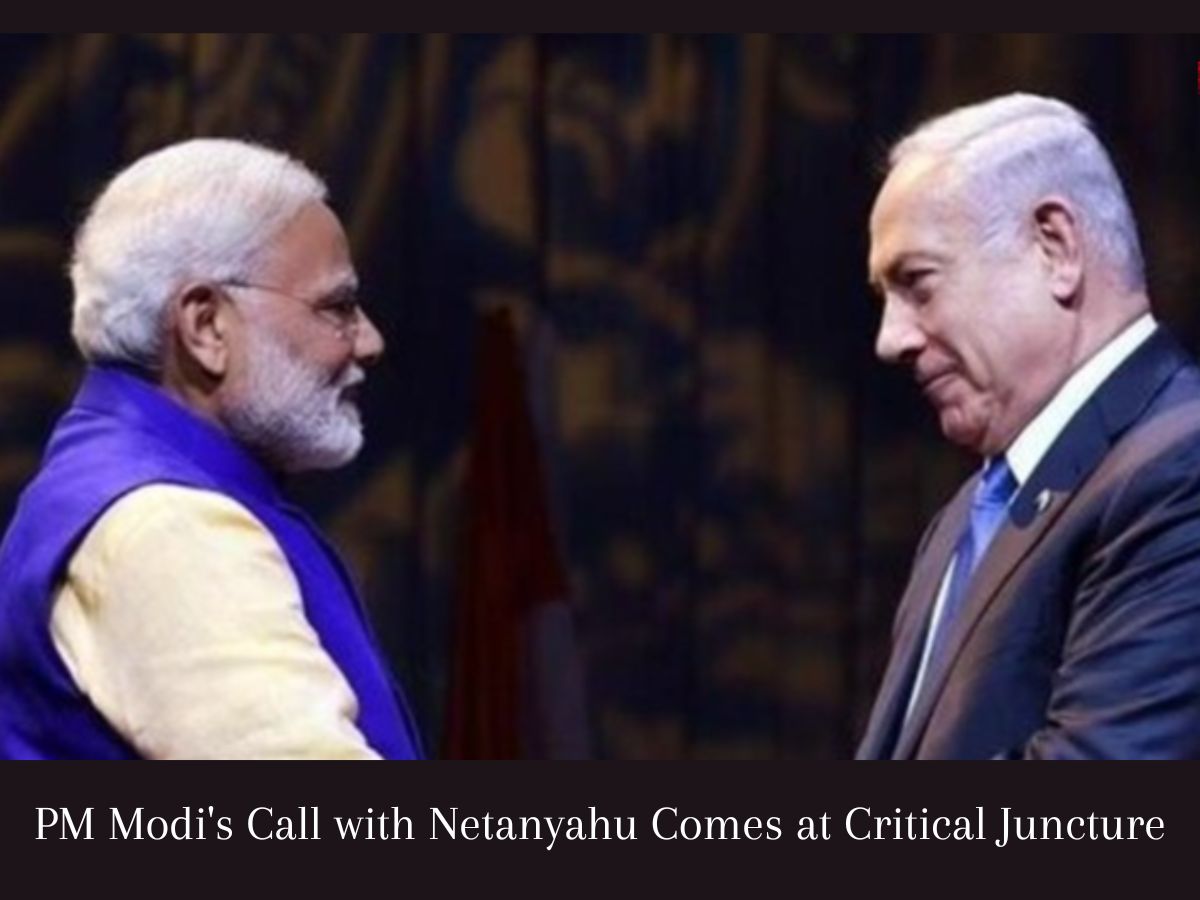
The telephonic conversation between Prime Minister Narendra Modi and Israeli Prime Minister Benjamin Netanyahu on Wednesday carries notable diplomatic significance, given the sensitive situation in West Asia. Their first interaction since October happened as Israel prepares for the next critical phase of the Gaza peace efforts, reflecting India’s active role in the region.
What Was Discussed in the Call?
According to a readout from the Prime Minister’s Office (PMO), the leaders covered bilateral ties and the pressing regional situation.
Key points from the conversation included:
- Gaza Peace Plan: PM Modi “reaffirmed India’s support for efforts towards a just and permanent peace in the area, particularly early implementation of the Gaza Peace Plan.”
- Bilateral Ties: Both leaders pledged to further strengthen the India-Israel Strategic Partnership and expressed pleasure with its current momentum.
- Terrorism: They “strongly condemned terrorism” and reiterated a zero-tolerance approach towards it in all forms.
- Future Engagement: They agreed to remain in touch, with Netanyahu’s office stating they have agreed to meet “very soon.”
Why is the Timing of This Call Significant?
The conversation is strategically timed ahead of imminent diplomatic moves concerning Gaza. U.S. envoy to the UN, Mike Waltz, stated on Wednesday that he expects “upcoming” announcements on advancing the peace plan, which includes a technocratic Palestinian authority and an international stabilization force.
Netanyahu also confirmed he will meet U.S. President Donald Trump later this month, stating that the second phase of the plan is “close.” By speaking directly with Netanyahu at this point, PM Modi ensures India’s views are included at this early stage, strengthening India’s steady call for dialogue and a two-state solution.
How Does Netanyahu View the India Relationship?
Netanyahu publicly touted his strong connection with PM Modi just two days before the call. During a heated parliamentary debate on Monday, he cited his frequent conversations with his “old friend” Modi as evidence of Israel’s growing international support despite global criticism.
He emphasized, “India, a huge country with a billion and a half people, also wants to strengthen ties with us,” framing the relationship as a major diplomatic asset. This public acknowledgment underscores the partnership’s strategic value for Israel.
Also Read: Author Sophie Kinsella, Who Brought Becky Bloomwood to Life, Passes Away at 55
Your Questions Answered: Modi-Netanyahu Call FAQs
Q: What is the “Gaza Peace Plan” mentioned?
A: It alludes to the conflict-ending strategy supported by the United States. A truce and hostage-prisoner exchanges were part of the first phase, which was decided upon in October. The pending second phase is more complex, involving setting up an interim Palestinian governance authority and an international security force, as outlined by U.S. envoy Mike Waltz.
Q: Why is India engaging with Israel so closely amid the Gaza war?
A: India maintains a balanced foreign policy. It has strong strategic, defence, and technological ties with Israel while also upholding its long-standing support for the Palestinian cause and a sovereign state. The call allows India to advocate for peace directly with a key party to the conflict.
Q: What did the leaders mean by “zero-tolerance towards terrorism”?
A: It adopts a standard diplomatic strategy that denounces extremist violence. In this sense, it allows India to clearly differentiate these groups from the Palestinian civilian fight while uniting both countries against groups like Hamas, which they classify as terrorist organizations.
Q: When might the Modi-Netanyahu meeting happen?
A: The commitment to meet “very soon” suggests that arrangements are being prioritized, possibly on the fringes of an upcoming multilateral meeting or a special bilateral visit, though no precise date was disclosed.
Q: How does this call fit with India’s other West Asia engagements?
A: This approach is part of an ongoing diplomatic line. India continues to enjoy robust ties with Arab nations, Iran, and Israel. Maintaining this balance enables India to engage all stakeholders, as reflected in PM Modi’s recent meeting with Russian President Vladimir Putin and continued talks with regional leaders.
Also Read: Why the US Invested $1.25 Billion in Reko Diq Despite Extreme Security Risks