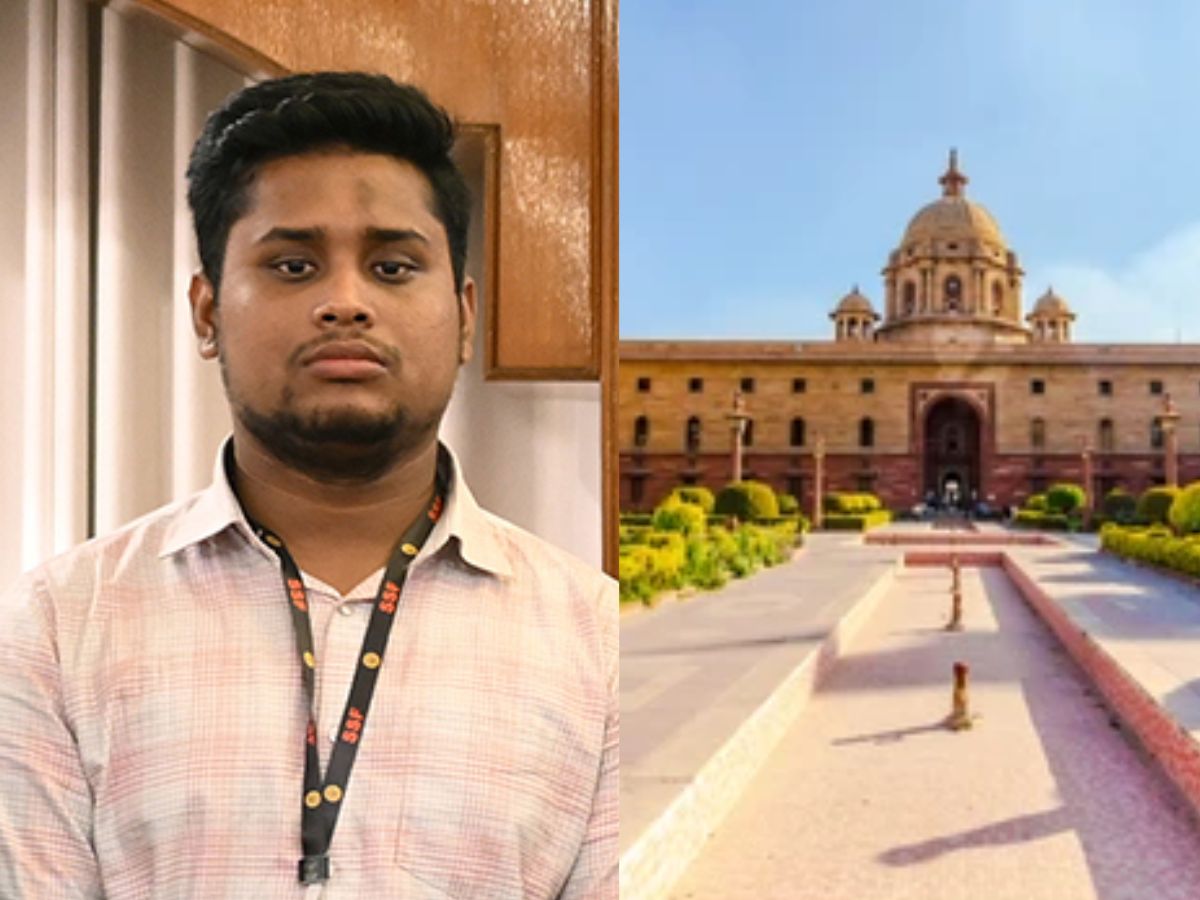
India’s Ministry of External Affairs (MEA) on Wednesday formally summoned Bangladesh’s High Commissioner to express strong objections over what it called provocative and anti-India remarks made by National Citizen Party (NCP) leader Hasnat Abdullah. New Delhi conveyed its serious concern and lodged a diplomatic protest over the statements.
Threats Made at Public Gathering in Dhaka
Hasnat Abdullah made the controversial remarks on Monday while speaking at a public event at Dhaka’s Central Shaheed Minar. During his speech, he issued direct threats against India and even warned the Indian High Commission.
Abdullah claimed that Bangladesh could provide shelter to separatist and anti-India forces and help cut off India’s northeastern region, often referred to as the seven sisters” Arunachal Pradesh, Assam, Manipur, Meghalaya, Mizoram, Nagaland, and Tripura. He also warned India against allegedly supporting forces that, according to him, undermine Bangladesh’s sovereignty.
Hasnat Abdullah Indirect Accusations Against India
Without naming India directly, Abdullah said that even after 54 years of independence, Bangladesh continues to face pressure from what he described as “vultures” trying to dominate the country. His comments were widely interpreted as an indirect reference to New Delhi.
Assam CM Calls Hasnat Abdullah Remarks Dangerous
Reacting sharply, Assam Chief Minister Himanta Biswa Sarma described Abdullah’s comments as irresponsible and dangerous.
“‘India is a very big country, a nuclear nation and the fourth largest economy of the world. How can Bangladesh even think about it?” Sarma said.
India’s Long-Standing Security Concerns
India has repeatedly accused militant and separatist groups operating in the Northeast of using Bangladesh as a safe haven, transit route, and logistics base, especially during the late 1990s and early 2000s. Several insurgent groups from Assam and Tripura were found to have camps, safe houses, and support networks across the border during that time.
Presence of Extremist Groups
Indian agencies have also raised concerns over Islamist extremist organisations operating from Bangladesh. Groups like Harkat-ul-Jihad-al-Islami (HuJI) and later Jamaat-ul-Mujahideen Bangladesh (JMB) were flagged for their cross-border activities, including radicalisation and logistical support that affected eastern India.
India Rejects Bangladesh’s Allegations
The MEA’s action came just days after India firmly rejected claims made by Bangladesh’s Interim Government, which alleged that anti-Bangladesh activities were being carried out from Indian soil.
India clarified that it has always supported free, fair, inclusive, and peaceful elections in Bangladesh and has never allowed its territory to be used for actions against the Bangladeshi people.
Bangladesh Summons Indian High Commissioner
In response, Bangladesh’s Foreign Ministry summoned Indian High Commissioner Pranay Verma. Dhaka raised concerns that ousted Prime Minister Sheikh Hasina, who is currently in India, was making “provocative statements calling on leaders and activists to engage in terrorist activities” in Bangladesh.
Bangladesh also accused Awami League members living in India of attempting to destabilise the country and disrupt upcoming parliamentary elections. Additionally, Dhaka demanded that India hand over suspects linked to the attack on Hadi if they had crossed into Indian territory.
India’s Clear Response
Responding to these accusations, the MEA reiterated India’s position, stating, “We have consistently reiterated our position in favour of free, fair, inclusive and credible elections being held in Bangladesh in a peaceful atmosphere. India has never allowed its territory to be used for activities inimical to the interests of the friendly people of Bangladesh.”
India Bangladesh Relations Under Stress Since Hasina’s Expulsion
India–Bangladesh relations have remained tense since August 5, 2024, when the Sheikh Hasina-led government collapsed following student-led protests.
After being removed from office, Hasina fled to India and has since been staying at a secure and undisclosed location in New Delhi, further complicating diplomatic ties between the two neighbours.