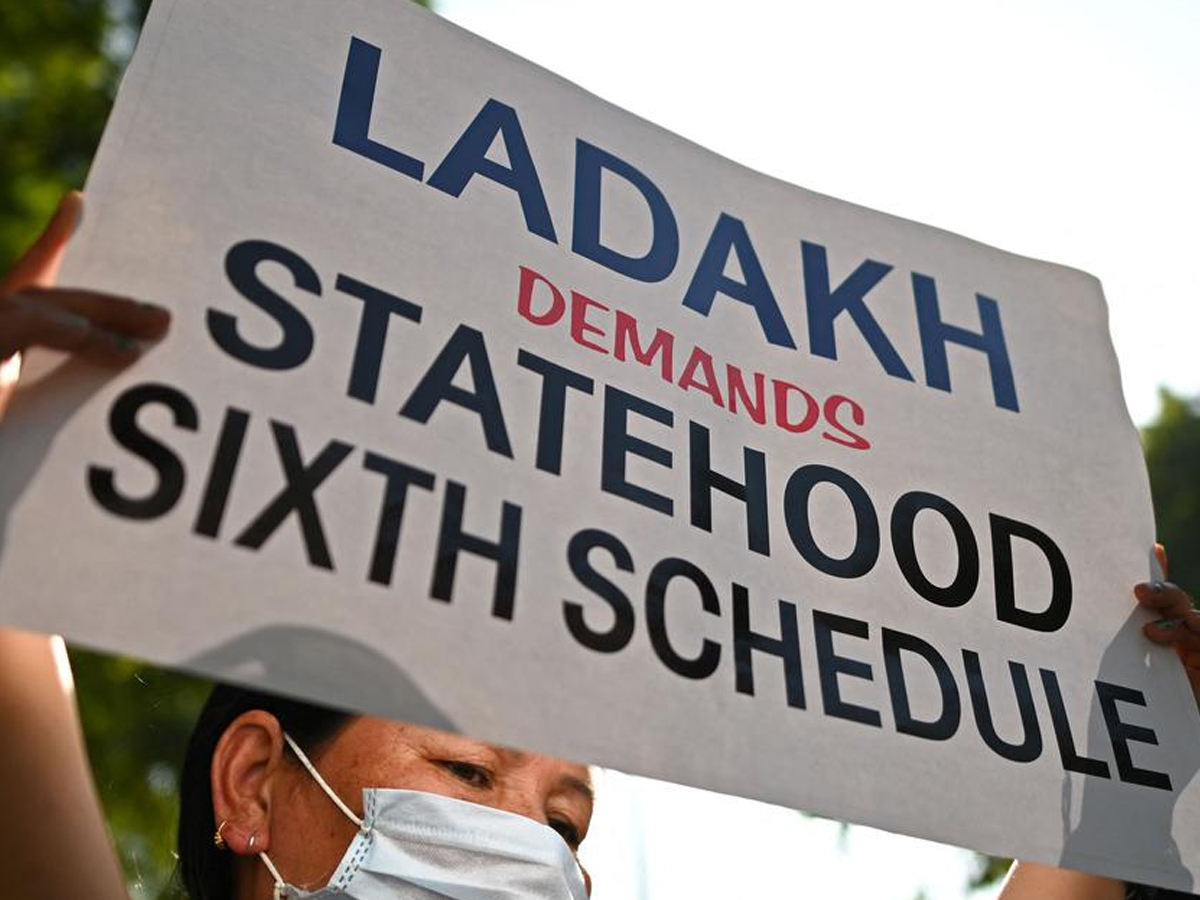
Protests in Ladakh over statehood and Sixth Schedule protections turned violent on Wednesday. At least 4 people were killed by the evening, and several were injured. The Leh Apex Body’s (LAB) youth wing called for the protest after two hunger strikers were hospitalised on Tuesday. The agitation has been building for weeks as people grow impatient with the central government.
The Centre had fixed October 6 for the next round of talks with LAB and the Kargil Democratic Alliance (KDA). But setting that date unilaterally angered protesters and became the immediate trigger for the unrest.
Why Ladakh Wants Sixth Schedule Protection
At the heart of the agitation is the demand for Ladakh to be brought under the Sixth Schedule of the Constitution. People in Ladakh believe this will protect their culture, environment, and tribal rights.
Ladakh became a Union Territory in 2019 when it was separated from Jammu and Kashmir. While many people had initially welcomed UT status, they now feel statehood and Sixth Schedule safeguards are necessary.
What Is the Sixth Schedule?
The Sixth Schedule of the Indian Constitution deals with the administration of tribal areas in Assam, Meghalaya, Tripura, and Mizoram. It gives local communities special powers to govern themselves.
Some of its key provisions include:
- The Governor can declare tribal areas as autonomous districts.
- Each autonomous district must have a District Council with up to 30 members.
- Out of these, the Governor can nominate no more than four members. The rest are elected by the people.
- If there are different tribes in an area, separate Regional Councils can be set up.
- District and Regional Councils have the power to make laws and administer justice in their areas.
- The Governor can dissolve these councils if a commission recommends it.
Powers Under the Sixth Schedule
The Sixth Schedule allows District and Regional Councils to make laws on land, forests, water, agriculture, and village administration. They can also regulate inheritance, marriage, and social customs of tribal groups.
Councils can run courts to handle civil and criminal cases. They also get powers under the Code of Civil Procedure, 1908, and the Code of Criminal Procedure, 1898. This helps them deal with disputes and offences at the local level.
Can the Sixth Schedule Be Changed?
Yes, the Parliament can amend the Sixth Schedule. Lawmakers can add, change, or remove provisions as needed.
The Constitution says: “When the Schedule is so amended, any reference to this Schedule in the Constitution shall be construed as a reference to the amended version.”
Protesters argue that without Sixth Schedule protection, Ladakh’s fragile environment and tribal identity are at risk. The demand for statehood and constitutional safeguards has now become central to their movement.
The violence in Leh shows rising frustration. As the October 6 meeting nears, all eyes are on whether the Centre will address Ladakh’s demand for stronger protections.
ALSO READ: Leh Protests Turn Violent: 4 Dead, 70 Injured as Ladakh Statehood Demand Escalates