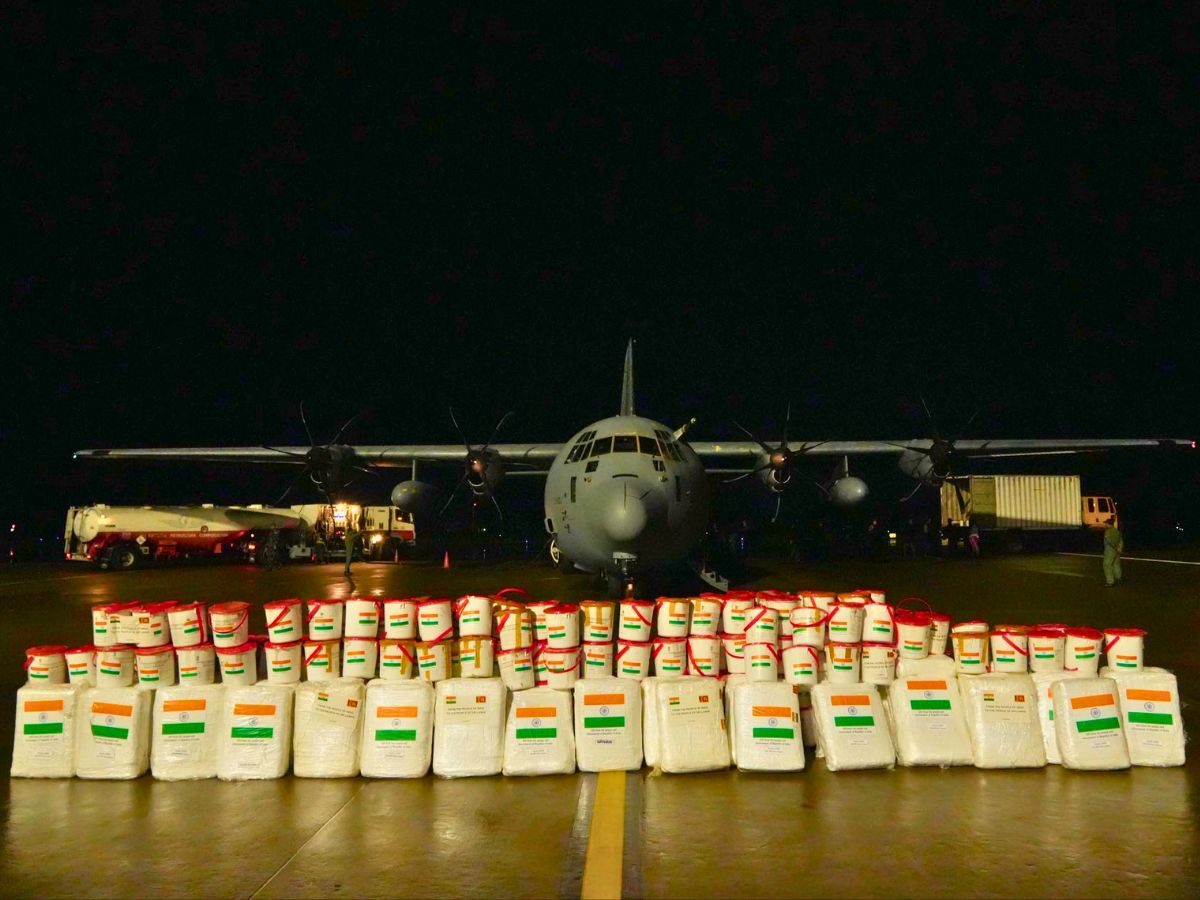
India airlifted urgent relief supplies to Sri Lanka after the powerful Cyclone Ditwah hammered the island, leaving dozens dead and widespread destruction in its wake. On Saturday, a C-130J aircraft landed in Colombo carrying 12 tonnes of humanitarian aid under India’s rapid response plan.
The relief package includes tents, tarpaulins, blankets, hygiene kits, and ready-to-eat meals. The effort is part of Operation Sagar Bandhu — India’s emergency mission to support Sri Lanka during this crisis.
External affairs minister S. Jaishankar announced the delivery on social media: “#OperationSagarBandhu unfolds. @IAF_MCC C-130J plane carrying approximately 12 tons of humanitarian aid … lands in Colombo.”
#OperationSagarBandhu unfolds. @IAF_MCC C-130 J plane carrying approx 12 tons of humanitarian aid including tents, tarpaulins, blankets, hygiene kits, and ready-to-eat food items lands in Colombo.
🇮🇳 🇱🇰 pic.twitter.com/btzlnZeO8x
— Dr. S. Jaishankar (@DrSJaishankar) November 29, 2025
What is Operation Sagar Bandhu?
Operation Sagar Bandhu is India’s swift humanitarian effort launched to help Sri Lanka in the wake of Cyclone Ditwah. The mission began Friday with the Indian Navy dispatching relief supplies aboard the aircraft carrier INS Vikrant and the warship INS Udaigiri. These first consignments delivered essentials such as food, water, and emergency shelter materials.
PM Narendra Modi expressed solidarity with Sri Lanka on social media. He offered condolences to those who lost loved ones and reaffirmed India’s readiness to provide further assistance as needed — calling it a demonstration of India’s “Neighbourhood First” commitment and a reflection of its “Vision MAHASAGAR.”
My heartfelt condolences to the people of Sri Lanka who have lost their loved ones due to Cyclone Ditwah. I pray for the safety, comfort and swift recovery of all affected families.
In solidarity with our closest maritime neighbour, India has urgently dispatched relief…
— Narendra Modi (@narendramodi) November 28, 2025
Why Sri Lanka Needs Help? Devastation After Cyclone Ditwah
Cyclone Ditwah triggered severe flooding, landslides, and heavy rain across several Sri Lankan provinces. The disaster has so far claimed more than 80 lives. The island’s disaster-management authorities reported numerous homes destroyed, thousands displaced, and massive damage to crops and infrastructure.
Rivers such as the Kelani and Attanagalu surged dangerously, flooding entire districts. In many regions, rainfall reached levels not seen in decades, with some areas receiving over 200 mm of rain. The rising water levels led to widespread evacuations and urgent calls for food, shelter, and medical aid.
What India’s Aid Shipment Means for Sri Lanka?
The arrival of Indian aid could not be more timely. The 12-tonne consignment includes essential relief items to support thousands of displaced people. Tents and tarpaulins will give temporary shelter to families whose homes collapsed or were submerged. Blankets, hygiene kits, and ready-to-eat meals will help meet the immediate needs of those stranded by the floods.
Delivery via both air and sea shows India’s commitment and capability to respond quickly — even when roads are flooded, and ground access becomes impossible. The use of naval ships and air force aircraft ensures aid reaches remote or severely affected areas without delay.
Regional Solidarity in Times of Climate Crisis
Cyclone Ditwah’s devastation in Sri Lanka isn’t just a natural disaster, it is a stark reminder of how increasingly frequent severe weather events can devastate entire communities. India’s swift response under Operation Sagar Bandhu highlights how regional cooperation and humanitarian solidarity can make a real difference.
In an era of climate change, disasters may strike more often. Neighbouring countries need to work together, share resources, and act fast to assist each other. India’s support for Sri Lanka could set a model for regional disaster response, combining naval logistics, air transport, and organized humanitarian aid to respond when time is critical.