

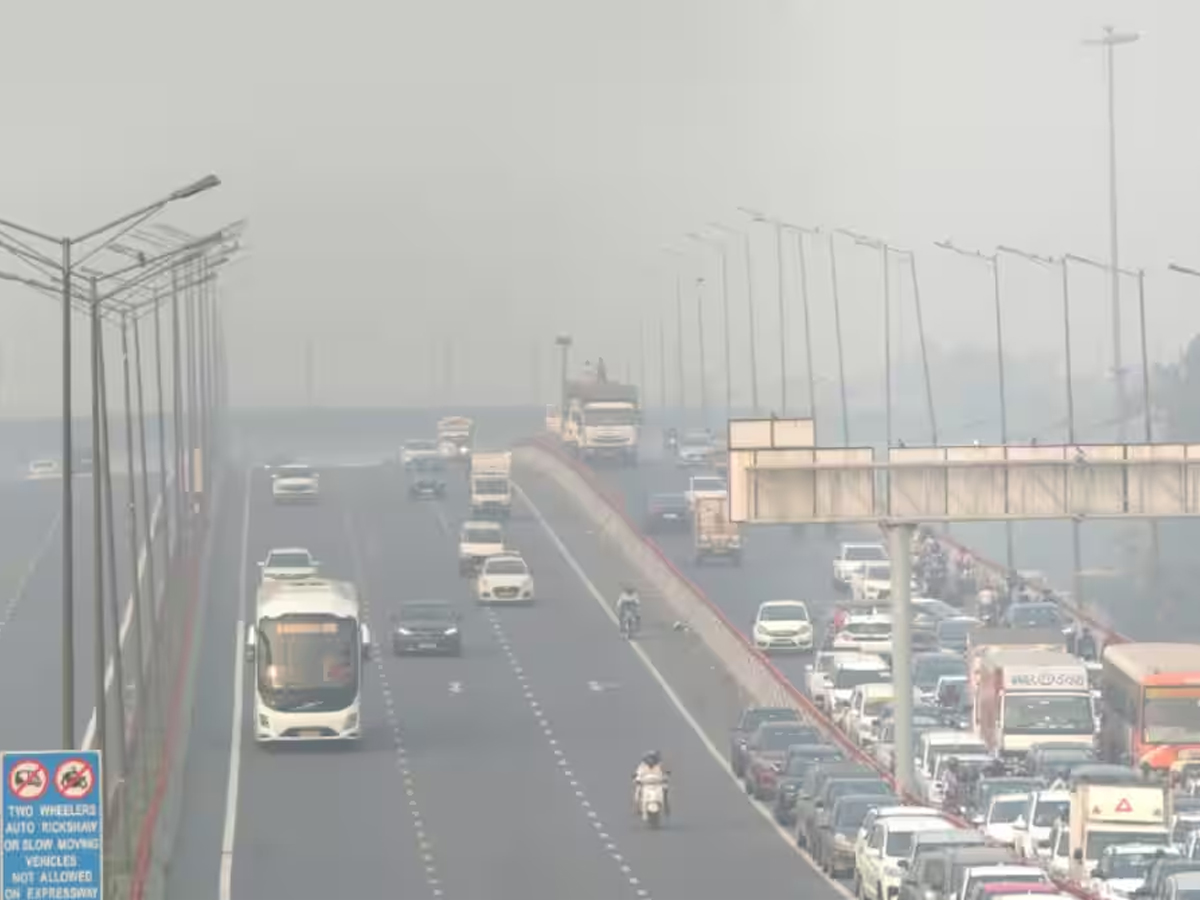
As toxic smog continues to choke the national capital, the Delhi government has rolled out a fresh set of emergency restrictions to curb rising air pollution. With the Air Quality Index (AQI) staying in the ‘severe’ category for several days, authorities have tightened rules on office attendance, vehicle movement, fuel access, and construction activity. The new measures come into force from Thursday and add to the already strict GRAP Stage-IV curbs.
Officials say the steps aim to reduce vehicular emissions, control dust, and limit human exposure to hazardous air, as health risks rise across Delhi-NCR.
Why Delhi Announced New Pollution Restrictions
Delhi’s air quality slipped deeper into the ‘severe’ zone after AQI readings crossed the 400 mark across multiple locations. The situation triggered emergency meetings and pushed authorities to enforce tougher controls under the Graded Response Action Plan (GRAP).
The Commission for Air Quality Management (CAQM) activated GRAP Stage-IV after Delhi recorded ‘severe’ AQI levels for three consecutive days. The Delhi government followed up with additional city-specific measures to reduce pollution sources quickly.
Work From Home Mandate: Who Must Follow It
One of the biggest announcements involves a partial work-from-home mandate for offices across Delhi.
Delhi Labour Minister Kapil Mishra said all government and private offices must switch to work-from-home arrangements starting Thursday or face action. However, the rule does not mean complete office shutdowns.
Key WFH Rules Explained
- Private offices in Delhi must ensure that not more than 50% staff attend the workplace physically.
- The remaining employees must work from home.
- The order applies to both government and private institutions.
Who Is Exempted From WFH Rules
Several categories of workers are excluded from the mandate, including:
- Emergency and frontline workers
- Hospital and healthcare staff
- Fire services
- Pollution control and enforcement teams
- Transport and sanitation workers
- Essential public utility services
Officials clarified that these services must continue operating normally to ensure public safety and daily functioning.
Construction Ban and Compensation for Workers
Construction and demolition activities have again come under strict restrictions as part of GRAP Stage-IV.
To soften the impact on daily-wage earners, the Delhi government announced financial relief for affected workers.
Construction Worker Compensation
- Construction workers affected by the ban will receive ₹10,000 as compensation.
- The amount will cover the period during which GRAP-IV restrictions remain in force.
- Registration for compensation is currently underway.
Authorities said the move aims to balance environmental protection with livelihood security.
No Fuel Without PUC Certificate From Thursday
The Delhi government has also intensified checks on polluting vehicles.
From Thursday, vehicles without a valid Pollution Under Control (PUC) certificate will not get fuel at petrol pumps across the capital.
Delhi Environment Minister Manjinder Singh Sirsa said petrol pumps have been instructed to strictly enforce the rule.
What Is a PUC Certificate
- A PUC certificate confirms that a vehicle meets emission norms.
- It is issued after a basic emissions test at authorised centres.
PUC Certificate Cost and Validity
- ₹60 for two-wheelers and three-wheelers
- ₹80 for four-wheelers
- ₹100 for diesel vehicles
- Valid for 12 months for BS-IV and BS-VI vehicles
Officials said denying fuel to non-compliant vehicles will discourage polluters and improve enforcement.
Ban on Vehicles Carrying Construction Materials
To further reduce dust pollution, the Delhi government has banned trucks carrying construction materials from entering the city.
Manjinder Singh Sirsa appealed to commuters from outside Delhi to follow emission norms.
“Trucks carrying construction materials into Delhi have also been banned… I appeal to people coming from outside Delhi to bring vehicles that comply with Bharat Stage 6 (BS6) emission standards,” Manjinder Singh Sirsa told ANI.
Enforcement teams will monitor city borders to ensure compliance.
BS-6 Vehicle Rule: Who Can Enter Delhi Now
Under the new rules, only cleaner vehicles are allowed entry into Delhi when GRAP Stage-III and IV are active.
Vehicles Restricted From Entry
- All vehicles below the BS-6 standards
- Vehicles registered outside Delhi that do not meet BS-6 norms
Vehicles Allowed
- BS-6 compliant vehicles
- CNG and electric vehicles
- Emergency and essential service vehicles
The ban takes effect from Thursday and will remain in place as long as pollution levels stay high.
Supreme Court Backs Stricter Vehicle Action
The Supreme Court has also stepped in amid worsening air quality.
On Wednesday, the top court withdrew protection against coercive action for end-of-life vehicles with poor emission standards, including BS-III and below vehicles, across Delhi-NCR. The order cleared the way for stricter enforcement and penalties.
How Will Rules Be Enforced
The Delhi Traffic Police and transport department will deploy special enforcement teams at:
- Petrol pumps
- Delhi borders
- Major traffic checkpoints
Officials said violators may face fines, seizure of vehicles, or denial of services.
Delhi Plans Carpooling Push to Cut Emissions
To tackle long-term vehicular pollution, the Delhi government has also announced plans to launch its own carpooling app. The initiative aims to reduce the number of private vehicles on roads and encourage shared travel.
Officials said details will be shared soon.
What Residents Should Know
Authorities urged residents to:
- Avoid unnecessary travel
- Use public transport
- Follow vehicle emission rules
- Wear masks outdoors
- Protect children and elderly family members
With pollution levels remaining hazardous, officials warned that further restrictions could follow if air quality fails to improve.





