

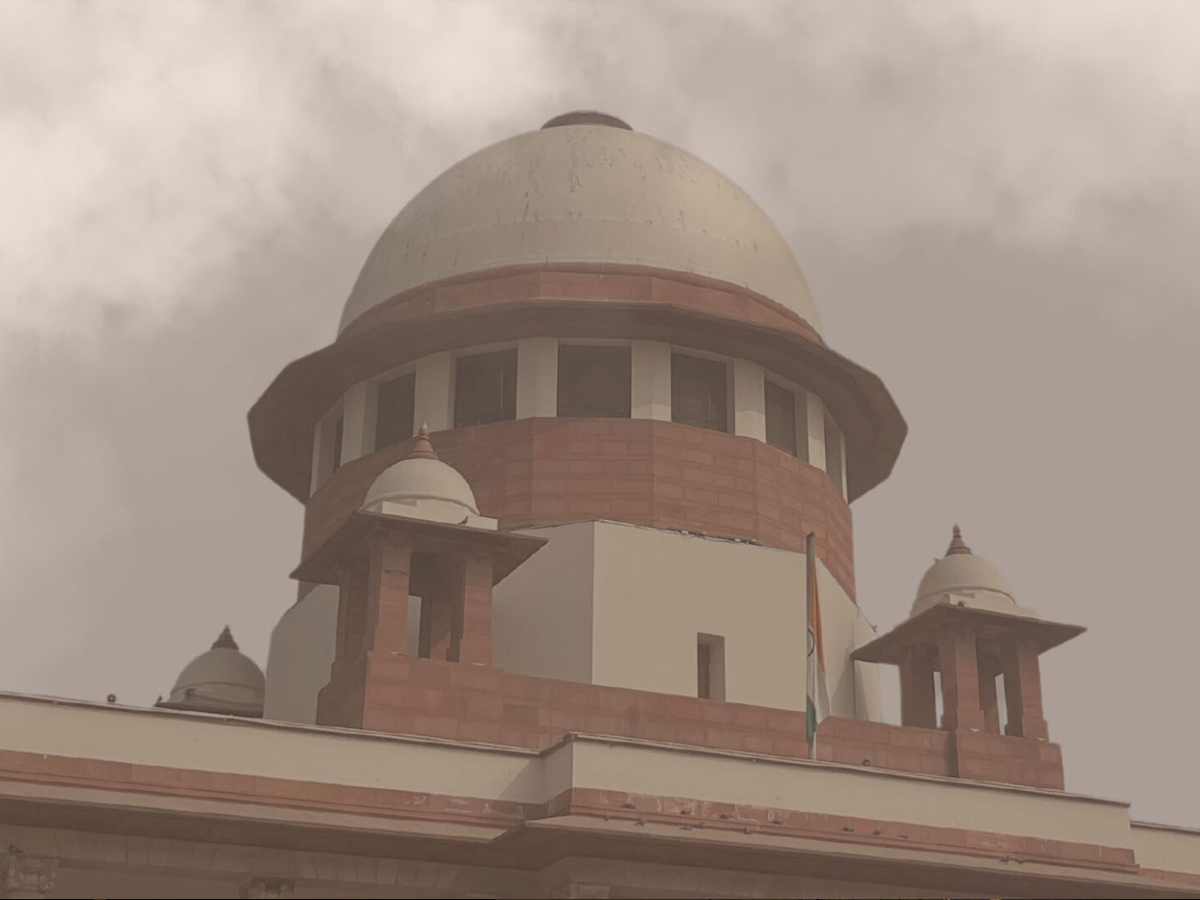
As toxic air once again chokes Delhi-NCR, the Supreme Court has delivered a sharp message to authorities. The top court said the steps taken so far to control air pollution have failed completely. The judges made it clear that temporary actions cannot solve a problem that returns every year.
The observations came during a hearing on multiple petitions related to worsening air quality in the national capital region. The court stressed that piecemeal decisions only delay the problem and do not fix it.
‘Total Failure’: Supreme Court’s Strong Words on Pollution Control
A Bench led by Chief Justice of India Surya Kant did not mince words while assessing the situation. The court said the current approach has not produced meaningful results.
“Any meaningful reduction in pollution would require broader and long-term planning rather than ad-hoc responses,” the Bench remarked.
The judges noted that pollution has become a recurring crisis and questioned why authorities still rely on short-term fixes instead of permanent solutions.
Court on School Closures: Temporary Relief, Not a Solution
Several petitions focused on the impact of pollution on children. These challenging decisions like closing schools or allowing hybrid classes. However, the Supreme Court refused to interfere with the Delhi government’s policy choices.
“The short-term measures are only to provide temporary protection to children and elderly persons. These are purely interim policy decisions. At best, they can be viewed as an extension of vacations, as schools are anyway scheduled to remain closed for 10 to 15 days during the winter,” the Court observed.
The Bench made it clear that while such steps may reduce immediate health risks, they do not address the root causes of pollution.
Why the Court Says Pollution Is Now an ‘Annual Feature’
CJI Kant highlighted a worrying trend. He said air pollution has become a routine winter problem rather than an exception.
The court pointed out that authorities prepare emergency responses every year but fail to plan. The judges stressed that Delhi-NCR needs a phased and long-term strategy that works throughout the year, not just during pollution peaks.
Supreme Court Asks CAQM to Rethink Long-Term Strategy
The court asked the Commission for Air Quality Management (CAQM) to revisit its long-term action plan. It directed the body to examine several key areas that directly affect air quality.
These include:
- Urban mobility and traffic planning
- Cleaner industry practices and energy use
- Stubble burning and incentives for farmers to stop it
- Regulation of construction work and alternative jobs during bans
- Pollution from household activities
- Increasing green cover across cities
- Citizen awareness and voluntary behaviour change
- Stronger and more accessible public transport
- Any other area identified by CAQM
The court made it clear that these issues need coordinated planning, not isolated action.
End-of-Life Vehicles Lose Court Protection
In a major move, the Supreme Court also ended the protection given to end-of-life vehicles in Delhi-NCR. These include vehicles with poor emission standards, especially BS-III and older.
The decision followed a recommendation from CAQM. It modified an earlier order that had protected such vehicles from enforcement action.
The court’s move signals stricter enforcement against major pollution contributors.
Why Short-Term Fixes No Longer Work
The judges repeatedly emphasised that emergency steps like traffic bans, school closures, or temporary construction halts only buy time. They do not reduce pollution in the long run.
The court wants authorities to focus on building systems that prevent pollution rather than reacting after damage occurs.
This includes better city planning, cleaner fuels, improved public transport, and strong enforcement.
For residents, the message is clear. Relief will not come from sudden bans or seasonal restrictions alone. The Supreme Court wants authorities to commit to sustained action.
The focus is now on accountability, planning, and long-term investment. Without that, the court warned, Delhi-NCR will continue to suffer every winter.





