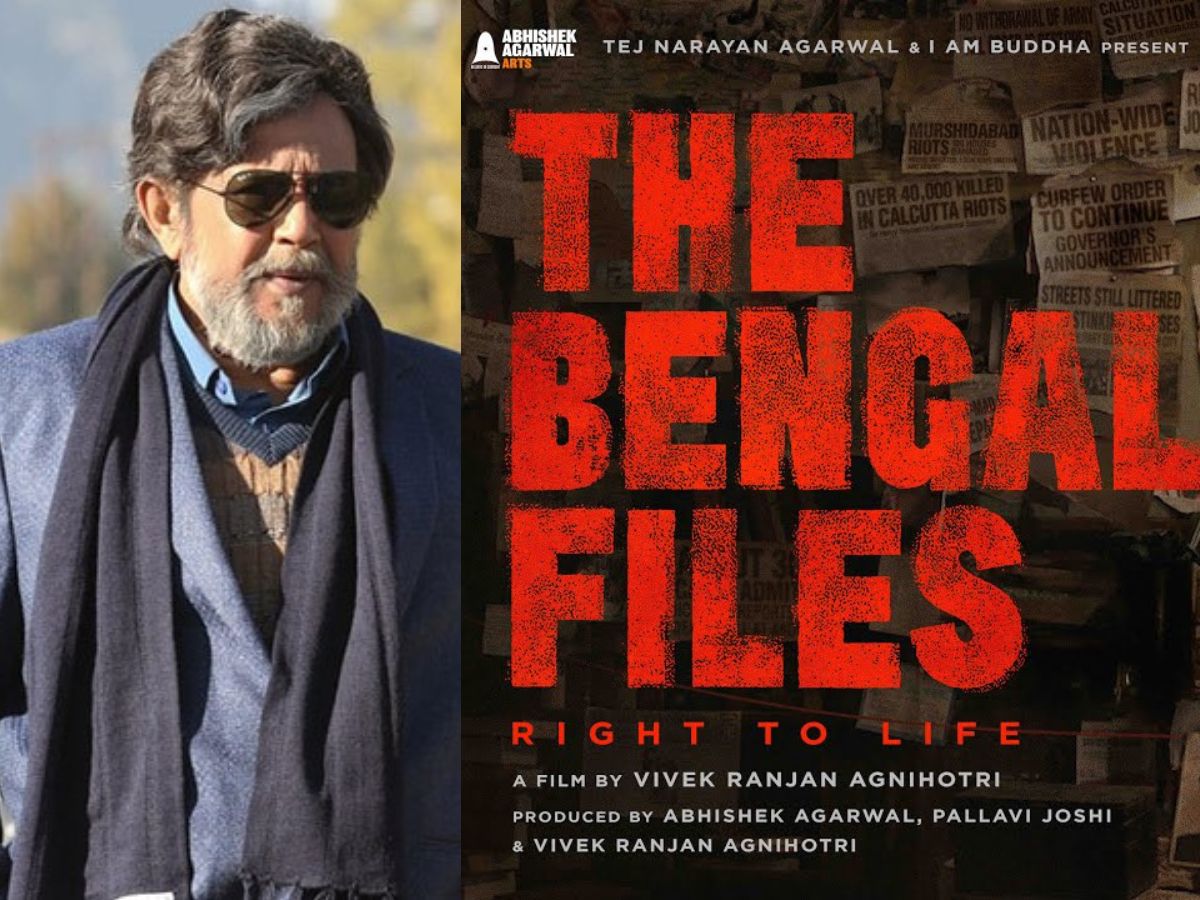
Vivek Agnihotri’s upcoming film, The Bengal Files, has triggered a wave of intense debate and public unrest with the release of its trailer. Launched in Kolkata on August 16, 2025, the trailer plunges viewers into the traumatic period of Bengal’s history surrounding the 1946 Direct Action Day and the subsequent riots. With a cast in the league of Mithun Chakraborty, Pallavi Joshi, Anupam Kher, and Darshan Kumar, the film promises to look back at some of the most traumatic moments that defined the partition history of modern India.
Trailer Highlights
The trailer is powerful: against haunting imagery and emotive dialogue, it places communal fissures and political oratory of the era side by side. The narrative of the film claims, “Yeh Pachim Bangal hai, yaha do constitution chalta hai”, more or less placing the division between Hindu and Muslim populations in Bengal at the forefront. Clips recreate exchanges between Mahatma Gandhi and Mohammad Ali Jinnah regarding religion and land, with the trailer going so far as to pose hard questions about the future of Bengal. Anupam Kher’s performance as Mahatma Gandhi, and Mithun Chakraborty as a survivor of the atrocities of partition, are notable in this incendiary portrayal.
Director Agnihotri names it “a roar that Bengal will not become another Kashmir,” situating the movie as a timely wake-up call to face up to the reality of communal politics and their inheritance. The star cast, at the launch, categorically characterised the film as “powerful cinema born out of deep truth,” even while highlighting its place in public debate.
Also Read | Vivek Agnihotri’s ‘The Bengal Files’ Trailer Sparks TMC Backlash, Event Disruption in Kolkata
Escalating Controversy and Upheaval
The trailer launch itself did not go off without trouble. In Kolkata, police halted the screening at a prominent hotel, reportedly under pressure from government authorities. Cables were unplugged, and heated arguments erupted between filmmakers and officials. Accusations flew—Trinamool Congress (TMC) spokespersons labeled the film a “political video made as part of a pre-election political assignment,” while questioning Agnihotri’s motives. Actor-turned politician Mithun C
#WATCH | Kolkata, West Bengal: On alleged disruption during the ‘The Bengal Files’ trailer launch in Kolkata, BJP leader Mithun Chakraborty says, “I can’t even imagine that such a thing can happen in such a big hotel. I am very surprised…all this will keep happening, will keep… pic.twitter.com/vfnvXl9lTL
— ANI (@ANI) August 16, 2025
Pallavi Joshi reacted with anger, highlighting what she considered to be an assault on creative freedom and inquiring if Bengal today had less freedom than Kashmir.
#WATCH | West Bengal | A ruckus erupted during the release of ‘The Bengal Files’ trailer in Kolkata today. Actor Pallavi Joshi alleges the trailer launch was not allowed.
Actor Pallavi Joshi says, ” I absolutely did not like the way my film was stopped. Is there freedom of… pic.twitter.com/nKC3ACIV7a
— ANI (@ANI) August 16, 2025
The crisis mounted rapidly, triggering public protests and political denunciation. Opponents worry that the film could “ignite communal flames,” particularly since Bengal is already burdened with vulnerable ethnic and religious fault lines. Producer Abhishek Agarwal countered by promising legal action to permit the release of the film on September 5, 2025.
Societal Impact and Fears of Rioting
As trailers are released and arguments escalate, Bengal remains on tenterhooks. The background of past violence, with ongoing social tensions, makes everyone worry about new riots breaking out. Political parties and civic leaders have appealed for self-control, beseeching citizens not to get caught up in inflammatory speeches. Police and state authorities are, meanwhile, said to be preparing for any outbreak of chaos as the release date of the film nears.
Summing up, the The Bengal Files trailer is not just a promotional video, it is a catalyst for Bengal’s continued debate regarding history, identity, and communal relations. As society struggles with its hurtful past, the influence of the film on Bengal’s present is yet to be determined.