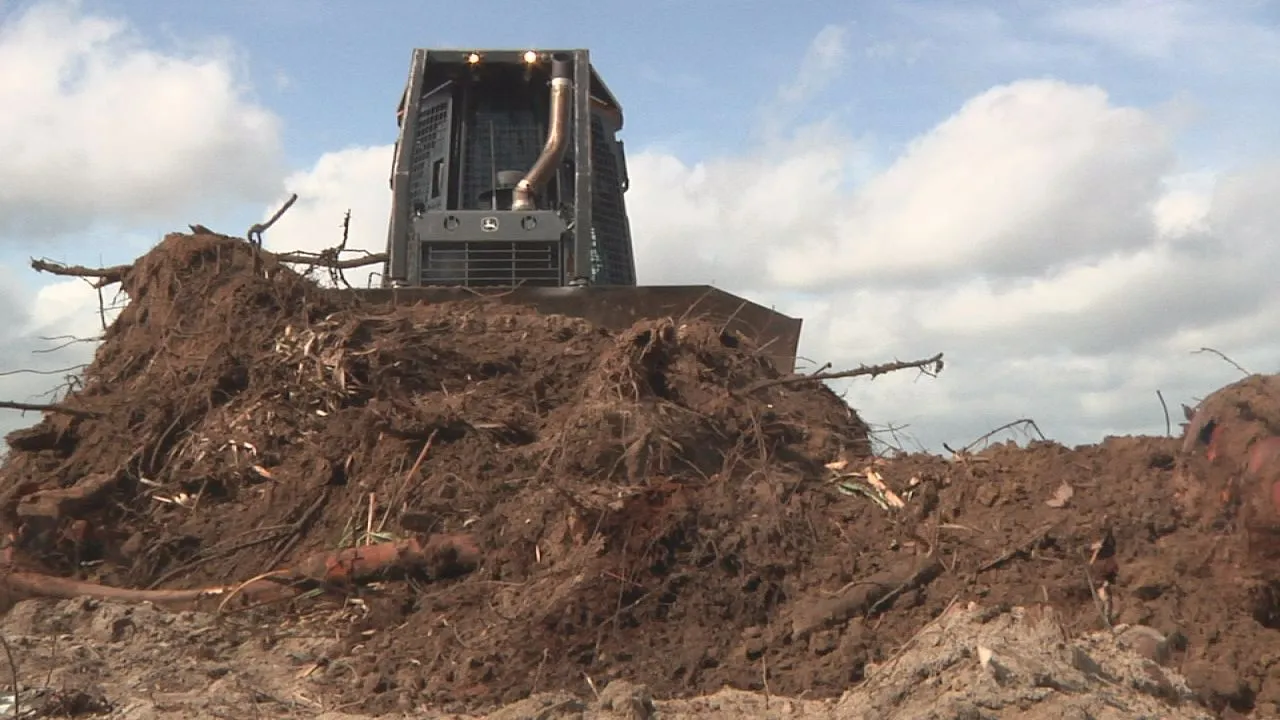
On Wednesday, the Supreme Court emphasized the importance of sustainable development while cautioning against using bulldozers to destroy forests for that purpose.
The Supreme Court of India has come down heavily on the developmental paradigms of demolition and forest clearance for the promotion of true sustainable development, such that for the destruction of ecosystems and grounding of vulnerable communities, there shall be no sustainable development. The national interest can always be better pursued, in line with the constitutional and environmental fundamentals, by demolishing settlements and industrialized greenbelt areas.
Bench led by Sarkar, Justices B.R. Gavai and K.V. Viswanathan said that development should not have led to obliteration through exclusion, non-participatory construction and ecological insensitivity. The court saw all the expanding infrastructure projects, raised at the costs of forest deterioration and the eviction of their indiscrete communities from their respective habitats as the one where the indigenous tribes are being pushed out from their homelands. “I am myself an advocate for sustainable development, but that doesn’t mean that overnight you should employ 30 bulldozers and clear all the jungle,” Chief Justice Gavai said.
The bench was notified by senior counsel K Parameshwar, who is an amicus curiae in the case, that a number of private parties wanted to reply to the state’s affidavit. After considering the statement, the bench scheduled the hearing for August 13.
Scrutiny on Law Regarding State Development Projects
Moreover, Supreme Court remarks during the voyage of legal proceedings on a brownfield forest eviction and giant deforestation petitions came out with the moot point, bedeviling the judicial understanding of ecological sensitivity. Contrasted with the environmental laws, it pressingly queries the right a number of arms of State have in carrying out deforestation-motivated land alienation, treating forest dwellers as the sacrificial lambs? Finding the discourse on forest and river-poisoning by developmental activities riding on hair-splitting constitutional principles didn’t stop, abutment provided by the Supreme Court in one fell swoop.
The Court reminded that the judicious re-thinking of prevailing models with which the sanctity of nature has relentlessly been broken, with the forest paths of other living beings, must not be allowed to continue. Equally questionable is the presumption that by under-calculating the role nature plays, one can expect to conceive it as the victim, or as the Supreme Court’s reverse shakedown could probably construe in discussion a meandering way around the dynamic notion of comprehensive development: development without justice.
The Telangana government was scolded by the Supreme Court on April 16 for its hasty decision to cut down trees there and ordered that if it wanted its chief secretary “to be saved from any severe action,” it must present a detailed plan to rehabilitate the 100 acres of deforested area.