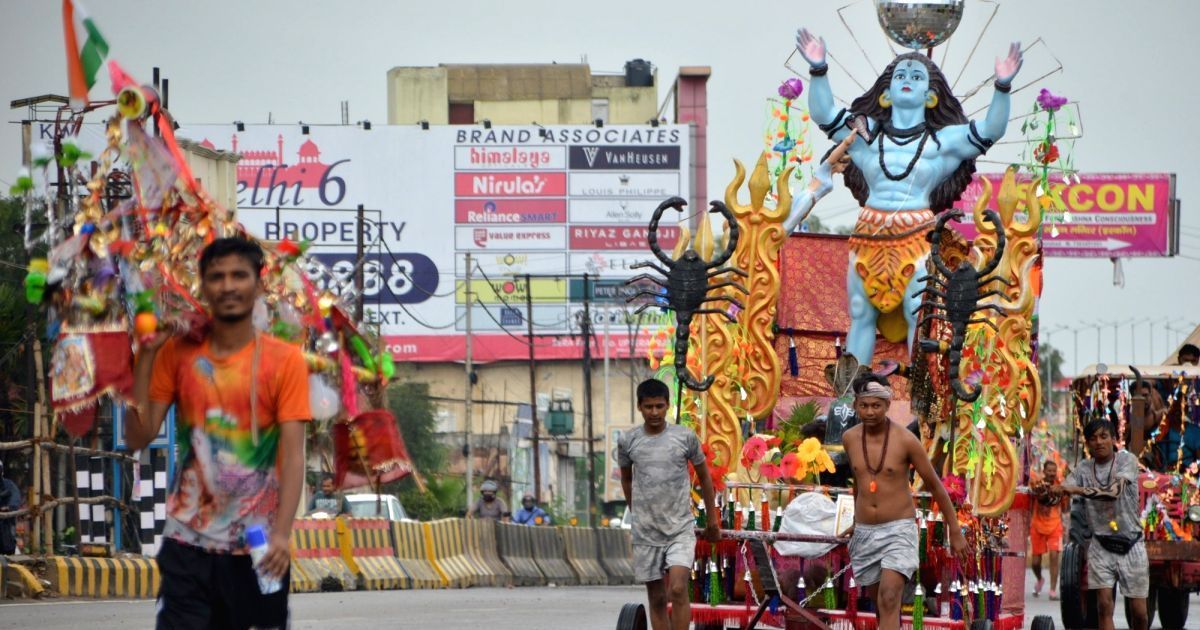
The Supreme Court on Tuesday directed that all food sellers and hotel owners along the Kanwar Yatra route must comply with the statutory requirements of displaying their license and registration certificates, reinforcing the principle that “the consumer is the king.” The order came while hearing an interlocutory application that challenged a recent directive mandating QR code displays revealing ownership and compliance details of eateries.
While the Bench, comprising Justices M. M. Sundresh and N. K. Singh, declined to rule on the legality of the QR directive, it reiterated that customers must be enabled to make informed decisions. “If one hotel was earlier serving non-veg and for better business during yatra switches to veg, the consumer should know,” Justice Sundresh noted during the hearing.
No ruling on QR code legality—yet
The court clarified that it was not going into the core legal arguments surrounding the QR code requirement. “We are told today is the last day of the yatra… Therefore, at this stage, we would only pass an order on license display,” it said, choosing to close the application without commenting on the alleged privacy violations.
‘Breach of privacy rights,’ says petition
The applicants, represented by Senior Advocate A. M. Singhvi, argued that the state’s directive to display QR codes revealing ownership details and names was effectively a backdoor attempt at identity-based segregation. The application cited a June 25, 2024, press note from the Uttar Pradesh Chief Minister and previous attempts at similar directives, which were stayed by the SC last year. Singhvi described the move as “the most divisive initiative… as if these people are untouchables.”
UP Govt defends directive as rooted in central law
Appearing for the Uttar Pradesh government, Senior Advocate Mukul Rohatgi contended that the instructions stemmed from FSSAI regulations, which apply nationally under a central law. “Last year, we had a law and order situation where kanwariyas ransacked a Dhaba… We’re only ensuring transparency as per licensing norms,” Rohatgi argued. He also said rules already require display of photo IDs and business compliance.
Hoteliers’ past practices under lens
Justice Sundresh highlighted a key concern—that restaurants temporarily altering their offerings during the religious yatra may mislead pilgrims. He insisted consumers deserve to know whether a place was originally vegetarian or merely adapting to the occasion. “There are people who won’t even touch certain foods,” he noted, defending the need for transparency while acknowledging religious sentiments.
The court made it clear that any further challenge to the QR code rule or concerns about privacy, profiling, or religious identity exposure should be raised in the High Court. “We have said we are not going into it… If you want to challenge it, go before the high court,” the bench concluded.