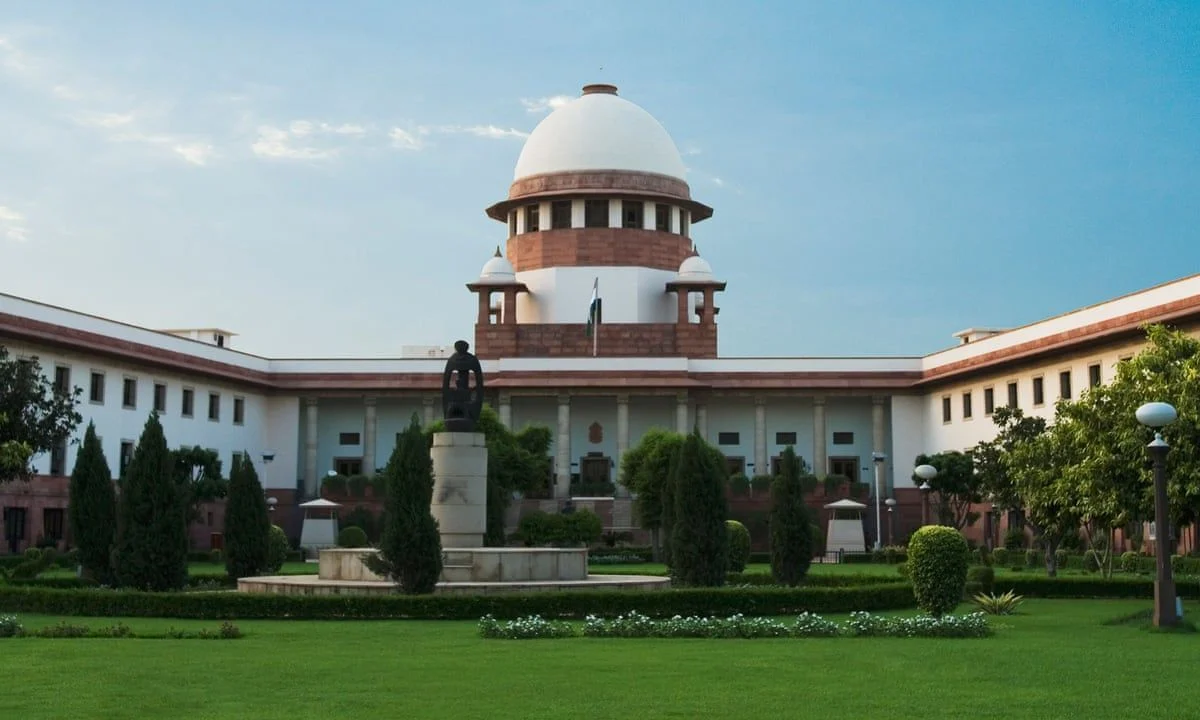
On August 19, the Supreme Court will start hearing arguments on a Presidential Reference that explores the possibility of imposing deadlines for state assembly bill approval. Submission deadlines were established, and arguments were planned until September 10 by a five-judge panel presided over by CJI BR Gavai. President Murmu’s inquiries about the constitutional responsibilities of the president and governors with regard to legislative bills are followed by the reference.
The Supreme Court of India has laid out a comprehensive hearing for a Presidential reference about the powers and functions of the Governors and the President concerning the timeline for granting assent to state legislation. The matter became of national importance after a decision in April 2025 from a two-judge bench imposing time-bound directions upon the Governor and the President for state bills.
The reference has been made under Article 143(1) of the Constitution and seeks to question the constitutional validity of the timelines imposed by the court.
History: A Landmark Ruling that Travels Past Empirical Reason
The case finds its origin in the ruling in State of Tamil Nadu vs. Governor of Tamil Nadu, wherein the Court had held that Governors must either act on a state bill “at once” or, at least, within one month if the bill is repassed by the legislature. In case the bill is reserved for the President, a three-month window has been prescribed for the actual act of decision-making. Any further period of inaction should, according to the Court, lead to a deemed assent through the utilization of Article 142, which empowers it to do complete justice in any matter.
This interpretation raised constitutional questions, although it found favor with states such as Tamil Nadu and Kerala. The view of the Union is that the judgment has infringed upon separation of powers and exceeded judicial authority itself by attempting to rewrite constitutional due processes.
Constitution Bench Arguments in August and September
The Constitution Bench, presided over by a five-judge set that includes Chief Justice B. R. Gavai, Justices Surya Kant, Vikram Nath, P. S. Narasimha, and Atul S. Chandurkar, will hear the arguments. The Court has set a definite timeline: the Union and supporting states for the reference must file their submissions by August 12, with hearings from August 19-26 opposing states Tamil Nadu and Kerala making submissions on August 28 and into September.
The Court will address 14 crucial questions, such as whether judicially imposed timelines on Governors and the President under Articles 200 and 201 are valid, whether “deemed assent” has any constitutional basis, and whether Article 142 can be read down to the express text in the Constitution.
This case may reformulate the constitutional framework that governs the relationship between the state legislatures and constitutional authorities over the federal balance between the Centre and the states, the Governor’s discretionary powers and the judiciary’s ability to enforce legislative efficiency. The ultimate judgment of the apex court will have long-term consequences for governance, particularly in politically sensitive states or those ruled by opposition parties.
The hearings which are set to commence in August will not merely re-examine a precedent but may change the manner in which constitutional functionaries undertake functioning in the federal landscape of India.