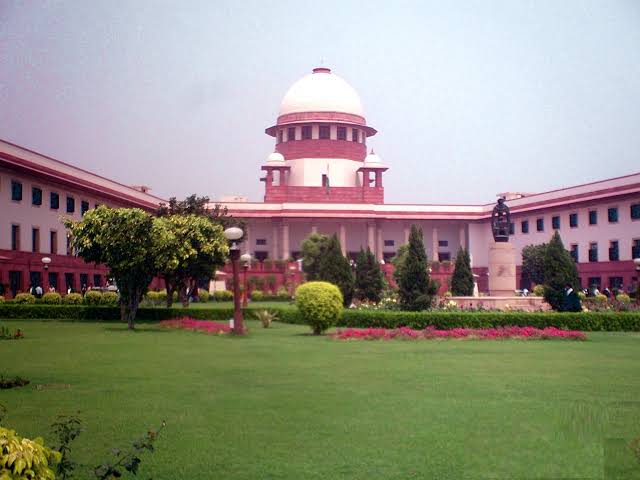
More than three years after ethnic violence erupted in Manipur, the Supreme Court has directed its court-appointed committee to independently verify claims that nearly 24,000 affected families are still waiting for rehabilitation and welfare benefits.
The direction highlights the gap between official rehabilitation figures and the situation on the ground for thousands of people displaced by the violence that began on May 3, 2023.
A bench comprising Chief Justice of India Surya Kant and Justices Joymalya Bagchi and V. Mohana was hearing matters related to the restoration of homes, livelihoods and properties lost during the violence. The unrest followed a Tribal Solidarity March in the hill districts protesting the Meitei community’s demand for Scheduled Tribe status. More than 200 people have been killed, hundreds injured and tens of thousands displaced since then.
The court noted the rehabilitation measures already undertaken by the government. Funds have been disbursed to more than 4,000 beneficiaries out of roughly 7,000 identified families for house reconstruction. Under the state rehabilitation scheme, families receive ₹5 lakh for rebuilding a kutcha house and ₹7 lakh for a semi-pucca or pucca structure.
More than 12,000 houses have been approved under the Pradhan Mantri Awaas Yojana-Gramin (PMAY-G) for violence-affected households. Temporary shelters are also in place. ₹51.95 crore has been released for permanent housing for 885 identified beneficiaries, while an additional ₹1 lakh per household has been provided to those whose homes were completely destroyed.
Senior advocate Vibha Dutt Makhija, appearing for the Justice Gita Mittal Committee, placed these figures before the bench. However, lawyers representing some affected families said approximately 24,000 households remain without benefits. They said the claim could be verified on the ground. Details of these families had already been submitted to the three-member panel.
“If that is so, we request the committee to verify and confirm the particulars of the alleged affected families,” Chief Justice Surya Kant said.
The bench directed the panel to submit a note on the implementation of welfare schemes identified in the court’s May 27, 2026 order.
The Justice Gita Mittal Committee is an all-women body of former High Court judges constituted in August 2023. It has served as the Supreme Court’s “eyes and ears” on humanitarian issues in Manipur. Headed by former Jammu and Kashmir High Court Chief Justice Gita Mittal, the committee includes Justice Shalini Phansalkar Joshi and Justice Asha Menon.
The panel has submitted dozens of reports on relief camps, compensation, women’s safety, psychological care and restoration of homes and places of worship. Its tenure was extended earlier this year to continue the oversight.
The court also referred an application concerning properties of violence-affected families to the same committee for verification of ownership and current status.
On places of worship, the bench noted a list of 276 properties whose damage claims require scrutiny. Senior advocate Colin Gonsalves informed the court of a separate list of 20 churches allegedly facing encroachment. The committee has been asked to examine these representations against relevant documents and land records. Authorities were directed to prevent any further encroachment on properties covered by the claims. The panel will report its findings to the court.
The bench also addressed the slow pace of criminal justice. It asked the Gauhati High Court Chief Justice to consider establishing two exclusive special courts one for CBI cases and one for NIA cases arising from the Manipur violence so that trials can proceed without the drag of mixed dockets.