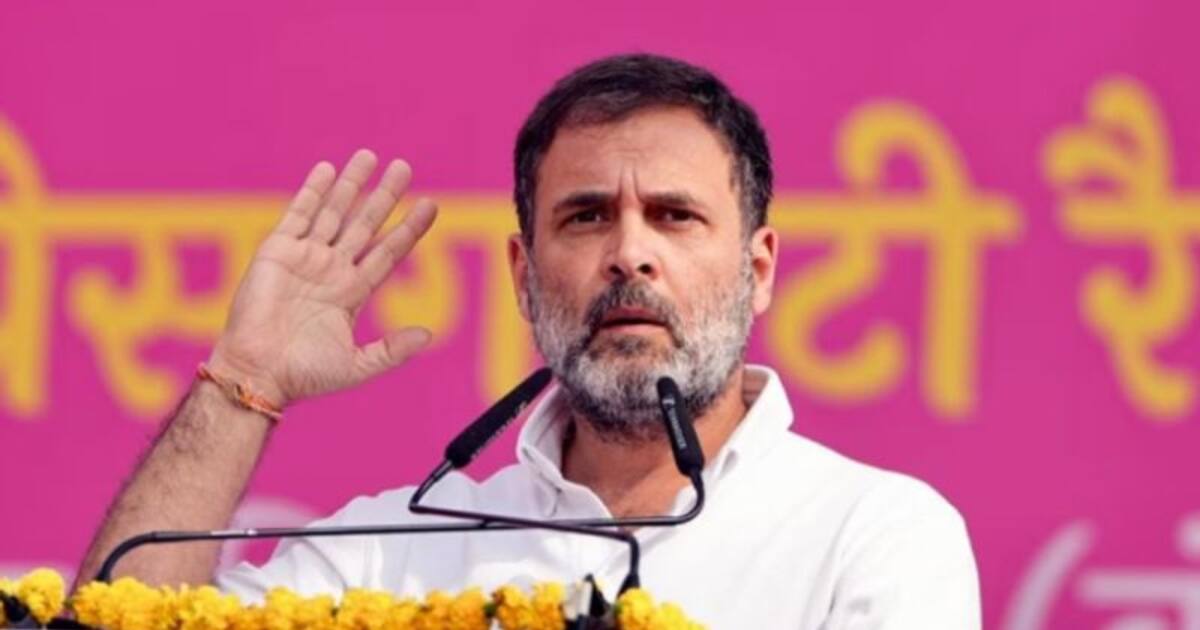
The top court made the stern comments while halting the proceedings in a criminal defamation lawsuit against the leader of the opposition in the Lok Sabha for his comments regarding the Indian Army in relation to the 2020 conflict with the Chinese soldiers in the Galwan Valley.
Apex Court Slams Rahul Gandhi Over Land Occupation by China
On August 4, 2025, Plaintiff Rahul Gandhi found himself at the receiving end of sharp criticism from the Supreme Court of India for India’s erstwhile opposition leader’s accusation that China occupied 2,000 square kilometers of Indian territory during his Bharat Jodo Yatra in 2022. Dealing with a defamation plea against him, the bench raised a query: “How do you know that? If you were a true Indian, you wouldn’t say such a thing.” The Court further stated that very wide allegations like these require solid evidence, not social media posts.
Justices Dipankar Datta and Augustine George Masih instructed Rahul to restrict his comments to Parliament, where formal debate occurs, and not the public domain. Keeping in view the admonishment, however, the Court granted an interim relief by putting a stay on the defamation proceedings in the Lucknow court.
“Whatever you have to say, why don’t you say in the Parliament? Why do you have to say this in the social media posts? Just because you have 19(1)(a) freedom of speech, you cannot say anything,” he said.
Broader Implications: Political Responsibility
The defence by Rahul Gandhi, represented by Senior Advocate Abhishek Manu Singhvi, argued that his observations questioned official narratives around Galwan. While he conceded the possible verbal mis-expression, Singhvi insisted that the raising of concerns is the duty of the opposition. But the Court insisted that leadership implies careful framing and evidence-based allegation.
By making comparisons with ongoing geopolitical tension and the legacy of the Galwan clash, the remarks of the Court highlight the responsibilities of public figures in justifying allegations which tarnish the reputation of the nation. This episode highlights the need for important restraint on the part of the judiciary and clarity, particularly when dealing with sensitive national security issues.
What Is Rahul Gandhi’s Defamation Case?
Singhvi claimed that making these kinds of accusations was merely a means of intimidating someone for posing inquiries. Additionally, he stated that the accused must be heard in accordance with Section 223 of the BNSS before the court can act on a criminal complaint.
However, this was not the case in this instance. Justice Datta did point out, nevertheless, that the High Court had not before addressed this argument on Section 223.