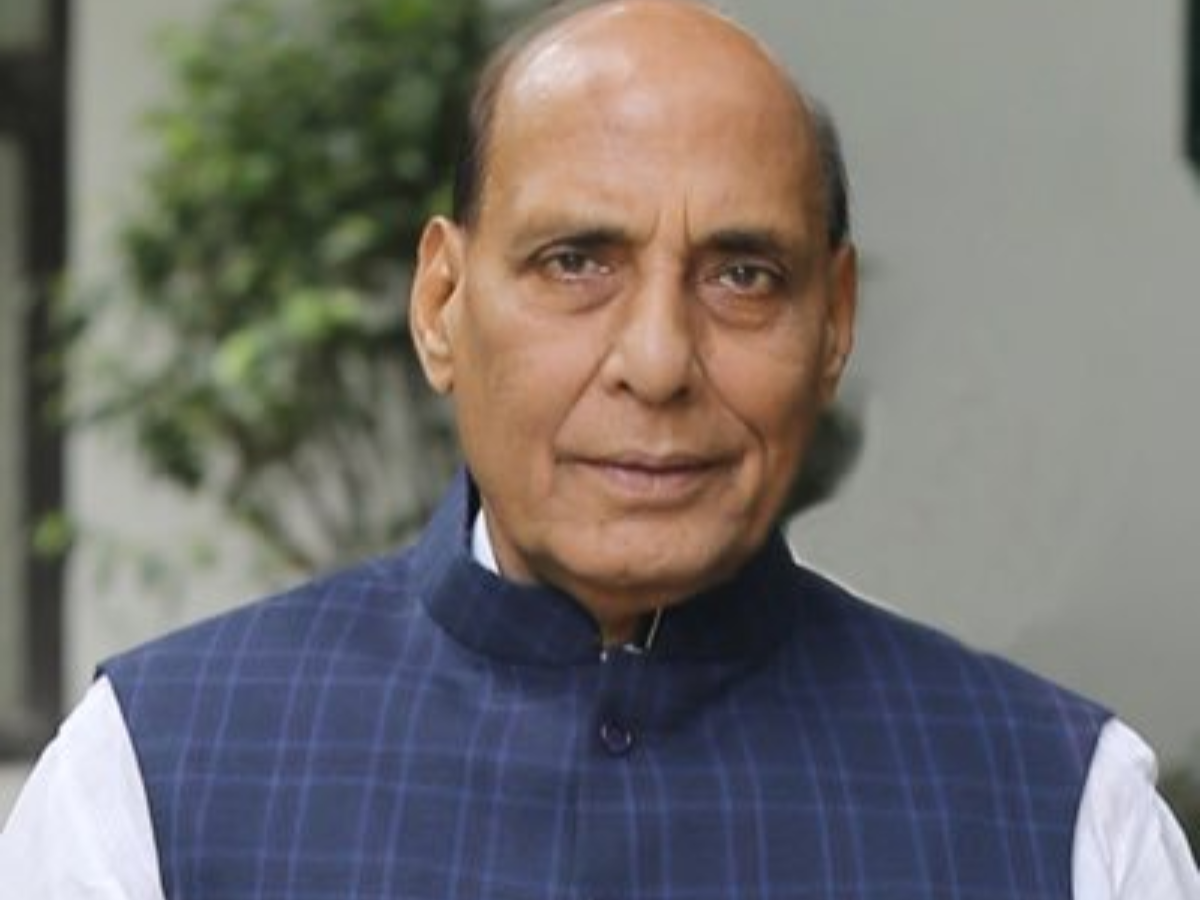
Defence Minister Rajnath Singh, addressing the NDTV Defence Summit 2025, reiterated the government’s view on “aatmanirbharta” (self-reliance) in the defence domain.
In a world where trade frictions with the United States were at a peak and engagements with China had mostly cooled down, Singh stressed that India’s defence and foreign policies would always adhere to one defining principle national interests and however, for some works more temporary than others.
Defence Minister @rajnathsingh addresses a Defence Conclave in New Delhi.
Mr Singh stresses that self-reliance in defence is not merely an option, but a condition for survival and progress.
He says the government believes that self-reliant India can safeguard its strategic… pic.twitter.com/OIQqE6tlEU
— All India Radio News (@airnewsalerts) August 30, 2025
ALSO READ: PM Modi’s Japan Visit: Historic Deals, Defence Ties and More Explained in Detail
No Permanent Friends or Enemies
The strategic tenor of Singh’s comments was unmistakable. He emphasized the tariff disputes with Washington to reiterate his point that India will never negotiate on the welfare of its people, however great the pressure from the outside world.
He commented on the near 50% tariff on Indian imports that the United States was imposing and said that protectionism is changing the global trade landscape. Once again reiterating that India does not see any nation as an ultimate enemy, Singh unabashedly declared that New Delhi would engage in partnerships only when those partnerships advanced its long-term national goals.
Aatmanirbharta as an Imperative, Not an Option
Defence Minister stressed that self-reliance in today’s turbulent geopolitical environment is recognized as a strategic necessity, not any longer as a blessing. Reliance on foreign vendors for crucial defence equipment makes a country vulnerable in times of crisis, Singh observed.
By striving for domestic production, India not only guarantees military preparedness but also fortifies the economic capability of the country. Rajnath Singh accentuated the point that every warship built in India is to be made in India, thereby fortifying the Navy’s commitment to wean itself off foreign supplies.
ALSO READ: “Preparations for Putin’s India Visit Underway,” Kremlin Aide Confirms
Increase in Indigenoization: From Warships to Sudarshan Chakra
India’s march in indigenous defence manufacturing has kicked off, and it is already harvesting fruits. Singh proudly declared the commissioning of two Nilgiri class stealth frigates INS Himgiri and INS Udaygiri both of which were designed, developed, and produced in India.
He went on to state that the much talked about Sudarshan Chakra defence system is nearing completion and will be made operational shortly. These events, he said, are the testimony of India’s ability to design, innovate and deploy world class military technology on its own soil.
Exports Rise and Operations Are Successful
Rajnath Singh pointed to the growing global demand for Indian defence technologies. Defence exports have grown from merely ₹700 crore in 2014 to almost ₹24,000 crore today, symbolizing a paradigm shift for India from being a heavy military importer to becoming an emerging exporter of military hardware. The minister further recalled how India’s indigenous systems played a crucial role in precision strikes during Operation Sindoor, held post Pahalgam terror attack. He called it an example of how indigenous capabilities translate into operational success on the battlefield.
Rajnath Singh reiterated that India’s journey toward defense self-sufficiency was concerned not merely with military security but also with national pride, economic development and global credibility.
ALSO READ: ‘Modi-San Welcome’ in Japan: What San Means and Why It Matters?