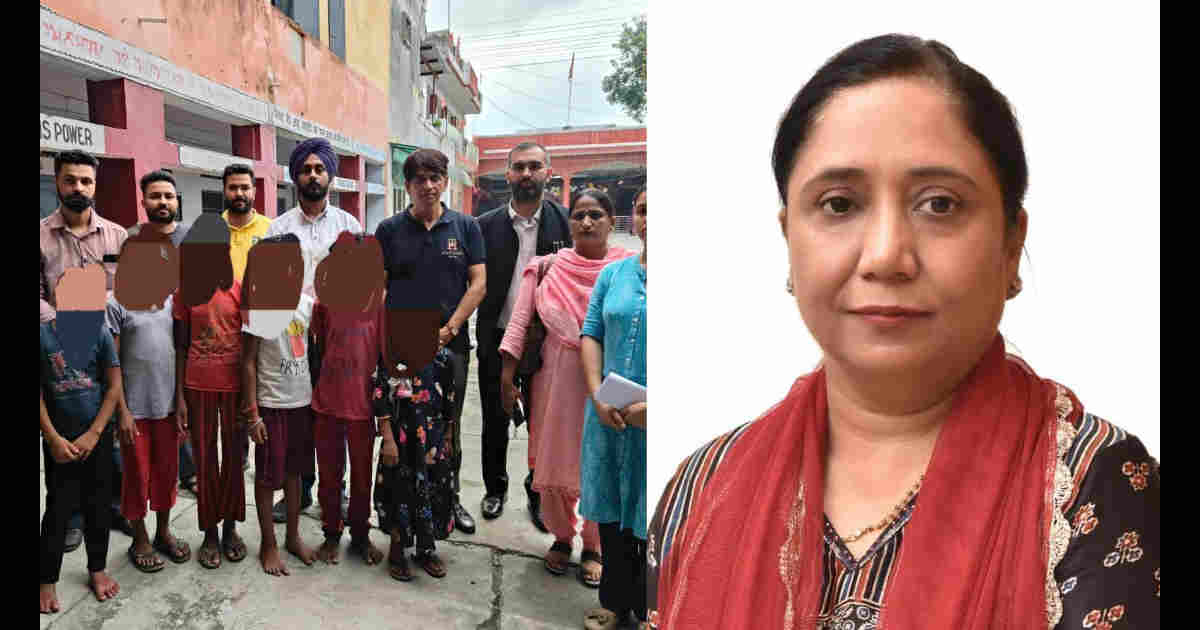
In the streets of Punjab, the sight of children knocking at car windows, holding out frail hands at traffic signals, or waiting outside temples with empty bowls has long been a disturbing reminder of poverty and helplessness. Each child forced into beggary loses not just education but also innocence and dignity. To end this painful cycle, Punjab has taken a historic step with Project JeevanJyot, a drive launched by the Department of Social Welfare under Minister Dr Baljit Kaur. From July 2024 onwards, this mission has brought hundreds of children out of begging and given them back a chance to live with dignity. Punjab has also become the first state in the country to prepare a law to completely ban and eradicate beggary, especially child beggary, in a structured and humane manner.
Project JeevanJyot 1: The first phase of hope
The first phase of Project JeevanJyot, launched in July 2024, ran actively till June 2025. It marked a turning point in the state’s fight against child beggary.
Raids conducted: 753
Children rescued: 367
Restored to parents: 350
Sent to Child Care Institutions (CCIs): 17
Belonging to other states: 150
Enrolled in schools: 183
Placed under sponsorship: 30
Sent to Anganwadi centres: 8
Behind every number is a human story. A six-year-old rescued from a busy traffic signal in Ludhiana was restored to his mother, who now sends him to school. Another group of children rescued in Jalandhar belonged to Bihar and were trafficked into Punjab to beg at religious sites. Officials ensured their safe return and rehabilitation.
This phase proved that beggary was not only a law-and-order issue but also one of social justice. Children were not treated as offenders but as victims who needed love, care and education.
Project JeevanJyot 2.0: A stronger second chapter
Encouraged by the success of the first phase, the Punjab government launched JeevanJyot 2.0 on July 17, 2025. In just over a month, till August 25, 2025, it showed remarkable results:
Raids conducted: 523
Children rescued: 279
Restored to families the same day: 137
Placed in CCIs: 142
DNA samples collected: 15
The fact that 142 children had to be placed in child care homes shows that many were without safe parental supervision or were trafficked from other regions. By collecting DNA samples, the department has also initiated steps to verify their identity, trace families, and prevent future trafficking.
Dr Baljit Kaur: “Every child deserves dignity, not a life of begging”
Social Welfare Minister Dr Baljit Kaur, who has been the guiding force behind JeevanJyot, said that the aim is not just rescue but long-term rehabilitation.
“Beggary is not a choice, it is compulsion. Children on the streets are not criminals, they are victims of circumstances. Through Project JeevanJyot, we want to give them dignity, education and a future. Punjab has taken the lead in fighting this evil and we are drafting a law to permanently end beggary in the state. This will be India’s first such legislation,” she said.
Dr Kaur stressed that while raids and rescues bring immediate relief, the larger mission is to create systems that prevent children from being pushed into begging again. That includes sponsoring their education, enrolling them in schools and Anganwadis, and working with parents to ensure livelihood support so children do not return to the streets.
Punjab as the first State to act
Punjab stands apart as the first state in India to formally start such a campaign. Unlike sporadic actions in other regions, JeevanJyot is a structured programme with regular raids, follow-ups and rehabilitation steps. The government has already announced that a draft law is being prepared to criminalize forced child beggary while holding traffickers and handlers accountable.
This law will also ensure that rescued children are provided immediate shelter, medical care, counseling and education. Officials say the law will blend compassion with strict enforcement, ensuring that children are not punished but those exploiting them are.
The human side: Stories from the streets
One of the most moving rescues was of an eight-year-old boy found at a bus stand in Amritsar. He had been made to beg by distant relatives after his father’s death. Under JeevanJyot, he was placed in a CCI, enrolled in school, and now dreams of becoming a police officer.
Another story came from Bathinda, where a mother of three was found making her children beg near a marketplace. She confessed she had no income and was unable to feed them. The children were placed in school while the mother was linked with a self-help group for livelihood. The transformation gave the family a chance to survive without beggary.
Why child beggary persists
Experts point out that child beggary in Punjab is not only due to local poverty but also migration and trafficking. Many children rescued in raids were from states like Bihar, Uttar Pradesh and Rajasthan. Syndicates often bring children across state borders and deploy them at busy crossings, markets, and religious places.
Another factor is urban poverty within Punjab, where jobless parents sometimes push children into begging. Addiction within families also contributes, as children are used to collect money for drugs or alcohol. JeevanJyot addresses these root causes by connecting parents to welfare schemes and linking children to education.
Education and rehabilitation: The real goal
The success of Project JeevanJyot is measured not only in raids and rescues but also in how many children re-enter education. In Phase 1 alone, 183 rescued children were admitted to schools. This step is crucial because education breaks the cycle of poverty and ensures children do not return to begging.
Some children too young for school were sent to Anganwadis, where they receive nutrition and early education. For orphans or abandoned children, CCIs provide a safe environment. Sponsorship programmes also play a vital role, where families in distress receive financial support so that children can stay in school.
Building public awareness
Officials believe that ending beggary also needs public participation. People often give money to children out of sympathy, but this fuels the cycle. Through JeevanJyot, the government is appealing to citizens to support rehabilitation efforts instead of giving alms. Awareness drives are being planned across districts so that the public sees rescued children as students and dreamers, not beggars.
Preparing the law: A national model
Work has already begun on drafting Punjab’s anti-beggary law. According to officials, the law will:
Criminalize the use of children for begging.
Empower police and social welfare teams to rescue children immediately.
Mandate DNA collection for unaccompanied children to trace families.
Provide for sponsorship, education and rehabilitation.
Establish accountability for traffickers and handlers.
Once enacted, this law will make Punjab the first state with a dedicated framework to fight beggary. Officials say it could become a model for the rest of India.
A mission of compassion and justice
Project JeevanJyot is more than statistics; it is about giving childhood back to children who had been robbed of it. The numbers already achieved — 367 children rescued in Phase 1, 279 in Phase 2 within a month — reflect determination. But the true measure of success will be when no child is seen begging at traffic lights or outside shrines in Punjab.
As Dr Baljit Kaur put it, “Every child deserves a life of books, not bowls. Our fight is to make sure no child in Punjab sleeps hungry or begs for survival. This is not just a government mission, it is society’s responsibility.”
With its strong start, Punjab has shown that compassion and willpower can change realities. By bringing law, care and education together, the state is leading India’s first organized battle against beggary. If successful, Project JeevanJyot will not just end begging on Punjab’s streets — it will light a path for the entire nation