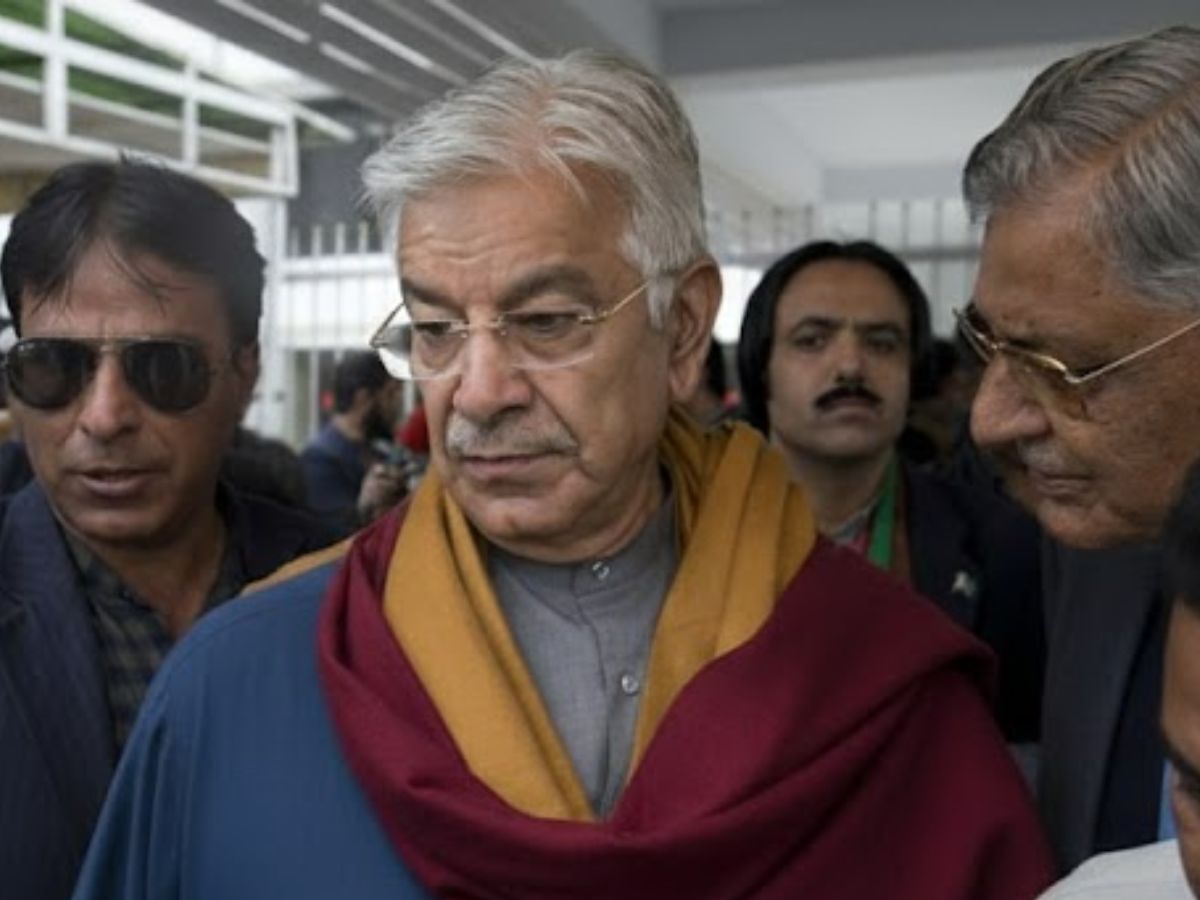
Pakistan’s Foreign Minister, Khawaja Asif, has put the country on “full alert” and issued a serious warning, saying an “all-out war” with India cannot be dismissed. His statement has sharply raised tensions between the nuclear-armed neighbors, hinting at a risky new stage in the long-standing dispute.
What Did Pakistan’s Foreign Minister Say?
In a recent interview, Khawaja Asif was vocal about the perceived threat from India. He reiterated a stark warning, emphasizing his country’s defensive posture. “I cannot rule out an ALL-OUT WAR and any strategy from India… We must stay fully alert,” he stated. Asif elaborated that Pakistan is neither ignoring nor trusting India, and his analysis suggests a high probability of hostile actions. He specifically mentioned the possibilities of border incursions or direct attacks as reasons for maintaining maximum military preparedness.
Pakistani Def Min Khawaja Asif
“I cannot rule out an ALL-OUT WAR or any hostile strategy from India, including border incursions or attacks. We must stay fully alert”. pic.twitter.com/IqYBMZoUVq
— War & Gore (@Goreunit) November 19, 2025
Why Are Tensions So High Right Now?
The immediate context for these warnings is multifaceted, involving recent terrorist attacks and a significant military operation. Security agencies in India are currently investigating a devastating blast at Delhi’s historic Red Fort, which killed at least 15 people. The investigation’s trail is reportedly pointing towards the Pakistan-based terror outfit, Jaish-e-Mohammad (JeM). This was further fueled by an unverified viral video featuring a former PoJK official seemingly claiming responsibility for hitting India “from the Red Fort to the forests of Kashmir.”
Operation Sindoor
Understanding the current mood means recalling Operation Sindoor, an important military move by India. Started in May 2025, it was a fast, 88-hour counter-terror mission. It came as a direct reaction to the April 22 Pahalgam attack that left 26 civilians dead at the hands of Pakistan-backed terrorists.Indian armed forces chiefs described the operation as “just an 88-hour trailer,” designed to deliver a clear message.
What Did Operation Sindoor Achieve?
Operation Sindoor was a carefully planned and destructive campaign against Pakistan’s infrastructure. Its purpose was twofold: to respond to the terror attack and to cut down Pakistan’s capacity to back terrorism. The operation executed targeted strikes on:
- Nine major terror camps.
- Eleven Pakistani military sites were hit, including key airbases. The strikes destroyed hangars, fighter jets, surveillance equipment, and runways, badly weakening Pakistan’s air defenses. When Pakistan tried to respond with drones and missiles, India’s coordinated air defense — including the S-400 system, neutralized the attempt.
Also Read: Assam Draws a Legal Line on Marriage, Announces Tough Anti-Polygamy Law
What Does This Mean for the Future?
Khawaja Asif’s war rhetoric is not occurring in a vacuum. It appears to be a direct reaction to the strategic humiliation of Operation Sindoor and the increasing international pressure linked to terror groups like JeM. The situation presents a volatile cycle: a terror attack on Indian soil leads to a military response from India, which in turn prompts threats of all-out war from Pakistan. This dangerous tit-for-tat dynamic keeps the region on a knife’s edge.