The demand for a National Register of Citizens (NRC) before the Census has intensified in Manipur after student protesters disrupted the training of Census enumerators and supervisors at Moirang College in Bishnupur.
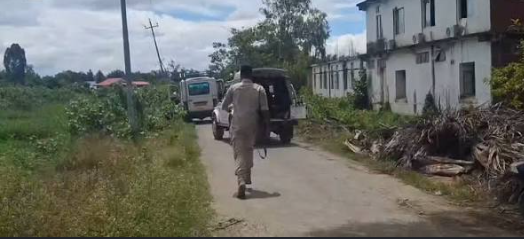
On August 14 morning, members of the students’ wing of the Campaign for Just and Fair Delimitation (JFD) reached the campus, where Census officials had gathered for training. Carrying placards that read “No NRC, No Census,” the protesters forced the trainees to leave before the session could begin. Police later arrived to restore order. Officials confirmed that the disruption was deliberate and political.
JFD students’ wing convenor Naorem Wangamba said the organisation wants the NRC to be conducted before the Census. “We have been demanding NRC to find out the illegal immigrants. However, the government is seeking to conduct the census without carrying out NRC. NRC is important to save the future generations,” he said.
The organisation has been demanding that the National Register of Citizens be updated before population enumeration. It says the exercise is necessary to identify alleged illegal immigrants and prevent them from gaining legitimacy through official records.
The Bishnupur incident is the latest development in a campaign that has gained momentum across the Meitei-dominated Imphal Valley for more than a year. Coalitions of civil society organisations, often under the banner of 14 CSOs Kangleipak, have organised mass rallies, sit-ins and public conventions demanding an NRC, preferably using 1951 as the base year, before the 2027 Census and any subsequent delimitation of constituencies.
The Manipur Legislative Assembly passed resolutions in August 2022 and March 2024 calling for an NRC and a State Population Commission. However, New Delhi and the state government have so far declined to commit to the exercise.
The demand is closely linked to Manipur’s ethnic geography and its 398-km porous border with Myanmar. Meitei and some Naga groups argue that cross-border migration over the decades has changed the state’s demographic balance, particularly in the hill districts. They point to high population growth rates in some hill areas between successive censuses and allege that many of the new arrivals belong to Chin-Kuki communities ethnically linked to Manipur’s Kuki-Zo population.
For the protesters, conducting a Census without prior citizenship verification could result in undocumented residents being counted and eventually gaining citizenship and voting rights. They fear that delimitation based on such population figures could permanently reduce the political weight of indigenous communities in the valley and among certain Naga groups.
The slogan “No NRC, No Census” has therefore become both a demand for an NRC and a reflection of wider demographic concerns in the state.
Kuki-Zo organisations and some tribal groups, however, view the demand with deep suspicion. They argue that an NRC based on the Assam model; a highly contested exercise that left nearly 19 lakh people excluded under a 24 March 1971 cut-off could affect genuine Indian citizens who do not have sufficient documentary proof after years of displacement, conflict and limited administrative reach in the hills.
Some groups have said they would accept a carefully supervised process under Supreme Court oversight and with tribal consultation. Others reject the claim that large-scale illegal immigration was responsible for the violence. The Free Movement Regime along the Indo-Myanmar border has already been tightened and fencing accelerated, but trust between the communities remains limited.
The disruption at Moirang College highlights how the Census has become another major point of contention in Manipur’s unresolved ethnic conflict.
House-listing operations were scheduled to begin later in August, while population enumeration is slated for early 2027. With thousands of people still living in relief camps, restrictions on free movement having continued in many areas until recently, and competing historical narratives becoming more entrenched, the process faces a difficult environment.
The Centre now faces competing demands over whether to proceed with the Census, consider a compromise mechanism or address the call for an NRC first. In a state still dealing with the consequences of three years of violence, the dispute over the Census has added another layer to the existing tensions.