Over 10,000 Indian citizens are already behind bars overseas, of which 49 are under sentence of death, as per the Ministry of External Affairs (MEA). The appalling magnitude of such cases highlights the uphill task before Indian diplomacy in bringing justice to citizens trapped in untested legal frameworks.
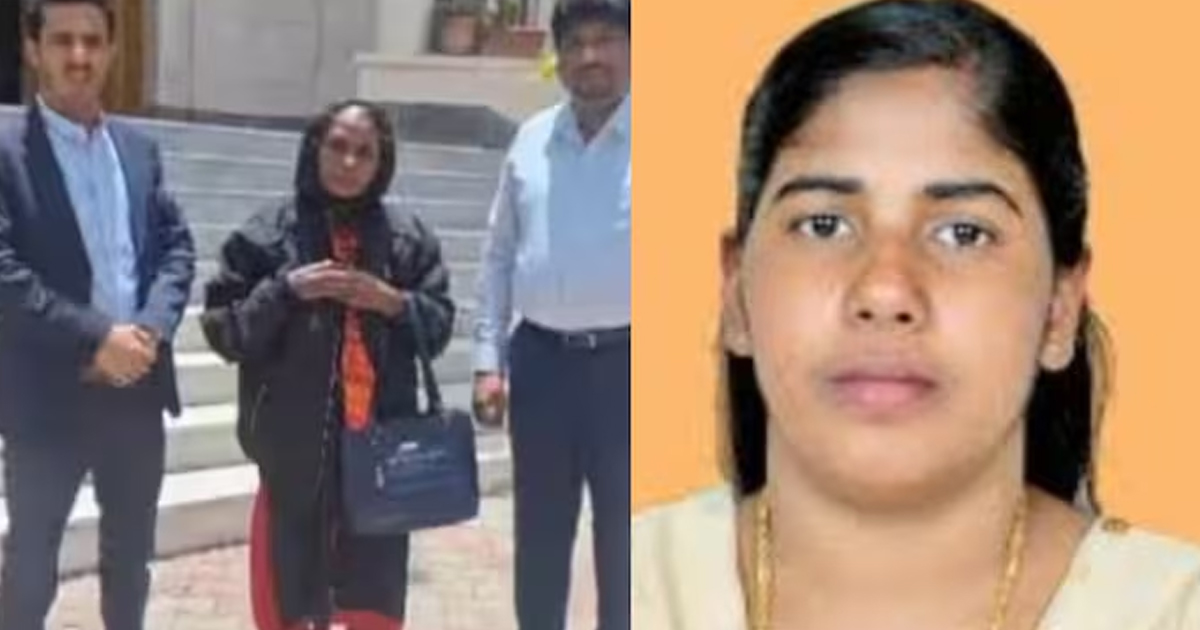
One of the most urgent cases is that of Nimisha Priya, a nurse born in Kerala, who will be executed in Yemen on July 16, 2025, for the murder in 2017 of her Yemeni business partner, Talal Abdo Mahdi.
The Nimisha Priya Case: A Grim Example
In a report, Priya reportedly drugged Mahdi to get her passport back from him, which he had kept. The argument eventually led to his death. She and a local accomplice reportedly cut up the body and buried it in a water tank.
Convicted under Yemen’s Sharia law amidst a civil war, Priya’s appeal was rejected in 2023. The lack of official diplomatic relations between India and Yemen’s Houthi-dominated government means direct intervention is virtually impossible.
India’s hope is only under Sharia law’s “blood money” rule, whereby the life of a convict can be spared if financial compensation is accepted by the family of the victim. But even this is a private legal affair under Yemeni law, inaccessible to the Indian state.
Indians on Death Row Around the World
Nimisha’s case is not unique. As of March 2025, 49 Indians were on death row in eight nations. They include 25 in the UAE, 11 in Saudi Arabia, six in Malaysia, and the rest in Kuwait, Indonesia, Qatar, the US, and Yemen.
The offenses vary from murder, trafficking in drugs, and spying to religious offenses. Some Indians in Saudi Arabia and Kuwait were put to death between 2023 and 2024, mainly for offenses involving narcotics.
India, with its international diplomatic reach, has no jurisdiction to reverse criminal convictions in independent states. The MEA can only provide consular assistance, legal aid, and enable appeals or mercy pleas.
Vulnerability of Indian Migrants in the Gulf
The UAE and Saudi Arabia, both countries with huge numbers of Indian migrant workers, have a disproportionate number of legal cases. More than 2,500 Indians are incarcerated in the UAE alone, and 25 are on death row.
Most of the cases include labour issues, identity theft, trafficking, or fights under coercion. Legal ignorance, language issues, and the absence of adequate legal representation increase the risk for Indian workers.
Legal Loopholes and Diplomatic Obstacles
Although the MEA is obligated to assist through jail visits and legal assistance, the laws of the host nation override all actions. In war-torn regions such as Yemen, even rudimentary consular access is typically withheld because of a lack of formal recognition of governing powers.
In spite of the Indian government’s guarantees that the “safety, security, and well-being” of Indian nationals abroad is a priority, it is difficult to intervene in individual cases due to the large number.
Community Action and the Future
Organizations such as Save Nimisha Priya – International Action Council have intervened to create awareness and engage local actors such as tribal sheikhs in Yemen. These efforts by society tend to bridge gaps left by the constraints of bureaucracy.
Experts are urging more robust pre-departure awareness campaigns for Indian emigrants, particularly to countries with strict legal systems. Local law awareness, cultural sensitization, and legal rights awareness can act as a first line of defence.
There is also an increased need for bilateral legal aid agreements, speedier consular access, and specially earmarked legal defence funds to protect vulnerable Indian nationals abroad.
As Nimisha Priya’s case demonstrates, the seamy side of international migration requires a concerted, well-financed, and compassionate strategy — one that prioritizes intervention, yes, but also prevention and legal empowerment.