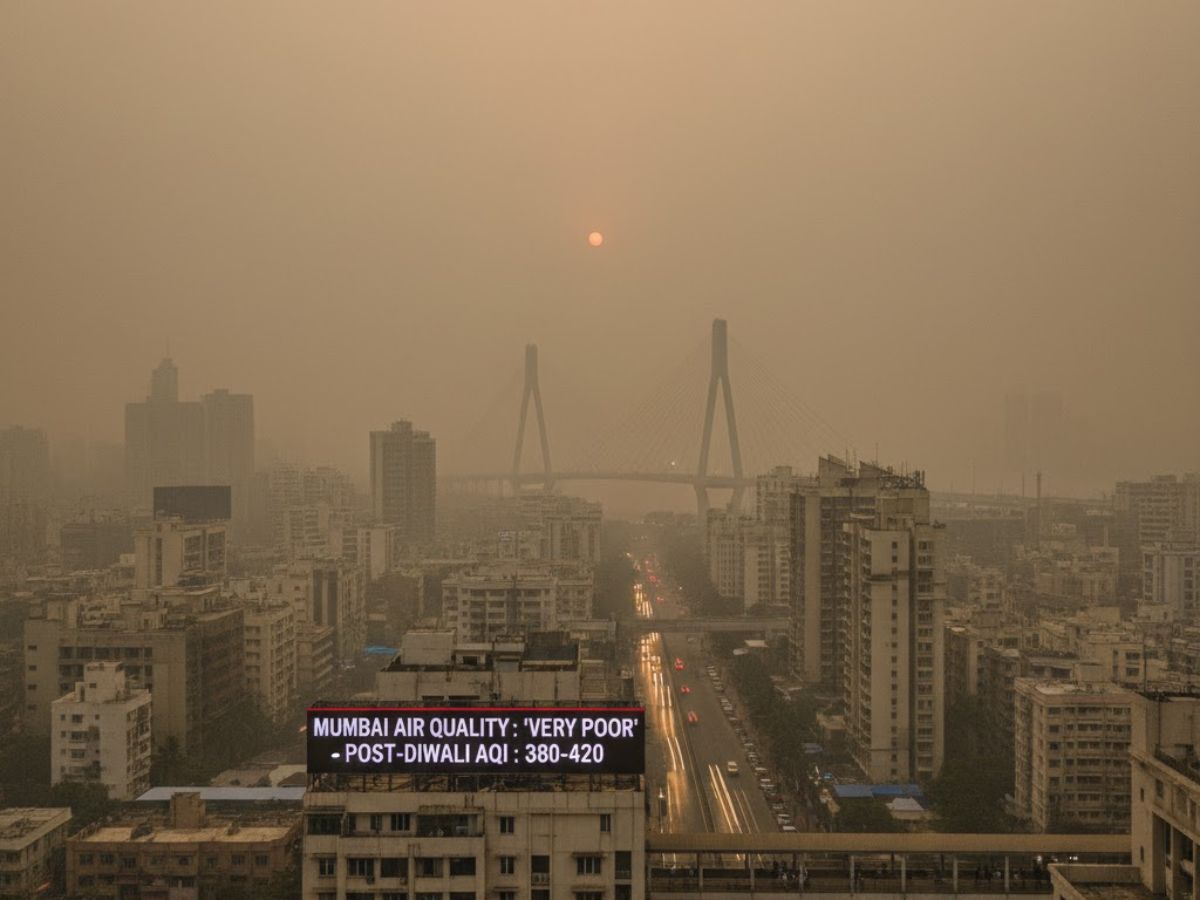
The festive cheer of Diwali has given way to a familiar environmental worry in Mumbai. The city’s air quality has dropped to its worst level since the monsoon withdrew on October 10. On Monday, the overall Air Quality Index (AQI) was recorded at 188, which falls into the ‘moderate’ category. However, this city-wide average hides a more troubling local reality, with primary pollutants like PM 2.5, PM10, and Ozone filling the air.
What Does the ‘Moderate’ AQI Really Mean?
AQI is a scale that tells us how clean or polluted the air is each day. A score of 0–50 means ‘Good,’ 51–100 is ‘Satisfactory,’ and 101–200—where Mumbai usually falls—is ‘Moderate.’ Air becomes ‘Poor’ at 201–300, ‘Very Poor’ at 301–400, and ‘Severe’ above 400. While Mumbai’s official reading was 188, this number is a city-wide average that smooths over severe local hotspots, presenting a deceptively calm picture.
Where Were the Worst-Affected Spots?
Data from the Central Pollution Control Board (CPBC) reveals that numerous locations were breathing air far more polluted than the average suggested. BKC recorded a hazardous AQI of 335, putting it deep in the ‘Very Poor’ zone. Additionally, ten monitoring stations showed ‘Poor’ air quality. The worst-hit areas included Mazagaon (254), Navy Nagar-Colaba (282), Deonar (271), and Chakala in Andheri East (263). Mira Bhayandar (192), Navi Mumbai (189), and the rest of the Mumbai Metropolitan Region experienced ‘Moderate’ pollution levels.
Why is the Air Quality So Bad Now?
The decline was expected due to a combination of seasonal and human factors. The onset of winter and the widespread lighting of firecrackers over the Diwali weekend were significant contributors. However, experts warn that the worst may be yet to come. Gulfran Beig, a chair professor, stated that wind speeds are likely to slow down in November. He pointed to the La Niña weather phenomenon, which is expected to reduce wind speed and trap pollutants, similar to the conditions that severely worsened Mumbai’s air in 2021-2022.
Also Read: ‘Immigrants Will Do the Jobs Americans Won’t’: Mehdi Hasan’s Jab at Trump’s Family
How Did the Weather Add to the Discomfort?
In addition to the unseasonably high temperatures, the city also had poor air quality. Santacruz and Colaba experienced temperatures of 35.9°C and 35°C, respectively. With this heat likely to stay between 34°C and 36°C through the week and air pollution persisting, the city is facing extremely uncomfortable and unhealthy conditions.