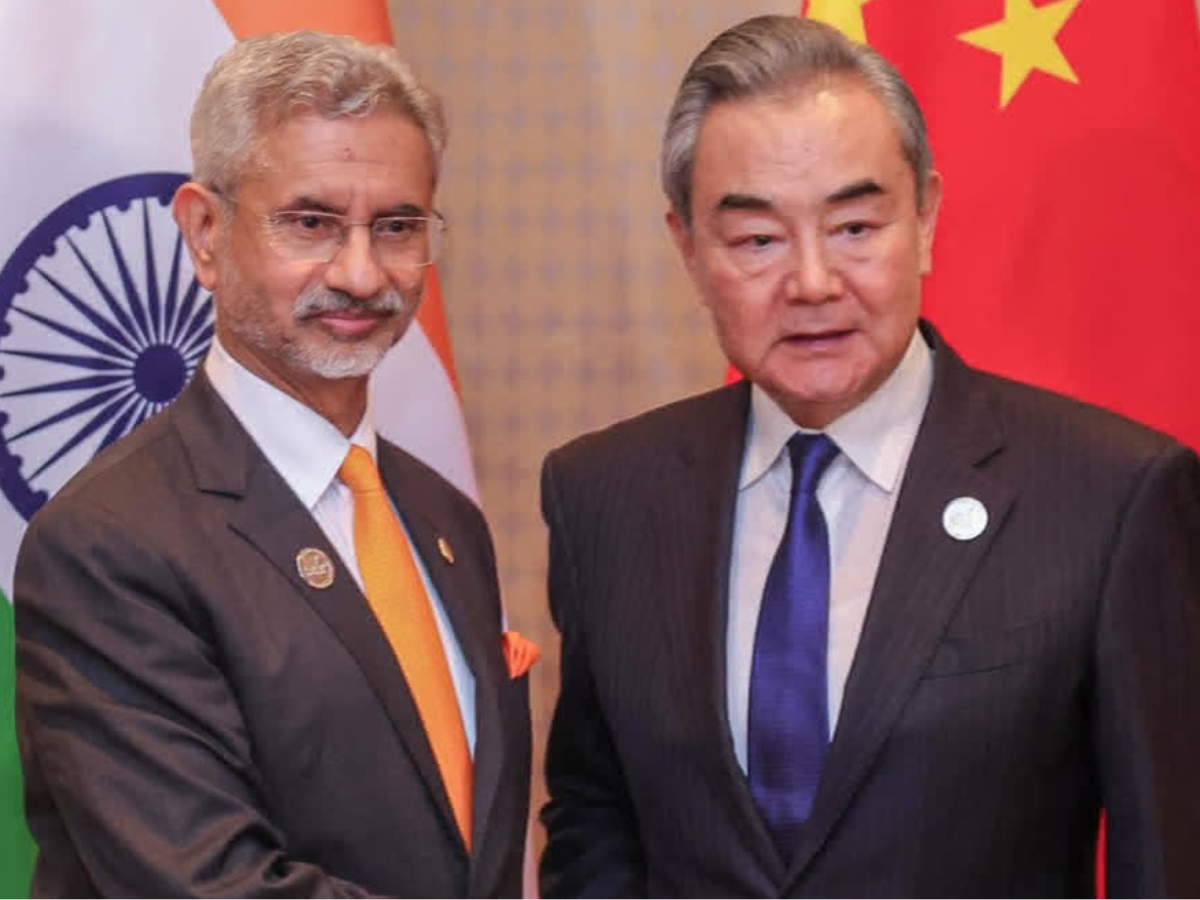
External affairs minister S. Jaishankar on Monday emphasized the necessity of a “candid and constructive” approach in resetting relations between India and China after years of tension. Jaishankar met Chinese foreign minister Wang Yi in New Delhi and reiterated that developments in bilateral relations would have to be based on the “three mutuals – mutual respect, mutual sensitivity, and mutual interest.”
Jaishankar emphasized that the capacity of both nations to ensure peace and tranquillity along the Line of Actual Control (LAC) is key to forward movement in relations. He further added that though no differences will ever disappear, “competition must not become conflict.”
Issues of Importance Addressed
The talks addressed a wide gamut of topics, including:
- Border Issues & Security – Jaishankar insisted that the de-escalation process on the LAC should proceed. Wang will discuss these issues with National Security Adviser Ajit Doval on Tuesday under the Special Representatives mechanism.
- Economic & Trade Cooperation – The Indian minister took up issues raised in Beijing last month, including Chinese restrictive trade practices like curbs on rare earth exports and fertilisers.
- Connectivity & Exchanges – Both sides talked about river data sharing, border trade, pilgrimage, and people-to-people contacts. India also emphasized terrorism as a “principal priority” which needs combined determination.
Between the two Asian giants, relations had hit a new low following the June 2020 Galwan Valley clash and had not been lower in six decades. But last October’s understanding to resolve the military standoff has opened up space for fresh engagement.
Since then, both nations have resumed efforts like the Kailash Mansarovar Yatra after five years, revived tourist visas for Chinese citizens, and are negotiating the revival of direct flights and border trade.
Wang’s Call for Cooperation
Wang Yi echoed Jaishankar’s appeal to rebuild trust, stating that mutual trust has contributed to “erase interference and broaden cooperation.” He placed India and China among the major stakeholders in making Asia stable, particularly at a moment when “unilateralism is rife” around the world.
Wang will see Prime Minister Narendra Modi following discussions with Doval. Modi is set to visit China later this month for the Shanghai Cooperation Organisation (SCO) Summit in Tianjin, and there are also possibilities that he could have a bilateral meeting with President Xi Jinping.