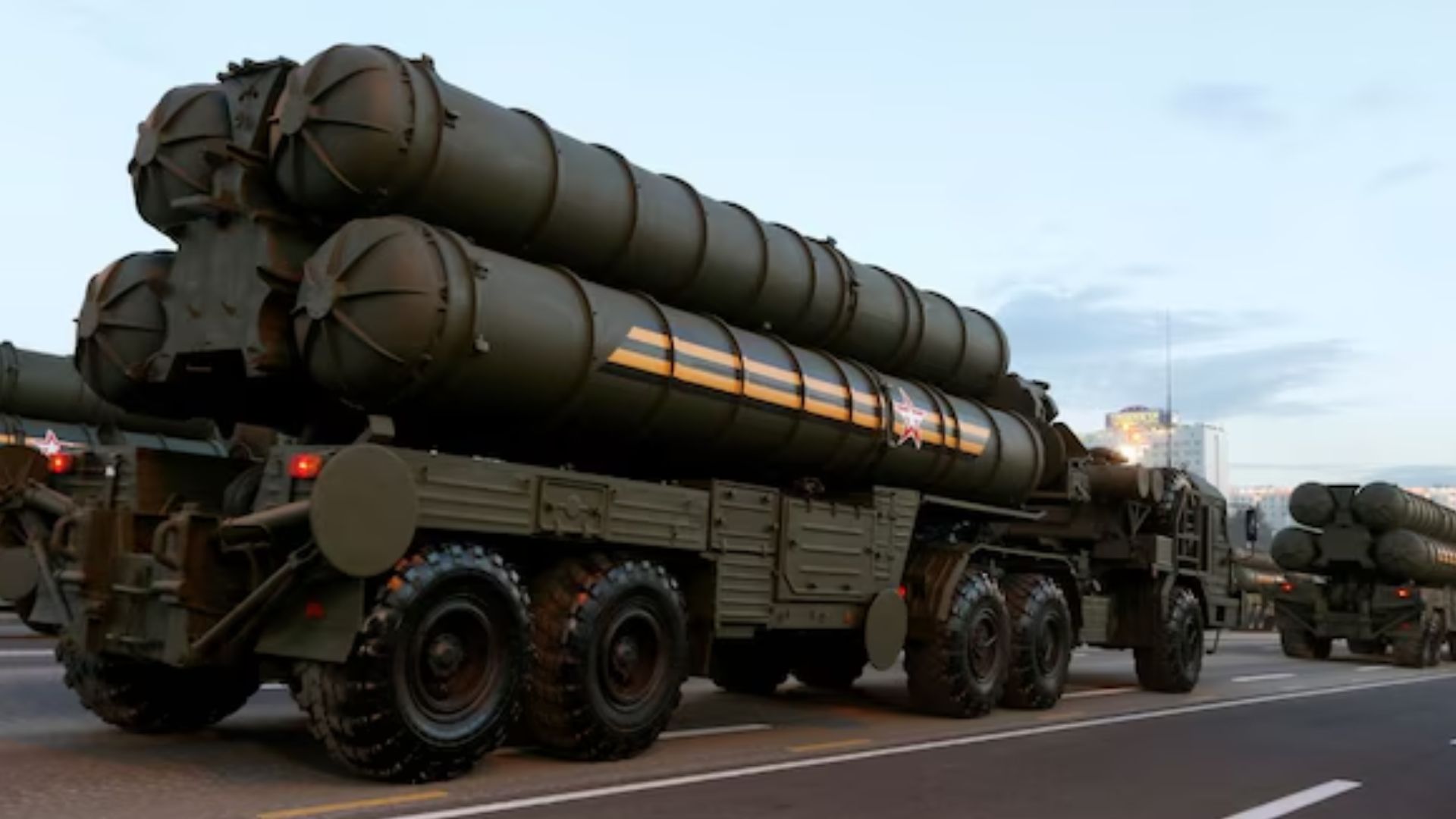
Indian Air Force (IAF) Chief Air Chief Marshal Amar Preet Singh has, for the first time, confirmed the scale of Pakistan’s aerial losses during Operation Sindoor. The S-400 Triumf system, known locally as the Sudarshan Chakra, achieved five fighter jet kills and brought down a high-value airborne early warning and control (AEW&C) aircraft.
The AEW&C, a critical asset for managing Pakistan’s aerial battle network, was destroyed at a range of nearly 300 kilometres—a feat that demonstrated the long reach and precision of the system. Singh emphasised that the operation also saw the S-400 successfully intercept multiple drones and incoming missiles, proving its versatility against a variety of threats.
Why the AEW&C Kill Matters
Destroying an AEW&C is considered a major strategic win in modern warfare. These aircraft act as flying command centres, tracking enemy aircraft, guiding fighters, and monitoring the airspace far beyond radar stations on the ground.
By eliminating Pakistan’s AEW&C early in the operation, India effectively blinded enemy air surveillance, reducing their ability to coordinate fighter jets and defend against further strikes.
Journey of the S-400: From Russia’s Capital to India’s Borders
First fielded by Russia in 2007, the S-400 was designed to protect Moscow from aerial and missile threats. It later served in Syria to defend Russian forces and in Crimea after Russia’s annexation.
India signed a $5.43 billion deal in 2018 for five S-400 regiments. While deliveries were scheduled to finish by 2023, the Russia–Ukraine war disrupted supply chains and delayed shipments.
Step-by-Step Deployment in India
-
December 2021 – First regiment arrives, deployed to guard against western threats.
-
April 2022 – Second regiment received, bolstering northern border defences.
-
October 2023 – Third regiment inducted, giving India three fully operational units covering both Pakistan and China.
The fourth and fifth regiments are now scheduled for February 2026 and August 2026.
Technical Power of the Sudarshan Chakra
Each regiment can deploy multiple interceptor missiles, enabling it to destroy:
-
Fighter aircraft
-
Drones
-
Cruise missiles
-
Short- and medium-range ballistic missiles
With a maximum range of 400 km, the S-400 can track up to 300 aerial targets simultaneously and engage 36 targets at once.
After induction into the IAF, the system was renamed Sudarshan Chakra—a reference to the mythological weapon of Lord Vishnu—signifying precision, speed, and deadly reach.
Looking Ahead: Expanding the Shield
Defence sources say India is considering additional S-400 batteries to strengthen coverage, especially in the northeast and coastal areas.
With full delivery expected by 2026, the system will form the backbone of India’s multi-layered air defence, integrated with indigenous Akash systems, Israeli Spyder units, and future ballistic missile defence interceptors.