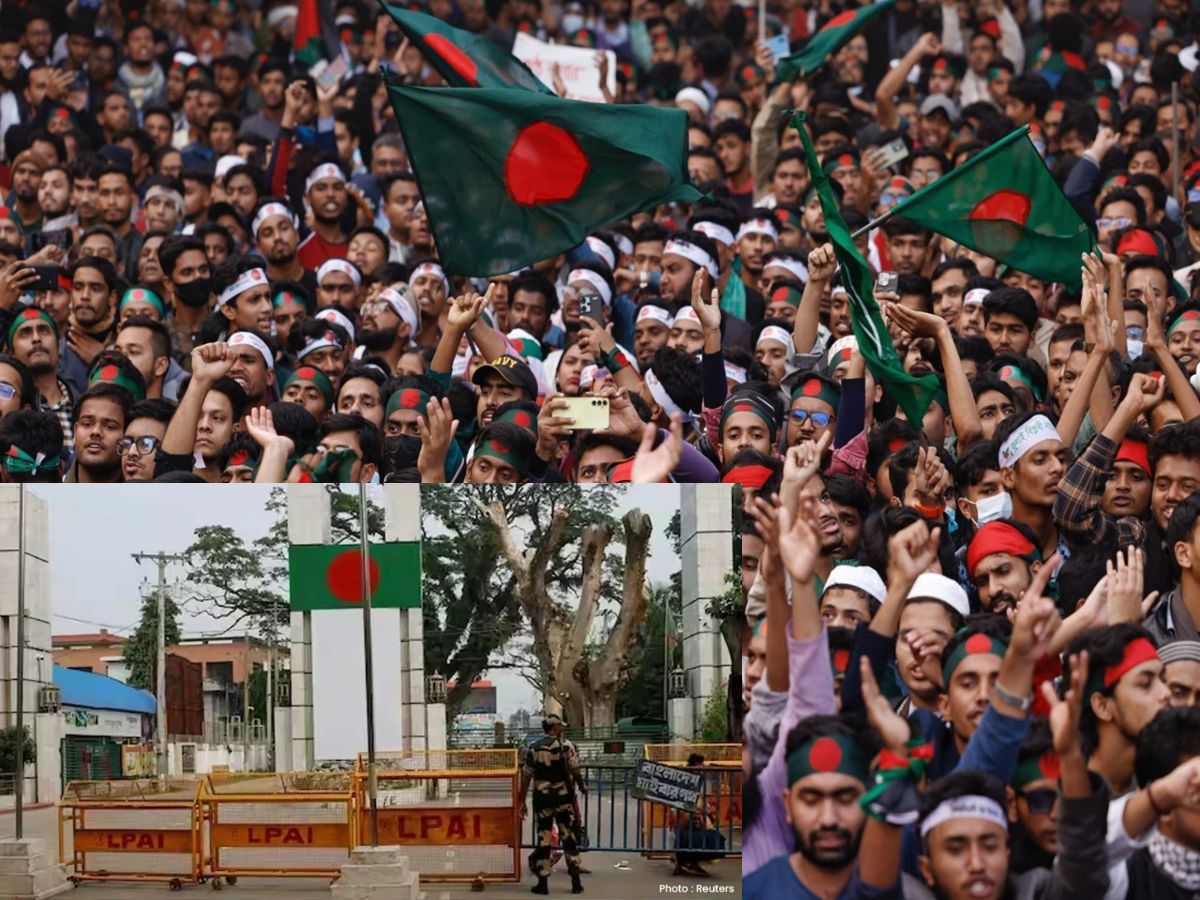
India has taken decisive diplomatic action, shutting down two visa application centers in Bangladesh and summoning the country’s high commissioner, following protests and specific security threats against its missions. Tensions between the neighboring countries have sharply and publicly escalated as a result of the actions on Wednesday and Thursday, which are focused on the security of Indian diplomatic personnel and posts.
What Protests Led to the Visa Center Closures?
Direct protests targeting Indian diplomatic offices prompted the immediate closures. An official from the High Commission of India in Dhaka told the ANI news agency that centers in Khulna and Rajshahi were shut down on Thursday due to the security situation. “Whenever the security situation turns bad, we are forced to shut down,” the official stated. The visa application center in the capital, Dhaka, remained operational.
India has closed two of its visa application centres in #Bangladesh on Thursday, citing the ongoing “security situation.”
The centres in Rajshahi and Khulna have been shut down for December 18. Applicants who had already booked appointment slots will be rescheduled for later… pic.twitter.com/YMgpqyv2gb— SK Chakraborty (@sanjoychakra) December 18, 2025
In Rajshahi, the group ‘July 36 Mancha’ organized a march toward the Indian Assistant High Commission. According to PTI, police intervened, stopping the procession with barricades roughly 100 meters from the office, leading to a sit-in protest.
PTI also reported similar protest calls in Khulna on Thursday.
Why Did India Summon the Bangladesh High Commissioner?
A day before the visa center closures, the Ministry of External Affairs (MEA) took the formal step of summoning Bangladesh High Commissioner Riaz Hamidullah. The MEA lodged a “strong protest over the deteriorating security situation in Bangladesh,” according to an official readout. The protest specifically highlighted “concerns over plans by extremist elements that could threaten the safety of the Indian mission in Dhaka.” The ministry stated it expects the Bangladeshi interim government to uphold its diplomatic obligations to protect foreign missions.
What Was the Controversial Speech That Fueled Tensions?
According to people familiar with the matter, a key trigger for the diplomatic summons was a recent speech by Hasnat Abdullah, a leader of the National Citizen Party (NCP). In his address, Abdullah made a severe allegation, claiming Bangladesh could shelter separatist forces from India and seek to sever India’s seven northeastern states. This rhetoric directly impacts core Indian national security concerns.
How Have Bangladeshi Authorities Responded?
Bangladeshi police have intervened in the protests. Alongside the actions in Rajshahi and Khulna, Dhaka police on Wednesday stopped a group of protesters marching towards the Indian High Commission in the city’s Gulshan area. The Daily Star reported that these protesters were demanding the return of ousted former Prime Minister Sheikh Hasina, who is currently in India.
The situation remains fluid, with India’s actions representing a clear, public demand for heightened security for its diplomatic operations in Bangladesh. The response and guarantees from the local Bangladeshi government are currently the main focus.
Also Read: 3I/ATLAS Comet Live Stream: Watch the Alien Visitor From Beyond Our Solar System