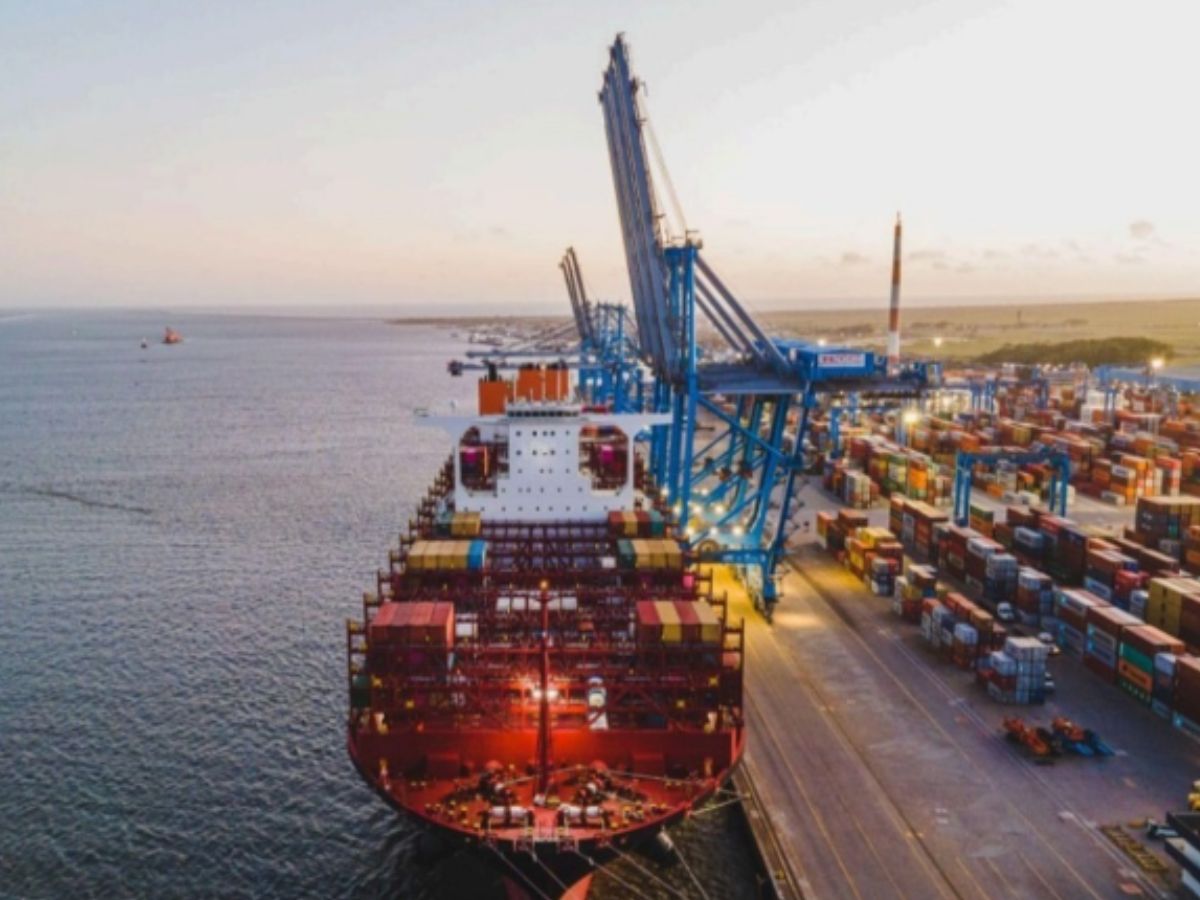
India is on the path of being a global maritime leader, the Union Cabinet has sanctioned ₹69,725 crore package as central government is committed to changing the nation’s shipbuilding and maritime economy. The scheme was unveiled in September 2025, is designed to develop an internationally competitive infrastructure supporting indigenous manufacturing, financing, and innovation.
India’s Maritime Infrastructure Strategy
The strategy of the government is anchored on four pillars aimed at:
- Augmenting domestic shipbuilding capacity
- Improving access to long-term finance
- Upscaling maritime infrastructure
- Globalizing competitiveness through innovation and sustainability
Also Read: Pankaj Dheer Passes Away: TV Actor, Famous for Karna in Mahabharat, Dies at 68 | Details Inside
Key Financial Schemes to Boost Shipbuilding Infrastructure
Shipbuilding Financial Assistance Scheme (₹24,736 crore):
- Provides manufacturing incentives, ship-breaking credit notes, and assistance through the National Shipbuilding Mission. Maritime Development Fund (₹25,000 crore): Is concerned with investment promotion and interest subsidy.
- Shipbuilding Development Scheme (₹19,989 crore): Offers capital assistance, risk coverage, and cluster-based capacity development.
- Infrastructure For Large Ships: Facilitates simpler financing to drive indigenous ship production.
- India Maritime Week 2025 to Welcome 100+ Countries’ Delegates
- Pre-India Maritime Week (IMW) 2025, taking place from 27 to 31 October in Mumbai, the Ministry of Ports, Shipping and Waterways (MoPSW) and the Indian Ports Association (IPA) conducted a press meet at the NESCO Exhibition Centre.
Union Minister Sarbananda Sonowal listed the long-term vision of the government for a strong and resilient maritime industry. IMW 2025 is likely to see more than 1 lakh delegates and 500 exhibitors from over 100 countries, including ministerial delegations from Singapore, UAE, South Korea, Japan, and Denmark.
- Shipbuilding Industry Hopes for High Job Generation and Economic Returns
- Shipbuilding is commonly referred to as the “mother of heavy engineering”, and rightly so. Official estimates hold that:
1. Each investment in shipbuilding creates 6.4 times more employment
2. Returns 1.8 times the invested capital, demonstrating its powerful multiplier effect
3. The industry strengthens national security, strategic autonomy, industrial development, and is likely to receive large-scale foreign and domestic investment.
Maritime India Vision 2030 and Viksit Bharat 2047 Aligned Reforms
These reforms are aimed at port modernization, enhancing manufacturing, promoting startups, and developing a sustainable and innovation-led maritime environment.
In alignment with Maritime India Vision 2030 and the national policy for Viksit Bharat 2047, India will become a world maritime leader, champion of economic resilience, generation of employment opportunities, and dominance of international trade.
Also Read: Global AI rush helps ASML beat orders estimates, but China outlook dims