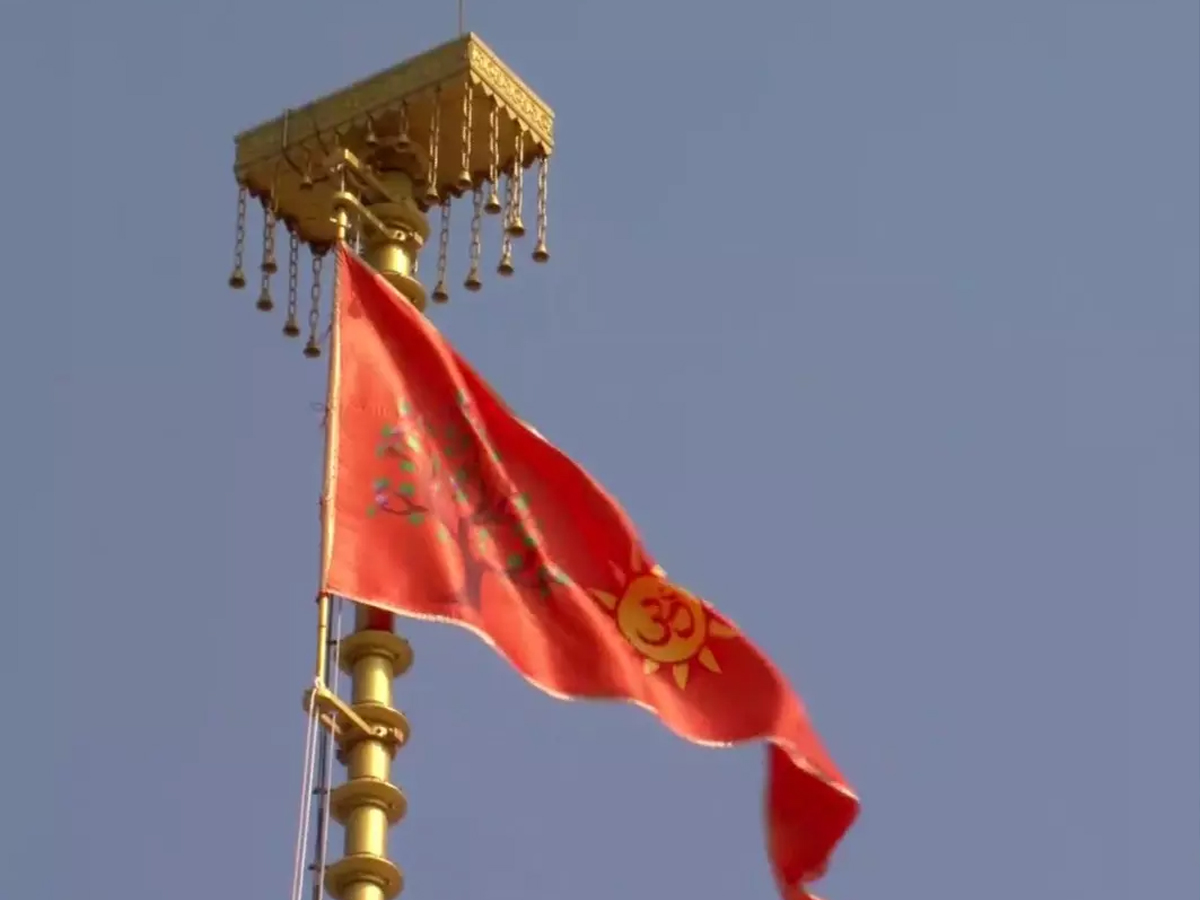
The Ministry of External Affairs (MEA) strongly hit back at Pakistan for condemning the recent flag-hoisting at the Shri Ram Janmabhoomi Temple in Ayodhya. The MEA said Pakistan — with what it called a long history of discrimination against religious minorities — has no right to lecture India on such events.
During the weekly press briefing, MEA spokesperson Randhir Jaiswal said, “Pakistan should focus on its own abysmal human rights records, rather than delivering hypocritical homilies.”
“We have seen the reported remarks and reject them with the contempt they deserve. As a country with a deeply stained record of bigotry, repression, and systemic mistreatment of its minorities, Pakistan has no moral standing to lecture others.”
He added, “Rather than delivering hypocritical homilies, Pakistan would do better to turn its gaze inwards and focus on its own abysmal human rights records.”
What Sparked the Tensions
The controversy began when Pakistan’s foreign office issued a statement objecting to the flag-hoisting ceremony at the Ayodhya temple. It called the event “an attempt to erase Muslim heritage,” referring to the temple’s construction at the former site of the now-demolished Babri mosque.
In November 2025, Indian Prime Minister Narendra Modi ceremonially hoisted a saffron flag atop the temple’s “shikhar,” marking the completion of construction. The celebration — known as the Dhwajarohan Utsav — was attended by senior leaders, including Yogi Adityanath and Mohan Bhagwat of the Rashtriya Swayamsevak Sangh (RSS). PM Modi described the moment as deeply moving and said the flag symbolizes a commitment even at the cost of life: “Pran jaaye par vachan na jaaye, jo kaha jaaye wohi kia jaaye.”
Pakistan’s remarks triggered an immediate response from New Delhi, which viewed the comments as unwarranted interference in India’s internal religious and cultural affairs.
India’s Stand: Sovereignty, Religion, and Rights
The MEA’s strong reaction reflects India’s long-standing view that matters related to religion and heritage are internal. By highlighting Pakistan’s own human-rights track record, the MEA sought to question Islamabad’s credibility when it speaks on minority treatment.
This exchange marks another flashpoint in India–Pakistan relations, where religious developments in India often draw sharp responses from Islamabad. In recent decades, such episodes have repeatedly underscored tensions around sovereignty, identity, and cultural heritage.
What this Means for Indo-Pak Relations
The MEA’s rebuttal publicly underlines India’s readiness to respond forcefully to international criticism over domestic religious matters.
By calling out Pakistan’s “systemic mistreatment of minorities,” India brought the focus back to cross-border human rights issues — possibly shifting the debate from religion to governance.
The incident is likely to add strain to already fraught diplomatic relations between the two countries.