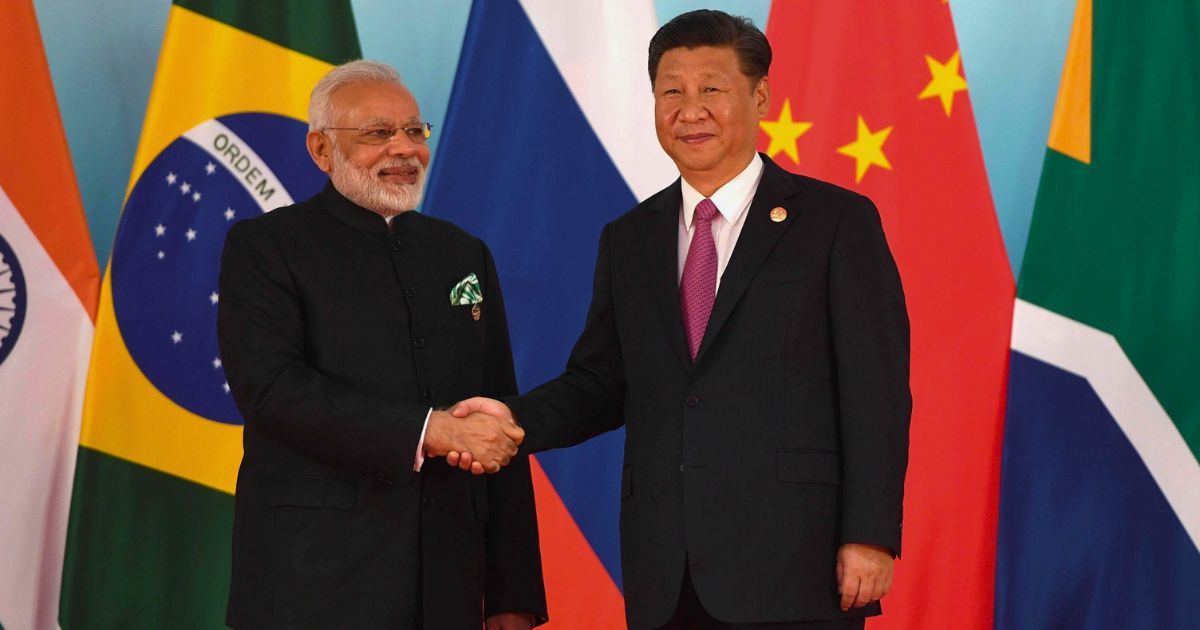
India and China are inching towards a careful thaw. Beijing has supported Moscow’s invitation for a trilateral group with India. New Delhi has met it with diplomatic outreach, flights, and economic largesse.
Both nations, despite earlier animosity during the shadow of Galwan, now have reason to collaborate—thanks partly to Donald Trump’s roughshod policies, Washington’s uncertain position while India fought its mini-war against Pakistan, and interdependence in the economy.
India is not dropping its guard, but it is pragmatically moving. The US might have inadvertently pushed its two Asian competitors closer to each other.
From Galwan to Handshake Diplomacy
The 2020 Galwan conflict continues to inform India-China relations. However, recent actions indicate a shift. India reopened direct flights with China in January. Chinese facilitation of Kailash Mansarovar pilgrims also restarted after six years. Both sides agreed to new LAC patrolling guidelines in October 2024.
Diplomatically, too, the atmosphere has improved. External Affairs Minister S Jaishankar has visited China after a gap of five years. He met President Xi Jinping, shared greetings from President Droupadi Murmu and PM Modi, and discussed progress in bilateral ties. He also raised the LAC issue with Wang Yi and called for a “structured roadmap” for de-escalation. Before him, Defence Minister Rajnath Singh visited China in June, marking the first Indian defence minister’s trip to China in over a decade.
Russia Revives RIC, Both Delhi and Beijing Agree
The Russia-India-China (RIC) alliance, in abeyance since 2020, is once again in the spotlight. Russia mooted its revival, and India and China embraced it. Chinese Foreign Ministry spokesperson Lin Jian indicated that RIC benefits regional and global peace.
Russia’s Deputy Foreign Minister assured that there are continued negotiations with both capitals. Moscow plans to revive the 2002-format as part of a “multipolar architecture,” a probable reaction against US hegemony.
Trade, Tech, and Trump: The Reluctant Alignment
India’s deficit with China persists—at $85 billion. Yet China is indispensable for essential imports—electronics, machinery, chemicals, and rare earths. India requires Chinese technology and raw materials. Beijing, on its part, cannot afford to ignore India’s enormous consumer base.
Trump’s tariffs and his suggestion of punishing trade with Russia further troubled Delhi. Commerce Minister Piyush Goyal has supported selective Chinese investment, while Niti Aayog suggested relaxing rules of scrutiny to unlock delayed deals.
Reuters quoted three Indian officials as saying the policy rethink has been confirmed. As Indo-US relations totter, analyst Derek Grossman noted: “New Delhi is preparing for a worse relationship with the US.”
Trump’s Shadow and India’s Strategic Realism
Donald Trump likes to take credit for worldwide developments. But he cannot claim this makeover. India and China are talking out of necessity. Trump’s unpredictable worldwide stance, as during India’s mini-war against Pakistan, left Delhi vulnerable. That moment necessitated a strategic recalibration.
India now balances relationships with care. It builds Atmanirbhar Bharat and reaches out for diversification. But it also talks to Beijing through economic opportunities and regional interfaces.
As retired Maj Gen GD Bakshi pointed out, thawing relations make “strategic sense” for China as well. Hostility would confront Beijing with a two-front situation with India and the US.
Not warmth, just realism
India is not stepping into China’s arms. It is hedging against loneliness. As Prof Happymon Jacob cautioned, “geopolitical loneliness” is more expensive than diplomatic tension.
This new engagement is not an expression of trust, but realism. It’s an armistice with sentries on post—prodded by Trump’s unpredictability.