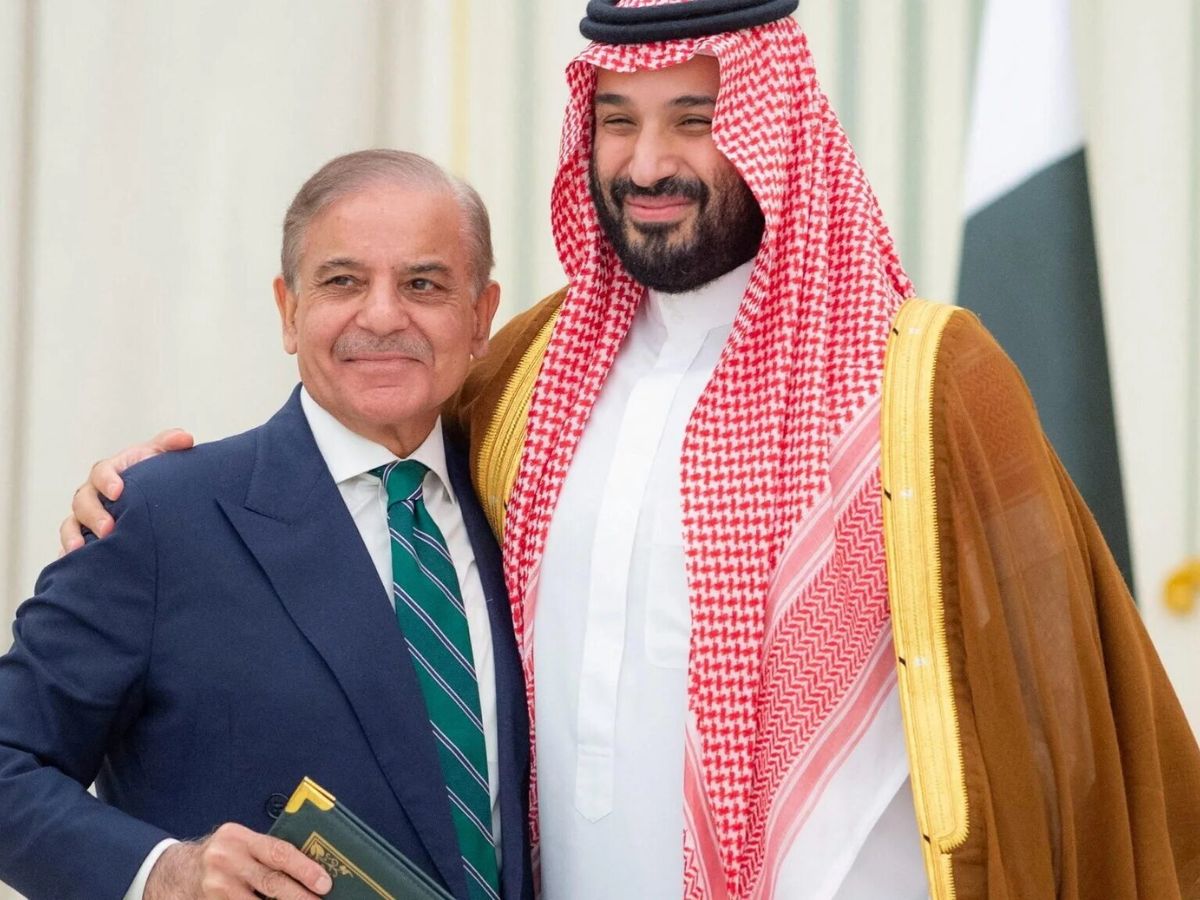
India, striking a balance between caution and firmness, urged Saudi Arabia to keep in mind “mutual interests and sensitivities” after its major defence pact with Pakistan.The pact, which includes a clause stating that “any aggression against either country shall be considered an aggression against both,” has major implications for regional security architecture and India’s strategic calculus.
What is the Saudi-Pakistan “Strategic Mutual Defence Agreement”?
- The pact, inked by Pakistani PM Shehbaz Sharif and Saudi Crown Prince Mohammed bin Salman, formalizes what had long been an informal security arrangement.
- The Core Clause: At the heart of the pact is a mutual defence promise, ensuring an attack on one is seen as an attack on both.
- Strategic Timing: The pact was finalized amidst growing questioning among Arab states about the reliability of the U.S. as a security partner, particularly in the wake of recent Israeli military actions in the region, including strikes in Qatar and Iran.
- Open to Others: Pakistan’s Defence Minister, Khawaja Asif, stated that the “doors are not closed” for other Arab states, like the UAE or Qatar, to join the pact in the future.
How is India Reacting to the Pact?
New Delhi has responded cautiously and diplomatically, while firmly emphasizing its commitment to safeguard national interests.
Official Statement: External Affairs Ministry spokesperson Randhir Jaiswal highlighted the extensive and robust strategic partnership between India and Saudi Arabia. He stated, “We expect that this strategic partnership will keep in mind mutual interests and sensitivities.”
National Security First: India’s initial response made it clear it would “take all steps to protect the country’s national interests and ensure comprehensive national security.”
Studying the Fine Print: Indian officials noted they are aware the pact was under consideration and are studying its legal obligations and implications, as the full text has not been made public.
Also Read: Zelenskiy Welcomes EU’s 19th Sanctions Package, Says It Targets Russia’s Economic Lifelines
Why is This a Delicate Situation for India?
The deal puts India in a difficult diplomatic situation where it must manage several partnerships.
The Pakistan Factor: The main issue for New Delhi is the possibility that, in the event of future wars with India, Pakistan would invoke the deal, enlisting Saudi Arabia in the fight.
The Saudi Partnership: Conversely, India shares a deepening strategic partnership with Saudi Arabia, including recent joint military exercises. Additionally, the Kingdom has been an essential ally for India’s energy security.
Broader West Asia Relations: India maintains “expansive” ties with other key players in the region, including the UAE and Qatar. The possibility of them joining the pact in the future adds another layer of complexity to India’s foreign policy in what it considers its “extended neighbourhood.”