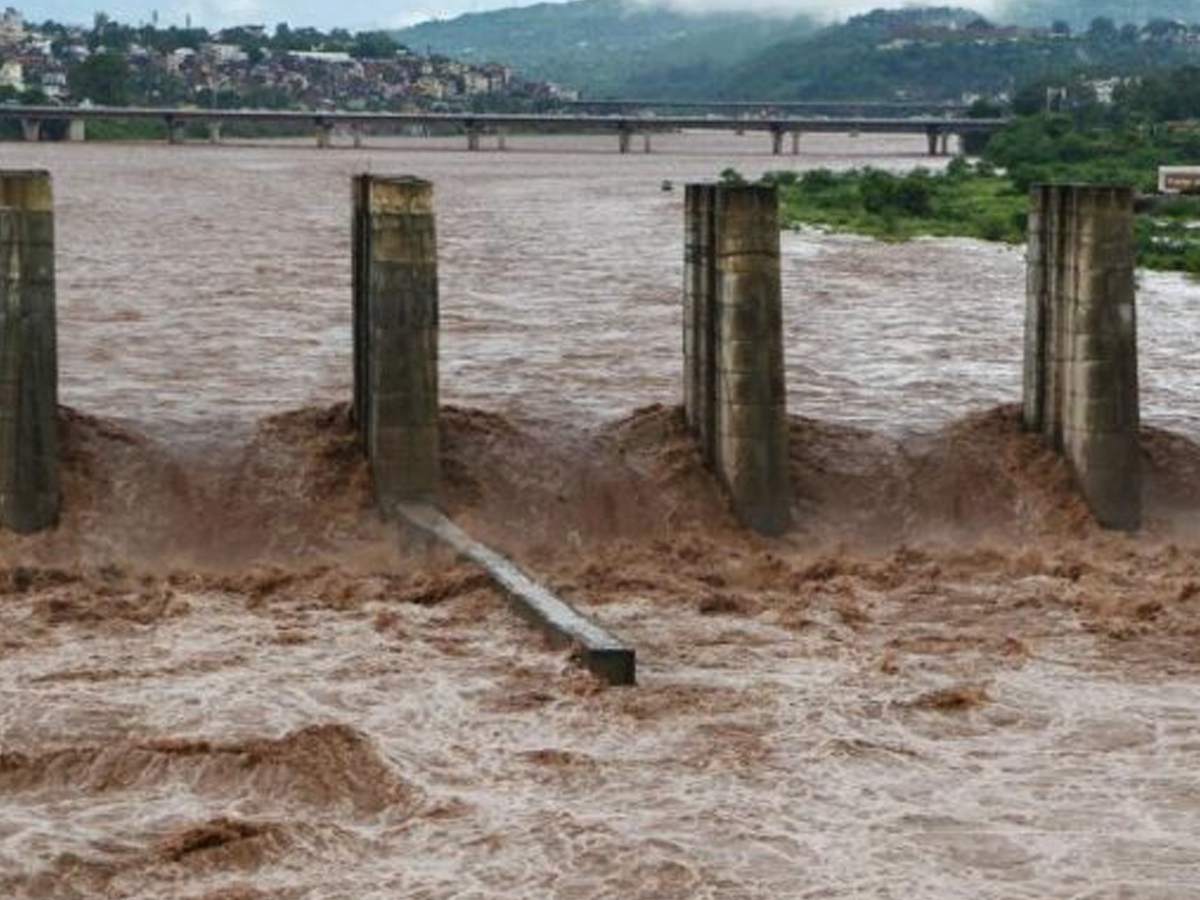
On Sunday (Aug 24), India officially informed Pakistan about rising water levels and possible floods in the Tawi River. The Indian High Commission in Islamabad directly shared the warning with Pakistan’s Foreign Ministry.
This is the first time India has used this diplomatic route. Normally, such updates are exchanged under the Indus Waters Treaty (IWT), but India avoided that channel because the treaty is currently on hold.
Indus Waters Treaty on Pause
The Indus Waters Treaty, signed in 1960 with the World Bank’s help, decided how India and Pakistan would share rivers like the Indus, Chenab, and Jhelum.
ALSO READ: Rivers Rising, Punjab Drowning: Monsoon Floods Claim 120 Lives In Pakistan
However, India stopped cooperation under the treaty after the April 22 terror attack in Pahalgam’s Baisaran Valley that killed 26 tourists. Pakistan’s leaders reacted strongly, warning that India’s decision could worsen tensions.
Record Rainfall in Jammu and Kashmir
The flood alert came after Jammu saw record rainfall. The city got 190.4 mm of rain in a single day – the second-highest for August in 100 years.
Flash floods hit low-lying areas like Janipur, Roop Nagar, Talab Tilloo, Jewel Chowk, New Plot, and Sanjay Nagar. Water entered houses, broke walls, and swept away vehicles. With rivers like the Tawi, Chenab, Ujh, Ravi, and Basantar flowing above danger levels, disaster response teams were put on high alert.
Why This Alert Matters
India’s choice to inform Pakistan directly rather than through the treaty framework shows the tense relations between the two nations. According to experts, this shows that India is still sharing humanitarian information, but on its own terms.
ALSO READ: Punjab on High Alert as 19,000 Evacuated Ahead of Fresh Monsoon Floods
It also suggests that India would take a more aggressive stance in future water conflicts with Pakistan, given the current cross-border tensions.x
A Treaty Born from Conflict
The Indus Waters Treaty was created after Partition, when water-sharing disputes caused major clashes. The World Bank mediated a resolution after Pakistan even brought the matter before the UN. The agreement was reached in 1960 by Pakistani President Ayub Khan and Prime Minister Jawaharlal Nehru following nine years of negotiations.
Now, with the treaty suspended, India’s flood warning through a direct diplomatic channel marks an important shift.