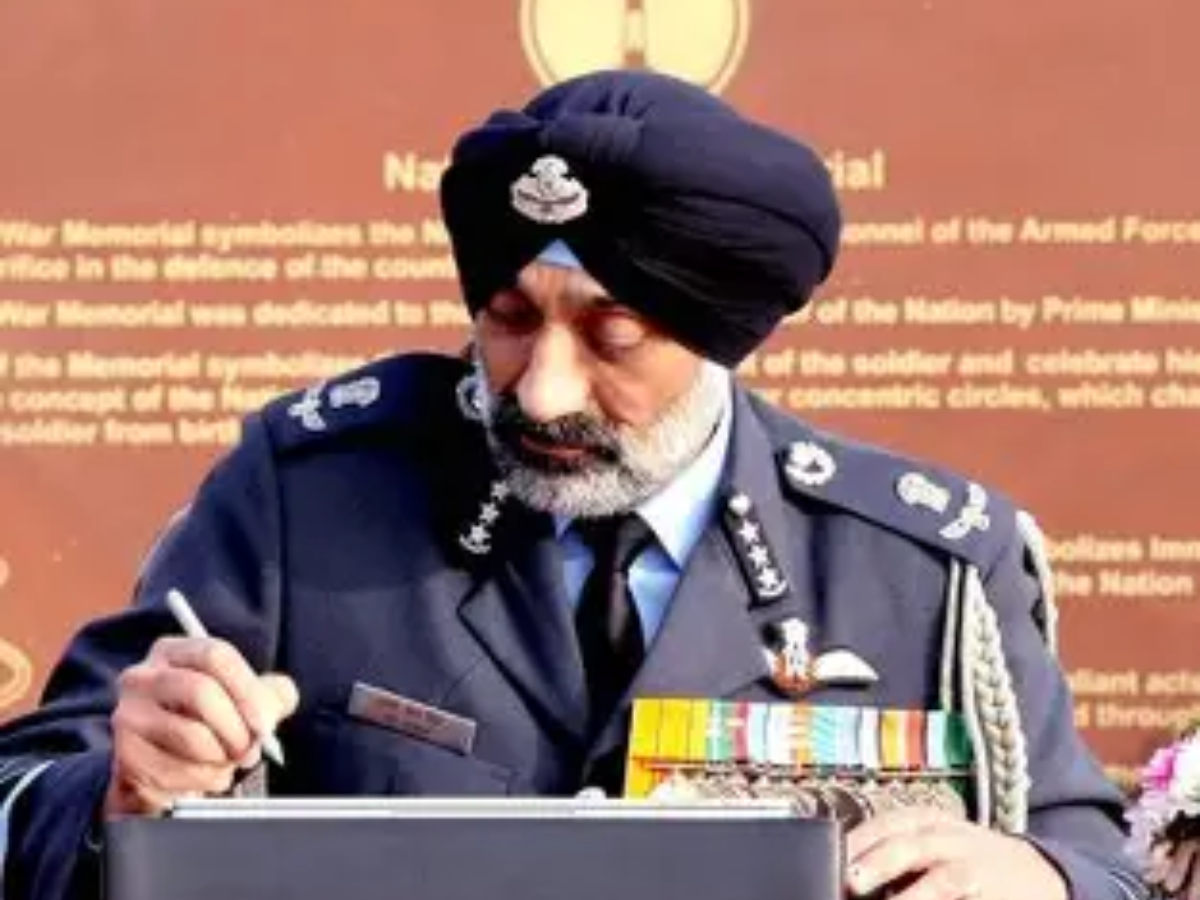
Air Chief Marshal Amar Preet Singh on Saturday revealed that India had shot down five Pakistani fighter jets during Operation Sindoor, a retaliatory operation carried out because of the Pahalgam attack on April 22. He reflected on the lessons from the 2019 Balakot airstrike while speaking about India’s recent Operation Sindoor against Pakistan.
The operation was executed with precision using sundry S-400 surface-to-air missile systems and also saw the destruction of an important Pakistani early warning aircraft. Singh said this is the largest-ever surface-to-air kill recorded in military history from the view of strategic depth of the Indian response.
“We have at least five fighters confirmed kills and one large aircraft, which could be either an ELINT aircraft or an AEW &C aircraft, which was taken on at a distance of about 300 kilometres,” the Air Chief Marshal said, calling the downing of the aircraft the largest ever recorded surface-to-air kill. He also said that one half of the F-16 hangar at the Shahbaz Jacobabad airfield in Pakistan was “gone” and some aircraft inside were possibly damaged.
VIDEO | “5 Pakistan fighters confirmed killed and one large aircraft, largest ever recorded surface-to-air kill,” says Air Chief Marshal Amar Preet Singh on Operation Sindoor, while addressing 16th edition of the Air Chief Marshal LM Katre Memorial Lecture, at the HAL Management… pic.twitter.com/A74pYQ7Fsr
— Press Trust of India (@PTI_News) August 9, 2025
Strategy of Tactical Engagement
The Air Chief Marshal is citing that destruction of the assets was not the end of the Indian attack. Additionally, the operation caused considerable damage to almost half of the F-16 hangar at the Shahbaz Jacobabad airfield, with the added possibility of damage to some other aircraft.
The Indian Air Force also took control of important Pakistani command centers located at Murid and Chaklala, as well as destroying at least six radar sites of various sizes. These tactical strikes undermined Pakistan’s defense and intelligence capabilities significantly, thus altering the regional power equilibrium.
ALSO READ: India’s S-400 Downs Five Pakistani Jets During Operation Sindoor, Says IAF Chief
High Tech Warfare Mark
Singh has said that the operation was carried out using very sophisticated technology and also executed very quickly within the timeframe of 80 to 90 hours. Because of the intensity and high level of efficacy with which India attacked, the latter thought twice about the sustainability of the war.
The costs that they would incur would have been worse had a continuation of the hostilities occurred. His talk thus countered the several international figures that say third-party mediation has influenced the ceasefire. Rather, India’s decisive action and superior strategy shaped the arc of this conflict independently.
ALSO READ: Seville, Spain – India Receives Final C-295 Aircraft Ahead of Schedule, Marking Defence Milestone