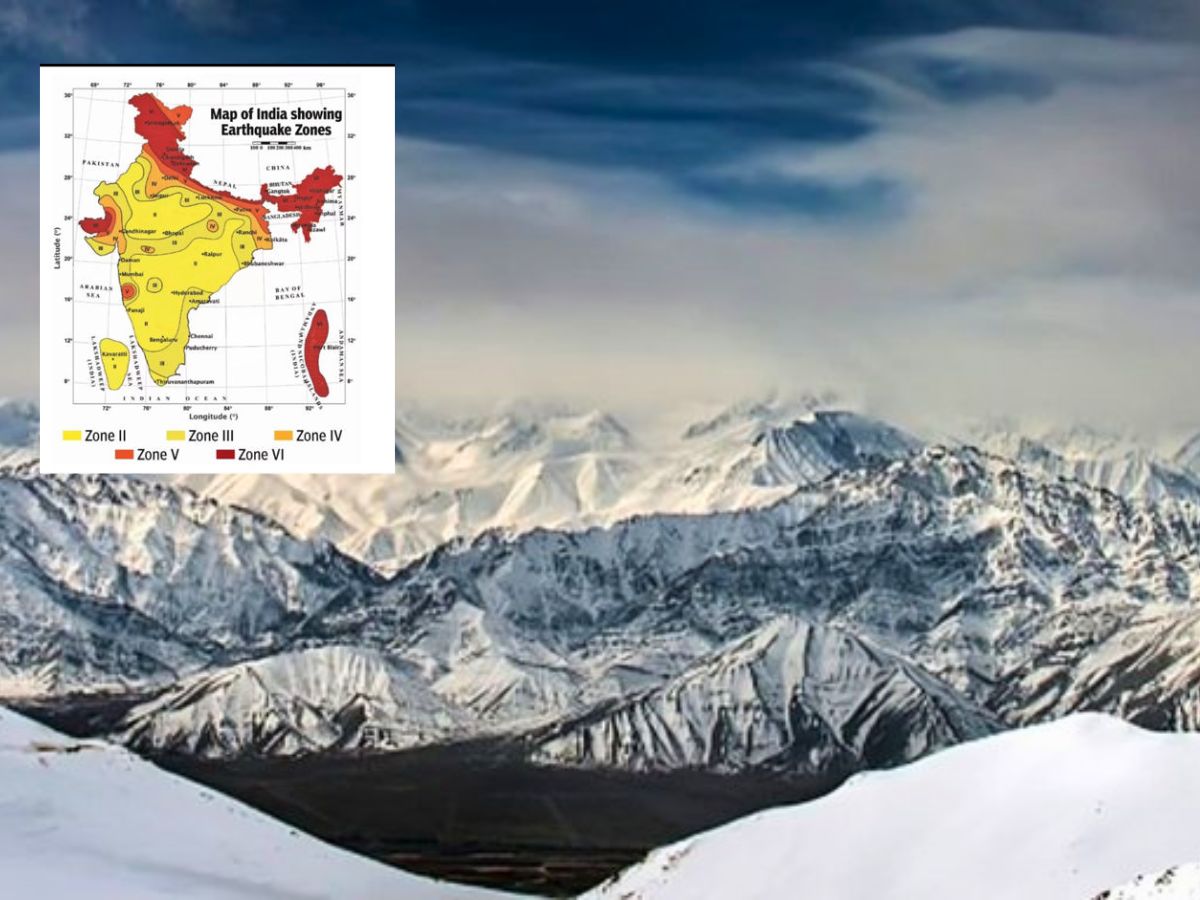
The Indian Meteorological Department’s recently updated Quake Map has intensified concerns about the growing seismic vulnerability of the Himalayas. Experts warn that the region is primed for a major earthquake due to accumulated tectonic stress along the Himalayan arc.
What is Quake Map?
The Quake Map is IMD’s scientific tool that tracks seismic patterns across the country, identifies earthquake-prone zones, and highlights regions experiencing rising tectonic pressure. The latest data suggests sharp spikes in seismic activity in several parts of North India.
Himalayas in Danger Zone
The updated map places large sections of the Western, Central, and Eastern Himalayas firmly within the danger zone. This includes:
- Uttarakhand (especially Chamoli, Joshimath, Rudraprayag)
- Himachal Pradesh
- Nepal Himalayan belt
- Parts of Jammu & Kashmir and Ladakh
- Arunachal Pradesh and adjoining Northeastern states
Seismologists say that stress has been accumulating along the Main Frontal Thrust (MFT) and Main Boundary Thrust (MBT) for decades, increasing the likelihood of a high-magnitude quake—possibly 7.5 or stronger.
Why Are the Himalayas So Vulnerable?
The Himalayas sit directly over the collision zone between the Indian Plate and Eurasian Plate, one of the most active tectonic boundaries on Earth. With slow but constant plate movement, strain builds up until it releases violently in the form of an earthquake.
Urban expansion, unregulated construction, and population density have further amplified disaster risks.
What’s New in India’s Updated Quake Map?
The revised map highlights rupture propagation along the Himalayan Frontal Thrust and expands the risk zone southward. This change affects areas such as Dehradun near Mohand. The outer Himalaya is now reclassified due to its vulnerable faults that can trigger quakes affecting foothill populations.
Boundary towns between hazard zones will now automatically fall under the higher-risk category. These changes prioritise geological evidence over administrative borders. Officials said this ensures stricter standards for buildings and roads in sensitive regions.
The map also captures the ongoing stress from the Indian-Eurasian plate collision beneath densely populated states like Uttarakhand, Himachal Pradesh, and parts of Uttar Pradesh. Experts said the update demands retrofitting of older infrastructure and a halt to new construction on soft sediments or active fault lines. They called the uniform mapping a major step toward resilience as urban growth increases.
States Prepare for Tougher Construction Rules
Following the release of the new map, several states are preparing for stricter building codes. Urban local bodies may soon require quake-resistant designs for residential and commercial structures.
Government officials said the update will influence metro rail projects, hill-town expansions, highway tunnels, and hydropower plants. Disaster-management agencies are also expected to revise emergency response plans based on the new risk zones.