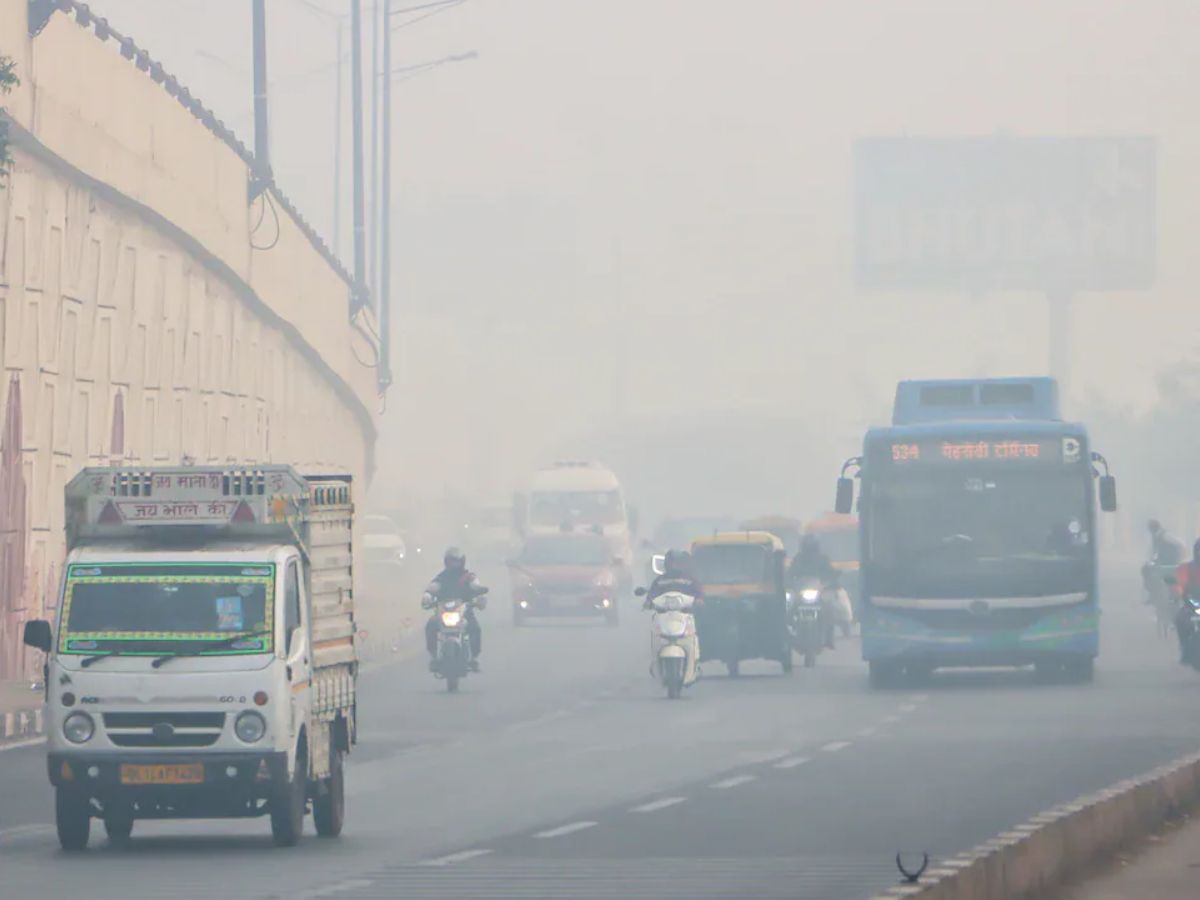
After days of severe smog and rising public concern, the Commission for Air Quality Management (CAQM) has removed the Stage-4 (GRAP-4) pollution restrictions in Delhi. The decision came as the city’s Air Quality Index (AQI) improved to 271, placing it in the ‘poor’ category rather than ‘severe’.
The move brings temporary relief to residents, but experts warn the air is still unhealthy for sensitive groups and broader restrictions remain in place. The improvement follows slight wind changes and modest dispersion of pollutants, making the air a bit easier to breathe than in the recent past.
What GRAP-4 Restrictions Included?
Under GRAP-4, authorities had imposed the strictest pollution control measures in response to hazardous air quality. These actions typically included:
- Banning the entry of non-essential heavy and polluting vehicles.
- Suspension of construction activities.
- Schools are switching to online classes for younger students.
- Work-from-home advisories for offices to reduce traffic.
- These curbs aimed to cut down emissions during the worst winter pollution period but also disrupted daily life and mobility across the capital region.
What Has Changed Now?
With the AQI now in the ‘poor’ category (271), the CAQM decided that the most stringent curbs were no longer necessary. However, lower-level restrictions under GRAP stages I, II and III remain active, focusing on limiting major pollution sources but allowing more normal activity to resume.
This means residents may now see heavy vehicles back on some roads and construction work continue under certain conditions. Yet, monitoring and compliance are still key, as authorities warn that air quality can worsen again quickly during winter.
Public Health Risks Still Present
Even though the air improved from ‘severe’, it remains a health risk, especially for children, elderly people, and those with respiratory issues. Pollution in Delhi during winter is driven by multiple factors, including vehicle emissions, construction dust, and weather conditions that trap particles close to the ground.
Medical experts recommend minimising outdoor exposure when the AQI stays above 200, and suggest wearing masks or using air purifiers indoors. The government has also urged citizens to follow guidelines to protect themselves amidst fluctuating air quality.
Weather and Pollution Dynamics
Meteorological conditions like wind speed, temperature, and mixing height play a big role in how pollutants accumulate. Even slight changes can push the AQI up or down quickly.
Over the past few days, wind movement helped disperse some pollutants, contributing to the temporary improvement. However, forecasts suggest that winter weather may still support smog formation.
Regional Impact Across Delhi-NCR
Nearby cities in the Delhi-NCR region, such as Noida, Gurugram, and Ghaziabad, have also experienced varying levels of improvement. Some areas show AQI in the ‘poor’ to ‘very poor’ range, but none have reached ‘good’ or ‘moderate’ air quality. This pattern illustrates how regional winds and geography influence the spread of pollution.
Experts warn that unless long-term structural changes are made — such as reducing vehicle emissions, controlling industrial pollutants, and managing construction dust — Delhi’s winter smog will continue to pose a health challenge each year.
What do you think you should know now?
GRAP-4 is lifted, but other pollution curbs remain in place to keep AQI from spiking again. Air quality is still ‘poor’, not safe for prolonged outdoor activity. Authorities are watching conditions closely, ready to reimpose stricter steps if pollution worsens.
As winter progresses, the air quality may still fluctuate, and residents are urged to stay informed through real-time AQI updates and follow public health advisories to stay safe.