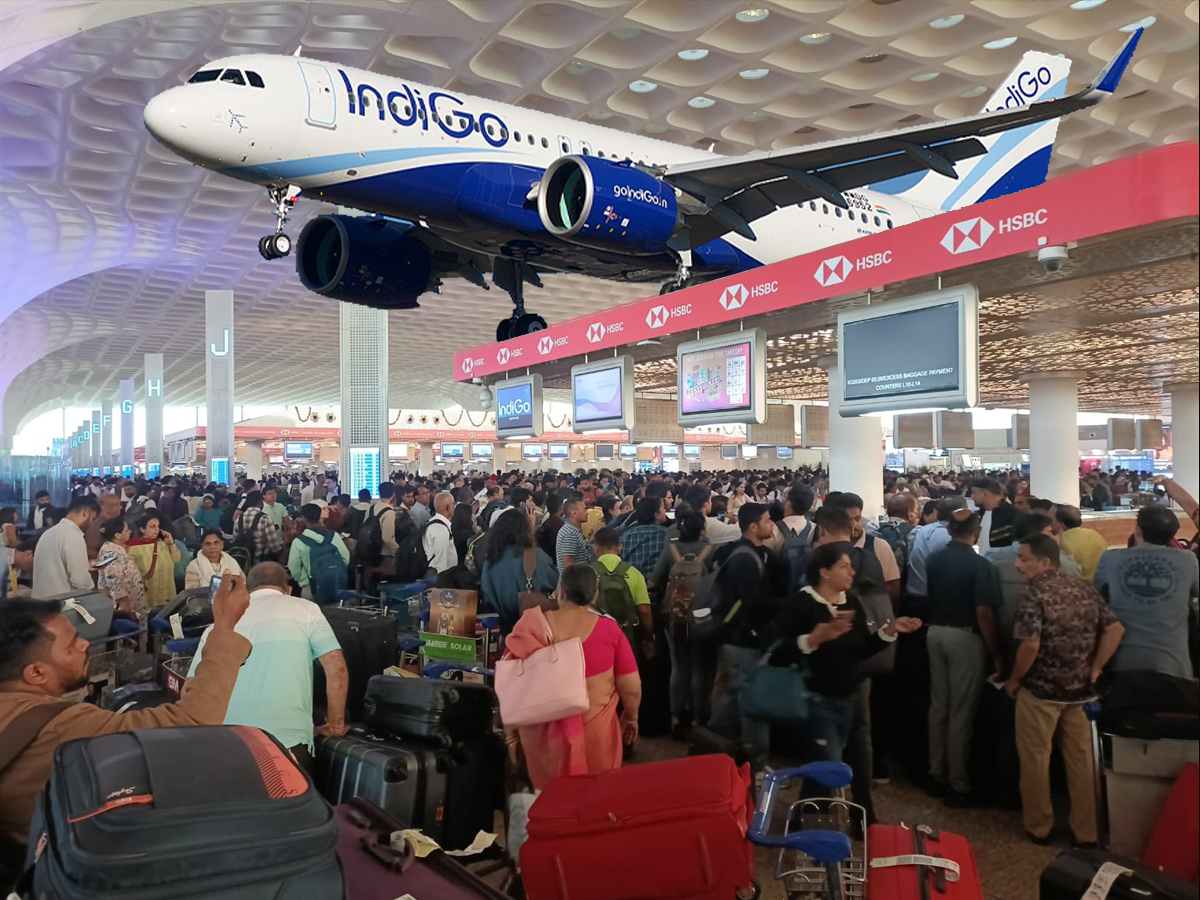
IndiGo, India’s largest airline, continued to face operational disruptions for the third consecutive day, canceling flights across Delhi, Mumbai, Bengaluru, Hyderabad, Ahmedabad, and other cities. More than 170 flights were canceled on Thursday alone, leaving thousands of passengers stranded and frustrated at airports.
Passengers reported long delays and a lack of assistance. “Chaos at Hyderabad airport today — flights delayed 12+ hours. To not give accommodation, they kept pushing it by ‘just 2 more hours’ every single time for 12 hours. Same excuse: the crew is coming soon. Unacceptable,” one user posted on X.
Chaos like situation at #Hyderabad RGI Airport after several Indigo flights cancelled
4th Dec – Total 35 Arrivals & 33 Departures Cancelled.
3rd Dec – Total 7 Departures & 12 Arrivals cancelled.
2nd Dec – Total 9 Departures & 5 Arrivals cancelled.
Several passengers… pic.twitter.com/IG1LOkKepX
— Sowmith Yakkati (@YakkatiSowmith) December 4, 2025
Impact on Passengers Across Airports
The cancellations affected multiple hubs:
- Delhi saw over 30 flights canceled early Thursday.
- Hyderabad reported about 33 flight cancellations.
- Bengaluru airport had 73 flights canceled.
- Several flights at Mumbai airport were also canceled.
Passengers complained of confusion, long waiting times, and a lack of adequate support, adding to the public’s frustration.
Airline Statement: Causes of Disruptions
IndiGo acknowledged the disruptions and apologized to customers. The airline cited multiple reasons, including minor technology glitches, schedule changes linked to winter, adverse weather, congestion, and new Flight Duty Time Limitations (FDTL) rules.
“To contain the disruption and restore stability, we have initiated calibrated adjustments to our schedules. These measures will remain in place for the next 48 hours and will allow us to normalise our operations and progressively recover our punctuality across the network,” IndiGo said in a statement.
IndiGo provided the following summary of recent operational performance – A total of 1,232 flights were cancelled during the period. A large share of cancellations arose from crew / FDTL compliance and airport/airspace/ATC-related factors, many of which lie beyond the operator’s… pic.twitter.com/9v7pReqZAH
— ANI (@ANI) December 3, 2025
New FDTL Norms: Major Factor Behind Flight Chaos
A key contributor to the disruptions is a shortage of crew, particularly pilots, following the introduction of revised FDTL norms in November. These rules mandate longer rest hours, limit the number of night landings, and introduce humane rosters.
Under the new norms:
- Weekly rest periods increased to 48 hours.
- Night duty hours were extended.
- Night landings are limited to two instead of six.
The norms were initially opposed by domestic carriers, including IndiGo, but were implemented by the DGCA following Delhi High Court directives.
DGCA Investigates IndiGo Flight Performance
The Directorate General of Civil Aviation (DGCA) called IndiGo officials for a meeting to review the disruptions. According to DGCA data, 1,232 flights were canceled in November alone, including:
- 755 due to crew and FDTL issues
- 258 due to airport or airspace restrictions
- 92 due to ATC system failures
- 127 for other reasons
IndiGo’s on-time performance (OTP) dropped from 84.1% in October to 67.7% in November, highlighting operational challenges.
Passengers Demand Better Assistance
Passengers expressed frustration online, particularly about the lack of timely updates, accommodations, and alternate flight arrangements. Many spent over 12 hours at airports without support.
“We have been at Hyderabad Airport from yesterday at 6:00 PM until today at 9:00 AM — over 12 hours — with no action taken by IndiGo regarding the Pune flight. This situation has caused significant inconvenience,” one passenger said.
Way Forward: IndiGo Promises Recovery
IndiGo operates approximately 2,200 flights daily to 90 domestic and 40 international destinations. The airline plans to adjust schedules and gradually restore normal operations over the next 48 hours. Officials emphasized that passenger safety and compliance with the new FDTL rules remain a top priority.
With the winter season, operational congestion, and new regulatory requirements, the airline faces ongoing challenges but is committed to stabilizing its network and improving service.