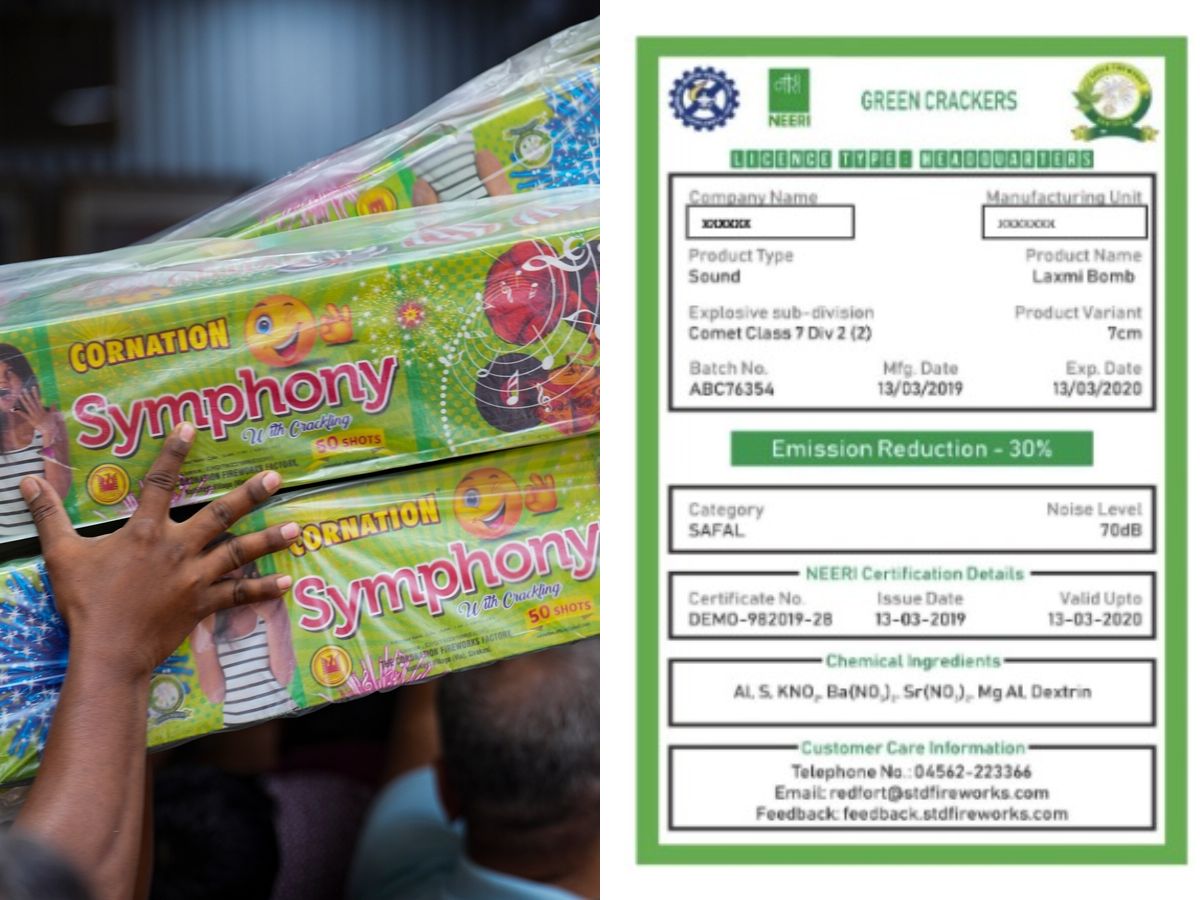
As Diwali 2025 is here, the spotlight is on green firecrackers—eco-friendly alternatives designed to reduce pollution during the festive season. These crackers, developed by the Council of Scientific and Industrial Research – National Environmental Engineering Research Institute (CSIR-NEERI), aim to preserve the traditional essence of fireworks while minimizing environmental impact.
Where Are Green Firecrackers Made?
The majority of licensed green firecracker production takes place in Sivakasi, Tamil Nadu, a town renowned for its firecracker industry. Manufacturers here adhere to strict guidelines set by CSIR-NEERI to ensure the eco-friendliness of their products.
Over 1,000 manufacturers in Tamil Nadu have complied by submitting their cracker compositions for NEERI testing and certification.
How to Identify Green Firecrackers?
To distinguish genuine green firecrackers from counterfeit ones, look for the following:
- CSIR–NEERI logo and certification
- QR code/barcode for verification
- Manufacturer name and license number
- Sales through authorized or licensed vendors
These identifiers ensure that the firecrackers meet the environmental standards set by CSIR-NEERI.
How Much Revenue Does the Firecracker Industry Accrue?
India’s firecracker industry contributes a substantial ₹6,000 crore annually. However, with the adoption of green firecrackers, there is a gradual shift in the industry, which has long dominated the traditional products.
Despite this, the annual sales of traditional firecrackers still hover between 70,000 to 80,000 tons, with a market share declining by 12-15% every year. On the other hand, the demand for green crackers has been steadily rising, with annual sales increasing by around 20%, reaching an estimated 20,000 to 25,000 tons.
How Are Green Firecrackers Made?
Unlike conventional firecrackers, green firecrackers exclude the use of polluting elements like barium nitrate and have reduced levels of aluminium and sulfur. These reduced quantities help in the reduction of sulfur dioxide (SO₂) and nitrogen dioxide (NO₂) levels.
Additionally, they lead to a reduction in noise pollution by nearly 30%. The formulations are designed to emit fewer pollutants while maintaining the traditional visual and auditory appeal of fireworks.
Growing Popularity of Green Firecrackers
With increasing environmental awareness, the adoption of green firecrackers is on the rise. The shift towards these eco-friendly alternatives reflects a growing commitment to celebrating festivals responsibly.
As legal frameworks tighten around traditional firecrackers, the market for green crackers is expected to expand further, offering a cleaner and safer option for Diwali celebrations.