India and Russia’s decades-long defence partnership has once again attracted attention following Operation Sindoor. With PM Narendra Modi set to host President Vladimir Putin in India on December 4-5, analysts are pointing to the continued significance of Indo-Russian military collaboration in shaping India’s strategic capabilities.
Russia Really Helped in the Success of Op Sindoor?
Speculation about Russia’s involvement in the success of Operation Sindoor has circulated widely on social media, but no official confirmation has been issued by the Indian government or armed forces.
Much of the discussion stems from India–Russia defence cooperation history, including hardware supply, training, and joint projects. Defence experts warn that, while Russia is a key partner, there is no publicly available evidence directly linking Russian assistance to the operation’s outcomes.
India-Russia Longstanding Defence Partnership
India’s collaboration with Russia dates back to the Cold War era. From Soviet-era MiG fighter jets to T-90 tanks, Russian technology has been integral to India’s defence modernization. “The collaboration in defence between India and Russia is a very, very long age-old collaboration,” said Dr VK Saraswat, missile scientist and Member of NITI Aayog.
He added, “We had Russian aircraft like MiG-21, MiG-23, MiG-27, MiG-29, MiG-25 — the series of MiG aircraft which were there. The tanks, T-90 tank, all these technologies have come to India and supported the Indian defence programme.”
BrahMos Missile: Symbol of Indo-Russian Synergy
The BrahMos supersonic cruise missile, jointly developed by India and Russia, exemplifies the partnership. During Operation Sindoor, its precision targeting capabilities were highlighted. “The pinpoint accuracy by which we could hit the targets in the enemy territory was due to the characteristics of BrahMos as a supersonic cruise missile, which has no match in the world,” Dr Saraswat said.
S-400 Air Defence and Sukhoi Jets
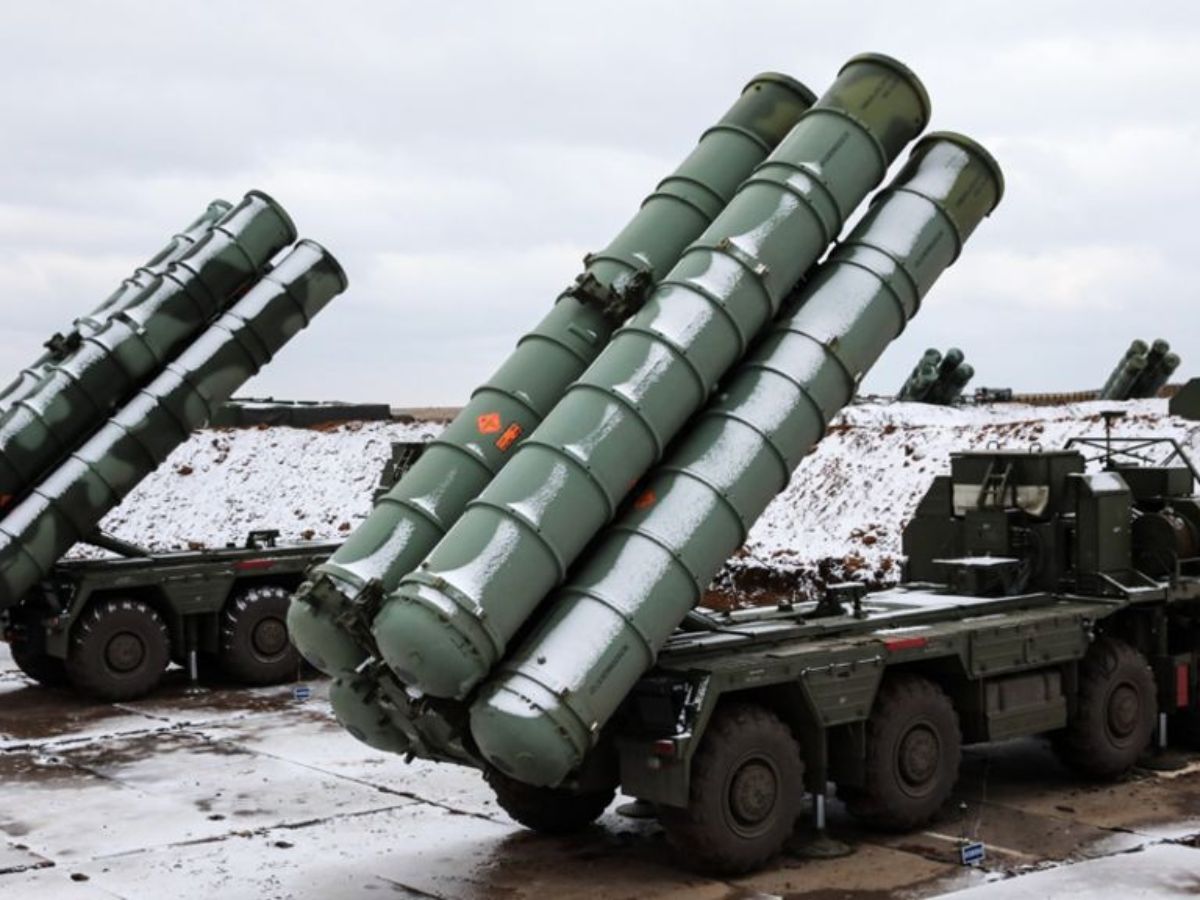
India’s S-400 surface-to-air missile systems, procured from Russia, created a strong air defence shield during the operation. Integrated radars and electronic warfare systems helped protect Indian airspace from hostile aircraft. “The complete air defence battery, including the radars and the EW system, kept their aircraft quite away from our boundaries,” Dr Saraswat noted.
Meanwhile, Sukhoi fighter jets, manufactured under Russian licence in India, played a decisive role in offensive operations. “When we went for direct attack, the role played by Sukhois, which are one of the major aircraft in our arsenal from the Russian origin, and which are being manufactured in our own country, I think the role played was significant,” he said.
Beyond the Battlefield: Strategic Technology Cooperation
The India-Russia partnership extends beyond conventional defence. Russian technology supports India’s nuclear energy program, space exploration, and submarine development. Dr Saraswat highlighted the growing collaboration between Indian and Russian private industries in critical technologies.
“The growth of industry today, which is taking place, is because a large number of Indian industries are now collaborating with Russian industries, in many of the critical technologies in defence,” he said.
Future of Indo-Russian Strategic Partnership
As geopolitical uncertainties persist, India continues to value Russia as a dependable strategic partner. “I think it is the most dependable collaboration. It has really worked very well. The test of time has proven. So, I think we are very happy with this collaboration. And we hope this goes from strength to strength,” Dr Saraswat concluded.
Operation Sindoor may be remembered for tactical precision, but it also underscores the enduring military and technological bond between India and Russia — a partnership that spans missiles, fighter jets, air defence systems, nuclear projects, and more.