Home > India > Delhi Pollution Crisis Deepens with AQI at 400; DPCC Says Air Quality Still Better Than 2024

Delhi Pollution Crisis Deepens with AQI at 400; DPCC Says Air Quality Still Better Than 2024

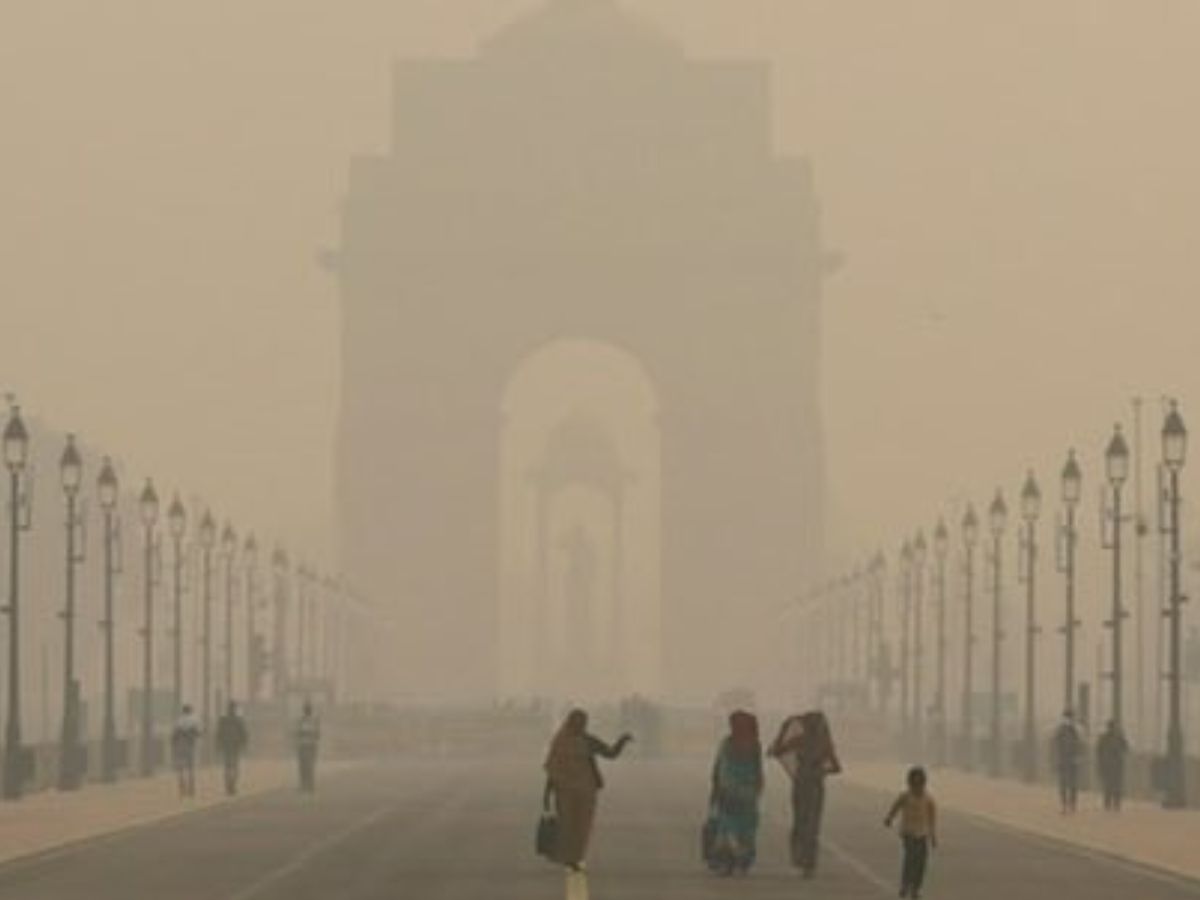
Delhi’s air quality plunged to “severe” levels with AQI nearing 400, even as officials claimed improvement over last year and aimed to avoid GRAP-III restrictions.

Published By: Nisha Srivastava
Last Updated: November 9, 2025 09:54:03 IST

Delhiites woke up to yet another morning of choking smog and heavy pollution on Sunday, as the city’s air quality index continued to stay at danger levels. According to data from the Air Quality Early Warning System early in the day, the overall AQI of the city was 392, while many areas crossed the 400 mark, making Delhi among the worst polluted cities in India. The 24-hour average AQI in Delhi was 361 at 4 p.m. on Saturday, according to the CPCB, a figure that places the capital in the “very poor” category.

The CPCB classifies AQI classes as follows:

0–50: Good

51–100: Satisfactory

101–200: Moderate

201–300: Poor

301–400: Very Poor

401–500: Severe

Several Areas Record ‘Severe’ Air Pollution

Pollution monitors across Delhi reported alarming AQI readings on Sunday morning  415 at Alipur, 420 at ITO, 426 at Nehru Nagar, 424 at Vivek Vihar, 435 at Wazirpur, and 430 at Burari. According to data from the Sameer app at 7 a.m., 21 out of 39 monitoring stations in Delhi registered AQI levels of 400 or higher, placing the city firmly in the “severe” pollution category.

In the NCR region, air quality was slightly better but still within the danger zone. Noida recorded an AQI of 354, Greater Noida 336, and Ghaziabad 339—all three areas classified under the “very poor” category.

DPCC Claims Delhi’s Air Is ‘Cleaner Than Last Year’

Despite the grim figures, the Delhi Pollution Control Committee (DPCC) claimed that air quality during the first week of November 2025 showed improvement compared to the same period in 2024.

DPCC Chairman Sandeep Kumar cited CPCB data showing that six of the first seven days of November recorded better AQI levels than last year. He attributed the progress to “timely implementation of departmental instructions” and stricter enforcement of pollution-control measures.

Government Aims to Avoid GRAP-III Restrictions

Officials stated that Delhi has not yet reached pollution levels that would trigger Stage III of the Graded Response Action Plan (GRAP), unlike the same period last year.

Kumar expressed hope that through “sustained efforts and cooperation from citizens,” the capital could avoid stricter curbs under Stage III and Stage IV this season.
He added, “Last year, GRAP-III had been implemented on November 13. This time, with the support of all departments and residents, we hope to prevent reaching that stage.”

Noida and Ghaziabad Report Worst October Air in Five Years

According to CPCB data, both Noida and Ghaziabad experienced their worst October air quality in the past five years.

  • Noida’s average AQI in October 2025 was 236, compared to 205, 202, 211, and 181 between 2024 and 2021.

  • Ghaziabad registered an average of 227, surpassing its previous four-year range of 194–224.

Ritesh Tiwari, Regional Officer of the UP Pollution Control Board (UPPCB), blamed early Diwali celebrations for the deterioration. “People were out shopping and traffic congestion caused high vehicular pollution. The situation was worsened by fireworks,” he explained.

Ankit Kumar from UPPCB Ghaziabad added that slow wind speeds and pollutant buildup worsened air quality. In response, authorities have intensified mechanised road sweeping, water sprinkling, and night patrolling in industrial zones.

PM2.5 and PM10 Remain the Main Pollutants

The most harmful pollutants behind Delhi’s toxic air are PM2.5 and PM10, these are the fine particulate matter produced by vehicular emissions, construction activities, and industrial operations.

These microscopic particles can deeply into the lungs and bloodstream, posing severe health risks to children, the elderly, and individuals with asthma or heart conditions.

Doubts Raised Over Accuracy of AQI Data

Videos circulating online showing water sprinkling near air quality monitors sparked public suspicion about possible data manipulation.

However, DPCC officials clarified that water sprinkling occurs citywide and does not specifically target the stations. DPCC Member Secretary Sandeep Mishra explained, “Sensors measure pollution within a 2–3 km radius, and sprinkling of water does not affect the readings significantly.”

Despite these assurances, questions persist. A Hindustan Times analysis (November 5) found missing readings, irregular trends, and algorithmic loopholes that may be underreporting actual pollution levels.

Even though the government claims marginal improvement, Delhi’s air quality remains dangerously poor, posing a serious public health crisis. Authorities hope to avoid the enforcement of GRAP-III this year, but experts emphasize that temporary fixes won’t suffice. Long-term and sustainable measures such as reducing vehicular emissions, controlling construction dust, and regulating industrial pollution are essential for making Delhi’s air breathable again.

Latest News

The Daily Guardian is India’s fastest
growing News channel and enjoy highest
viewership and highest time spent amongst
educated urban Indians.

Follow Us

© Copyright ITV Network Ltd 2025. All right reserved.

The Daily Guardian is India’s fastest growing News channel and enjoy highest viewership and highest time spent amongst educated urban Indians.

© Copyright ITV Network Ltd 2025. All right reserved.