Winters in India come and go without creating much of a buzz. However, in the Delhi-NCR region, winter brings a deadly companion in air pollution.
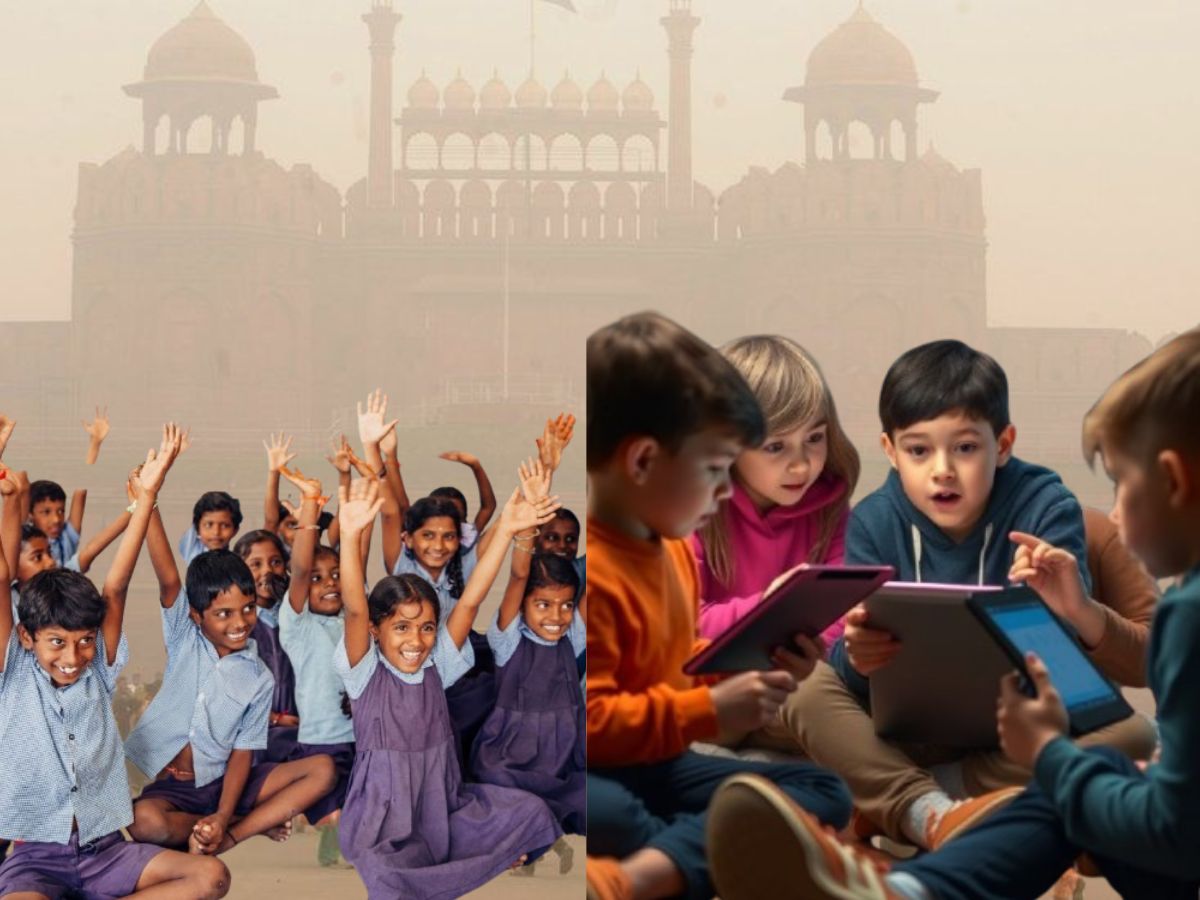
As soon as winters start in Delhi-NCR, smog starts increasing in the atmosphere, making it quite an ordeal to breathe in, especially with children. To cope with this situation, in order to reduce air pollution, GRAP Stage IV is imposed.
In GRAP IV, schools are advised to remain shut, and students are advised to adopt hybrid learning in a bid to avoid exposure to outdoor environments.
Why Schools Adopt a Hybrid Model of Education
When pollution rises to dangerous levels, outdoor activity can become dangerous. Students are one of the most affected because they have low immunity and underdeveloped lungs. To keep children in school without ceasing education entirely, a combination of online and offline learning is recommended.
Thus, learning can go on despite students being indoors because of peak air pollution days.
What Is Hybrid Learning?
“Blended learning integrates learning in class and online learning. Some subjects are taught in class at school, but others are conducted online from home using online learning platforms. Students can either be rotated to learn in class or go online entirely for a brief time when emergencies arise, such as pollution levels rising.”
Benefits of Hybrid Learning
Hybrid learning assists in minimizing exposure to air pollution. Additionally, hybrid learning enables flexibility in learning, saves time, and ensures continuity of studies.
Recorded/prerecorded lectures enable students to revise easily. Hybrid learning thus serves as a good short-term response to other emergencies such as air pollution.
Disadvantages of Hybrid Learning
However, hybrid learning faces some limitations. Not all students possess good internet connectivity and devices.
Young children face difficulty learning through screens. Prolonged usage of screens can influence their eyesight and mental health. Teachers face difficulties managing both online and offline students simultaneously.
Also Read: Delhi Schools Implement Hybrid Learning as Pollution Levels Worsen Across NCR
Are GRAP and hybrid learning limited to Delhi only?
GRAP guidelines were largely in force in Delhi-NCR, including Noida, Gurugram, Faridabad, and Ghaziabad. Other Indian states normally keep educational institutions shut for a short term when extreme weather situations arise but do not operate under GRAP guidelines. Online learning emerged in major cities in emergency situations.
When Was Hybrid Learning Used Earlier?
The need for hybrid learning arose during the time of the COVID-19 pandemic. After reopening in schools, this mode of learning occasionally emerged in situations such as pollution emergencies, heat waves, and harsh all-weather conditions in cities such as Delhi.
What the Delhi Government Guidelines Say
The government advisories in the state of Delhi have very clearly stated the need to suspend hands-on learning sessions in schools during critical situations of air pollution by switching to online schooling.
Is Hybrid Learning Affordable for Middle-Class Families?
For middle-class families, hybrid learning is doable but not easy. The expenditure involved is smartphones, laptops, internet charges, and power backup. Although private schools are more adaptable, government school students can have access-related problems.
Can Hybrid Learning Replace Traditional Schooling?
Hybrid learning is not an alternative to conventional schooling in all respects. Schooling provides children with discipline, socialization, exercise, and emotional development, which can never be achieved in online learning. As far as safety is concerned, hybrid learning can prove to be an interim solution.
Can Hybrid Education Protect Students from Pollution?
To a degree, yes. Through hybrid learning, students will not be exposed to damaging levels of pollution because they will stay indoors when pollution is most prevalent in their area. But in the long run, this problem can be solved through controlling pollution, not online learning.
Also Read: Bondi Beach Shooting Suspects: Who are Father & Son Duo Sajid Akram, Naveed | Details Inside