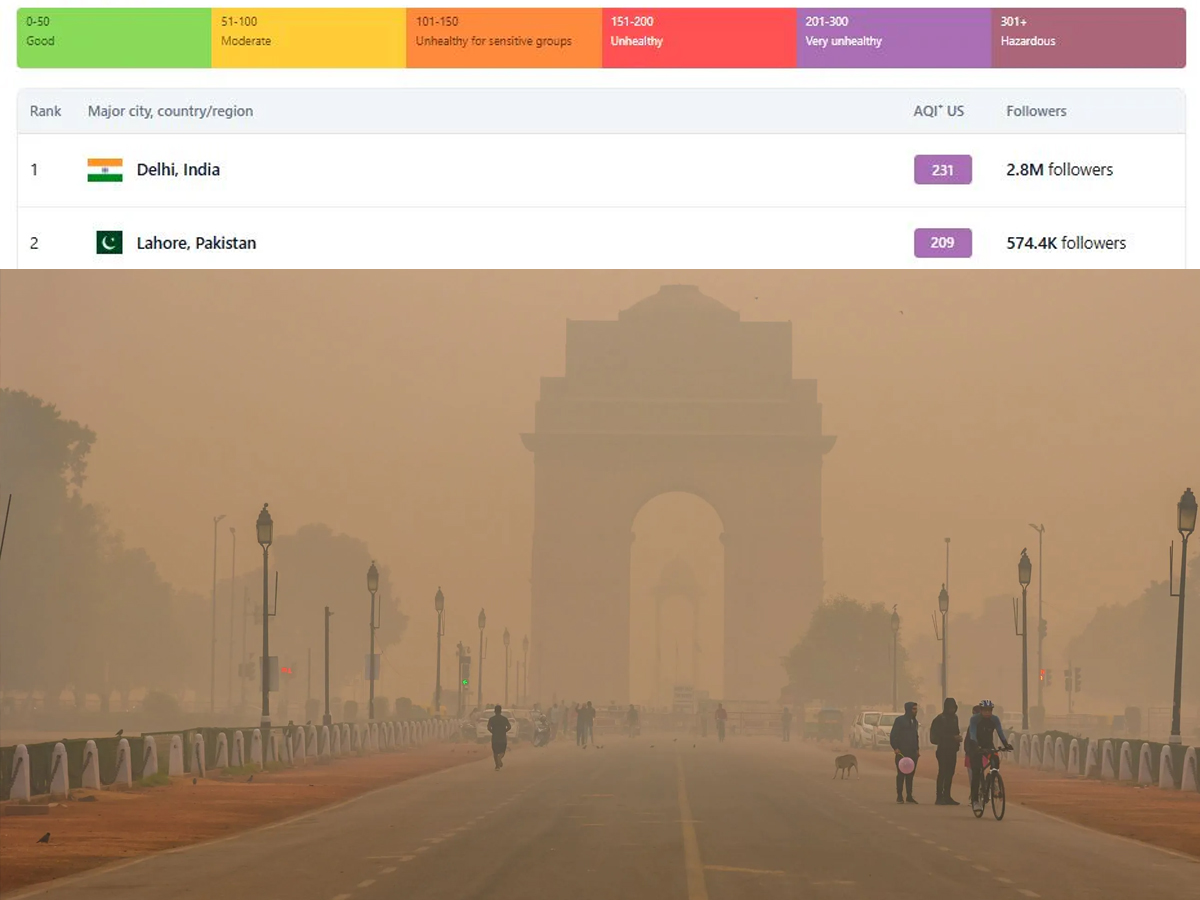
India’s capital, Delhi, has once again grabbed an unwanted global title. The city has overtaken Lahore to become the world’s most polluted city, according to the latest air quality data. The Central Pollution Control Board (CPCB) recorded an average Air Quality Index (AQI) of 373, placing Delhi in the “very poor” category. In several areas, AQI readings crossed 400, entering the “severe” zone.
The toxic smog has blanketed the city, reducing visibility and making the air unsafe to breathe. The Delhi government has responded by implementing emergency measures, including a ban on BS III commercial vehicles that are not registered in the capital.
Lahore’s Air Improves as Delhi’s Declines
While Delhi continues to battle choking smog, neighboring Lahore has seen some improvement. The Pakistani city’s air quality has dropped to the “moderate” range, allowing it to temporarily lose its long-held title as the world’s most polluted city.
On October 14, 2025, at 10:20 PM PT, Delhi’s air quality was categorized as “very unhealthy,” with AQI levels exceeding 200. Some neighborhoods recorded even higher readings, posing health risks to children, the elderly, and people with respiratory problems.
Experts say Delhi’s pollution levels are far worse than the city’s 2024 average AQI of 178, which was already classified as “unhealthy.” The current levels exceed the World Health Organization’s safe limits by more than 21 times. Even on its better days, Delhi’s air remains dangerously polluted, especially during the winter season.
What Is Causing Delhi’s Toxic Air?
Delhi’s poor air quality is the result of multiple factors that combine to create a toxic mix of pollutants. The major sources include vehicle emissions, industrial waste, and construction dust. These contribute heavily to the city’s worsening air quality.
Crop residue burning in neighboring states such as Punjab and Haryana adds to the crisis. Farmers set fire to leftover stubble after harvesting, releasing large amounts of smoke that drift into Delhi. This seasonal burning significantly worsens pollution during the post-monsoon months.
Weather conditions during winter make the situation even worse. Light winds and temperature inversions trap pollutants close to the ground, creating thick layers of smog.
A Regional Pollution Problem
Delhi’s pollution challenge is not isolated. Its location in the Indo-Gangetic Plain means that air from nearby states also carries pollutants into the city. This cross-border pollution further amplifies the crisis.
Environmental experts have long urged coordinated action between states and stricter enforcement of pollution control measures. Without stronger regional cooperation, Delhi’s battle for cleaner air is likely to remain a yearly struggle.
As winter sets in, residents brace for worsening air conditions — a grim reminder that the capital’s air pollution crisis demands urgent, long-term solutions.