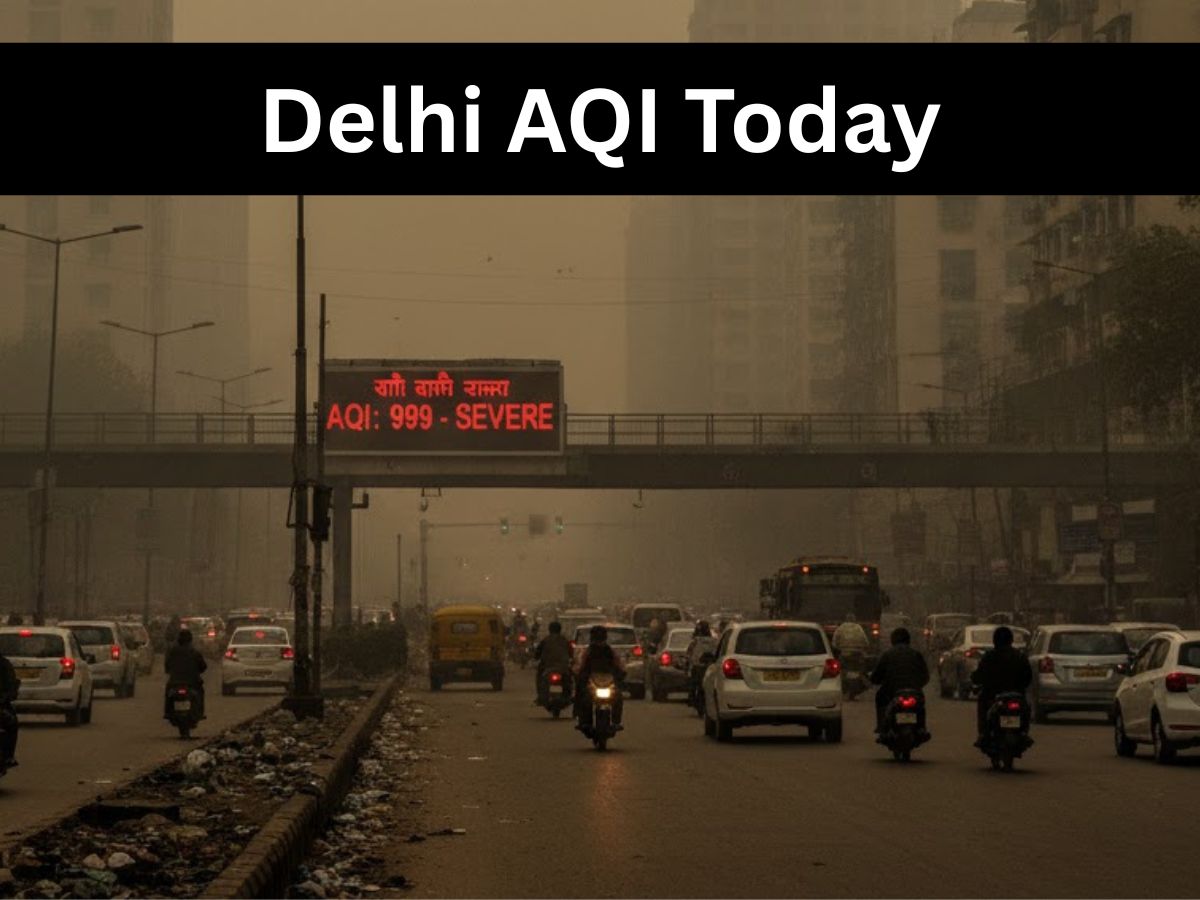
Delhi AQI Today: The national capital’s air pollution continues to be a major concern as Diwali inches closer. During the night hours of October 15th, Delhi recorded worrying levels of air quality as reported by the Central Pollution Control Board (CPCB) of India. At 10 PM, the city reported high Air Quality Index (AQI) readings across multiple monitoring stations.
Delhi AQI Today: Latest AQI Status in Delhi
Data shared by CPCB reflects poor air quality in Delhi. More than thirty stations showed concerning air quality readings throughout the national capital. Anand Vihar (346), Dwarka Sector 8 (324), Wazirpur (341), CRRI Mathura Road (318), and Bawana (282) were among the worst areas, with air quality in these areas rising to the ‘very poor’ category. Other areas like Alipur, Rohini, Chandni Chowk, Okhla Phase-2, Patparganj, and Vivek Vihar also showed an AQI reading exceeding 200, which is categorised as ‘poor’ by the CPCB.
Sri Aurobindo Marg saw the lowest AQI at 113, along with a few other areas that had better air quality, putting it in the ‘moderate’ zone. However, none of the stations showed ‘good’ or ‘satisfactory’ air.
ALSO READ: BJP Announces 12 More Candidates for Bihar Assembly, Maithali Thakur Named from Alinagar
What these AQI numbers mean
According to official guidelines, AQI values between 0–50 mean good air; 51–100, satisfactory; 101–200, moderate; 201–300, poor; 301–400, very poor; and 401–500, severe. With so many areas over 200, Delhi’s air is unhealthy for most people, causing coughing, breathing trouble, and irritation in the throat or eyes. Children, elderly people, and those with heart or lung conditions should be especially careful.
Why does pollution get worse now?
Delhi’s pollution gets much worse in winter because cold air and less wind trap pollutants like car exhaust and dust closer to the ground. One big reason in October is smoke from burning crops in nearby states—especially Punjab and Haryana, which can add more than 45% of Delhi’s air pollution during this season. Busy roads, traffic jams, factories, old vehicles, fireworks from festivals (like Diwali), and fast-paced construction also add lots of dust and harmful gases every day.
Supreme Court Lifts Firecracker Ban in Delhi NCR
Another factor that might negatively affect the current air quality of Delhi is the relaxation of laws around firecrackers in Delhi NCR. On Wednesday, October 15, the Supreme Court lifted the ban on firecrackers in the Delhi NCR region, permitting the sale and purchase of green firecrackers.
With Delhi approaching the time when its struggle with air quality is at its worst, the impact of the Supreme Court’s order in favour of firecrackers is something to look forward to for residents of Delhi NCR.
ALSO READ: SAU Gang Rape Case: FIR Reveals Threats, Morphed Photos, & Attempted Forced Pill