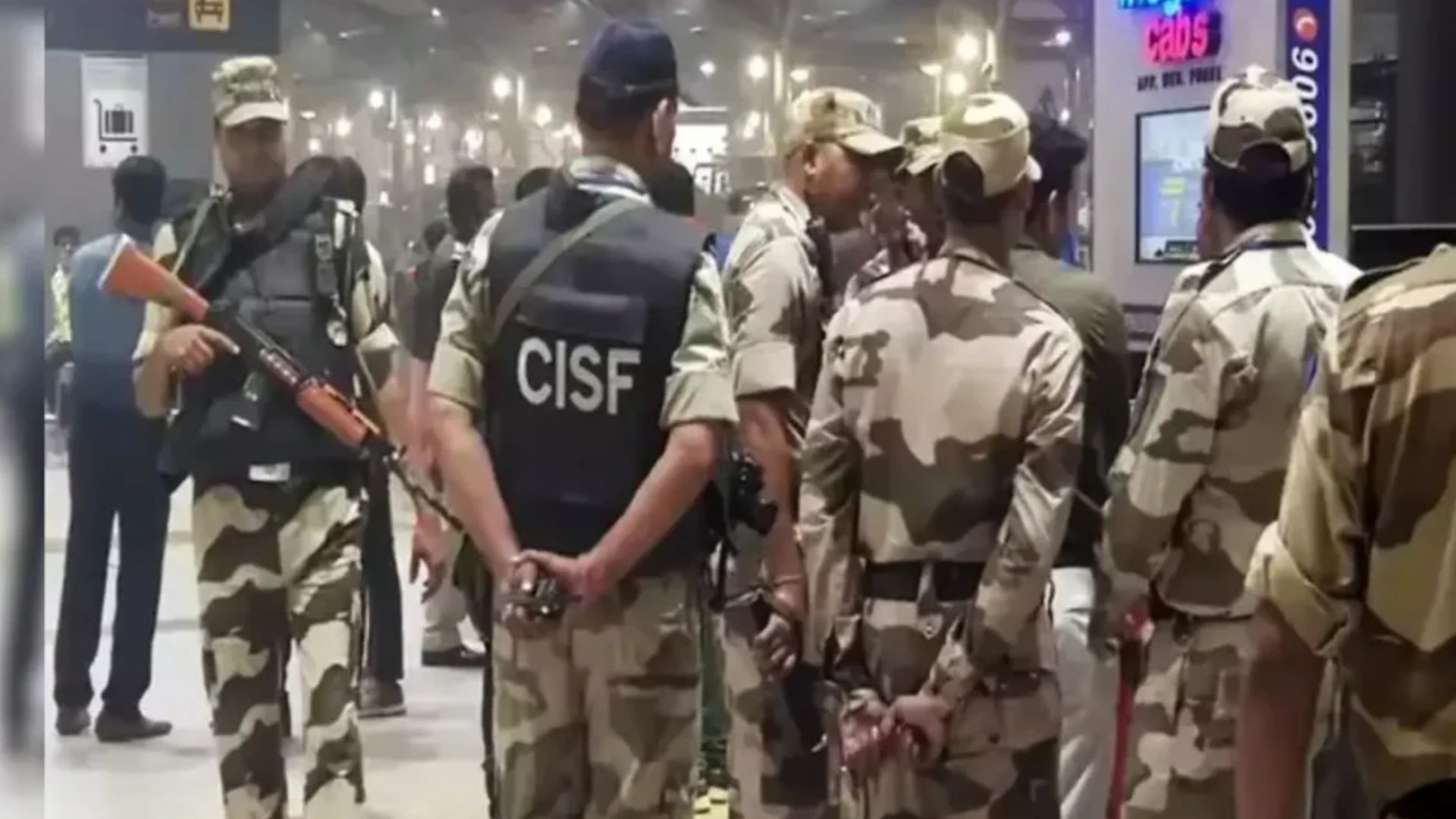
The Indian government has approved a significant expansion of the Central Industrial Security Force (CISF), increasing its sanctioned personnel from 1,62,000 to 2,20,000 — a jump of over 30%, according to officials familiar with the matter.
This additional force will be primarily deployed in industrial zones and upcoming infrastructure projects in areas affected by Left Wing Extremism (LWE), especially in Chhattisgarh, beginning next year.
CISF to Secure Development in Former Maoist Zones
As the government regains control of regions once dominated by Maoist insurgents, security responsibilities for key installations such as the National Mineral Development Corporation (NMDC) in Dantewada and various steel and iron ore plants in Bhilai have already been handed over to the CISF.
An official from the Ministry of Home Affairs (MHA), speaking on condition of anonymity, said: “From next year onwards, as development projects expand in LWE regions, there will be a rising demand for robust security. The Ministry of Home Affairs has also approved the formation of an additional CISF battalion, which will be deployed for internal security and contingency duties.”
CISF Expansion Confirmed by Senior Official
Ajay Dahiya, DIG (Intelligence), confirmed the decision, stating that the MHA had officially approved raising the CISF’s sanctioned strength. “Last year, 13,230 personnel were inducted into the force, and recruitment for another 24,098 is underway. We aim to add about 14,000 personnel annually to infuse young blood and make the force more battle-ready,” Dahiya said.
He added that the gradual decline of LWE threats in states like Chhattisgarh will lead to the creation of new industrial zones, which will require stronger CISF presence. “The enhanced strength will allow the CISF to cover a broader range of critical infrastructure, including airports, ports, thermal and nuclear power plants, as well as high-risk installations such as hydropower projects and prisons in Jammu and Kashmir,” he explained.
Official Approval and Budget Clearance
A formal communication from the MHA’s finance division, dated July 22, 2025, informed the CISF Director General that the President of India, through the MHA, had approved the new sanctioned ceiling of 2,20,000 personnel.
Industrial Push in LWE-Affected Areas
The Chhattisgarh government has also launched a new industrial policy to attract private investment in former Maoist strongholds. These areas, previously marked by insurgency, are now being transformed into hubs of economic development, with plans for new factories, schools, and job opportunities aimed at empowering local communities.
The central government has set a deadline to eliminate LWE-related violence by March 31, 2026, as part of a dual approach combining security and development.
Railways Seek Protection as Network Expands
To support these efforts, Indian Railways is expanding its network into previously inaccessible regions. However, Maoist groups have targeted railway workers in the past during track construction. As a result, the Railways has formally requested additional CISF protection for its staff and assets in those areas.
CISF’s Current Role and Security Responsibilities
Currently, the CISF is responsible for guarding 369 vital installations across India, including critical infrastructure like the Indian Parliament.
In Jammu and Kashmir, the CISF secures 11 high-risk sites, including:
-
Kargil Hydroelectric Project in Bandipora
-
Kishanganga Dam in Gurez
-
Uri-I and Uri-II hydropower plants
These facilities are located close to the Line of Control (LoC), making them particularly vulnerable to cross-border threats and requiring a high level of vigilance.
Also Read: Umar Ansari Arrested in Lucknow for Forging Documents Linked to Seized Property